

Jokbal

Bossam
In Korea, the night is often more vibrant—and delicious—than the day. As the sun sets and the workday winds down, a familiar question echoes through Korean homes and offices: “What should we have for Yasik (late-night snack) tonight?” And almost every time, the most popular answers are Jokbal (braised pig’s trotters) and Bossam (boiled pork slices).
If you’ve traveled to Korea, you’ve likely seen the flash of delivery motorbikes lighting up the city streets at all hours. Korea boasts one of the world’s most sophisticated delivery cultures, and Jokbal and Bossam sit at the very top of that hierarchy.
Even long before modern delivery apps became mainstream, these two were the undisputed “Kings of Late-Night Dining.” For decades, Jokbal and Bossam restaurants have operated their own independent delivery systems until the break of dawn, serving as the ultimate comfort for night owls.
These aren’t just meals to fill your stomach; they are the true “Korean Soul Foods.” They are the perfect companions for washing away the stress of a long day, shared over a few drinks with friends or colleagues.
At first glance, the deep glaze of Jokbal or the neat arrangement of Bossam might leave you wondering, “What does it taste like?” Between the chewy, collagen-rich texture of Jokbal and the melt-in-your-mouth tenderness of Bossam, there is a world of flavor waiting to be discovered. Let’s dive into why Koreans are so obsessed with these two dishes and the unique culture hidden behind every bite.
Are you ready to experience the true flavors of a Korean night? Let’s get started!
1. Jokbal (Braised Pig’s Trotters) – The Art of the Chew
1) A Perfect Harmony of Chewy and Tender
At first glance, the deep glaze and unique appearance of Jokbal might surprise international travelers. However, the moment you take a bite, you’ll instantly understand why Koreans are so obsessed with it.
The secret to Jokbal lies in its texture. Pig’s trotters are braised for hours in a “secret broth” made with soy sauce, sugar, ginger, garlic, and various traditional medicinal herbs. This process renders out the excess fat while turning the gelatin-rich skin into a wonderfully chewy delight. The meat remains as tender as a well-made steak, offering a unique “chewy yet soft” experience found nowhere else.

2) Historical Background: The Legend of Jangchung-dong
There is a fascinating history behind how Jokbal became such an iconic dining menu in Korea. The place widely known as the spiritual home of Jokbal is Jangchung-dong in Seoul.
The roots of the dish can be traced back to Dwaeji-jok-jorim (Braised Pig’s Trotters), a traditional regional specialty from Hwanghae Province. Modern Jokbal as we know it today was inspired by this dish, eventually evolving into a version braised in a savory soy-based sauce.
In the early 1960s, grandmothers who had fled from the northern provinces of Pyongan and Hwanghae during the war began selling these “pig’s trotter dishes” to make a living. At the time, the nearby Jangchung Gymnasium was a major hub for sports fans. Spectators coming for matches fell in love with the affordable and hearty portions, catapulting the dish to nationwide fame. What started as a nutritious meal and a source of comfort for the common people during tough, lean years has evolved into a beloved classic that continues to thrive today.
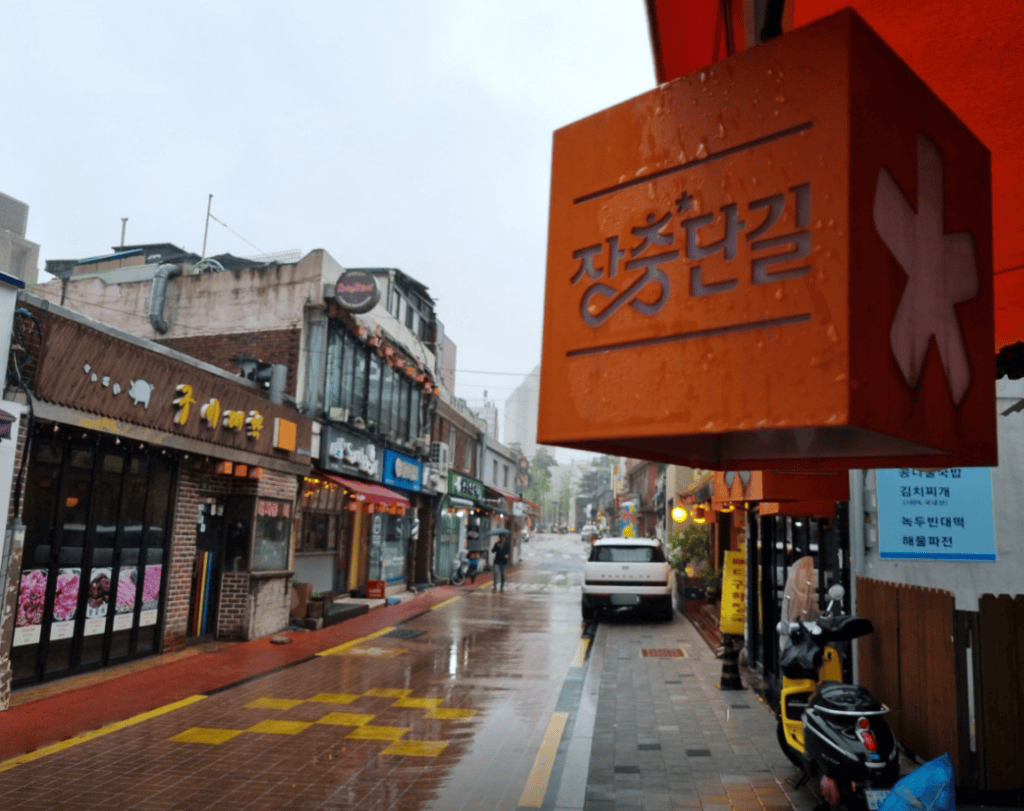
Jangchung-dong Jokbal Street
3) The Blessing of Collagen: Delicious and Healthy?
Another reason Koreans are so fond of Jokbal is because of “Collagen.” The skin of the trotters is packed with it, and it is widely known to be excellent for skin elasticity. In Korea, we even have a popular joke: “Eating Jokbal is like giving your skin a spa day.” A meal that tastes incredible while also taking care of your skin—could there be a more perfect menu?
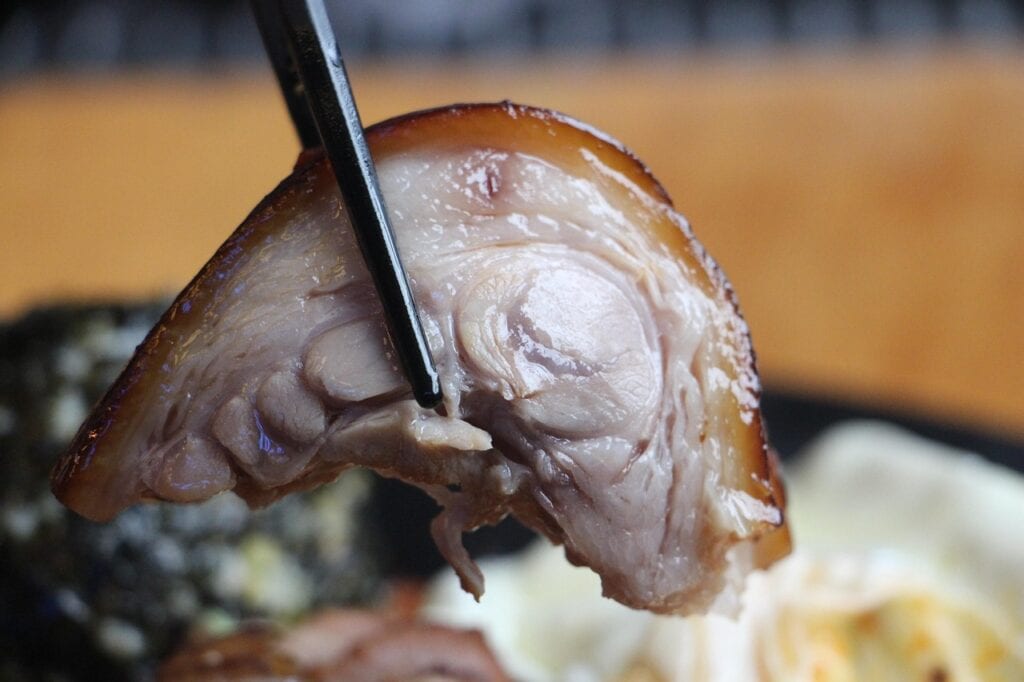
2. Bossam (Boiled Pork Slices) – The Harmony of Tenderness and Care
1) Pure Flavor, Minimal Greasiness
While Jokbal is the pinnacle of chewy texture, Bossam allows you to enjoy the savory richness and tenderness of pork in its purest form.
The name “Bossam” comes from the word Ssam, meaning to “wrap” the meat. Carefully selected cuts of pork (usually belly or shoulder) are boiled for a long time with ingredients like soybean paste, coffee, ginger, and onions to remove any unwanted odors. This process renders out the excess fat, resulting in a clean, light, and incredibly healthy flavor. One bite of this tender meat, and it will literally melt in your mouth like ice cream.
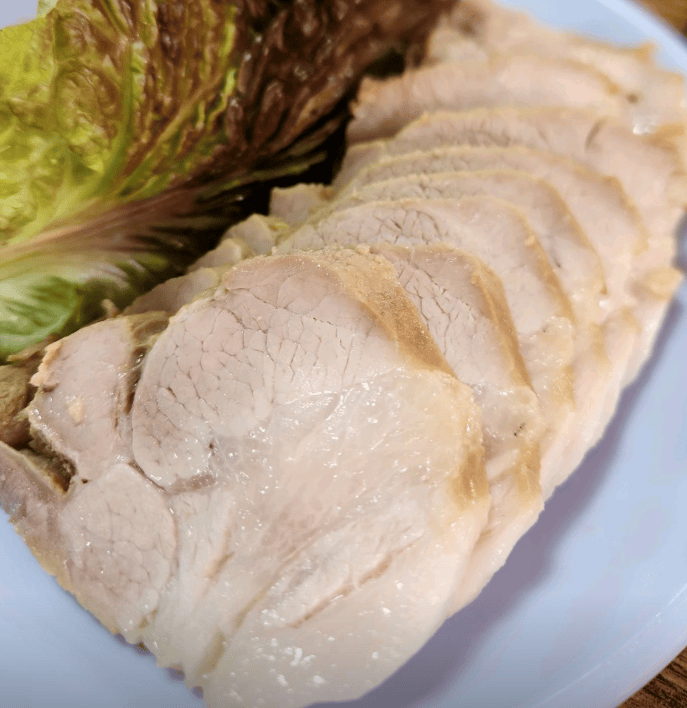
2) The Kimjang Festival: A Symbol of Sharing and “Jeong”
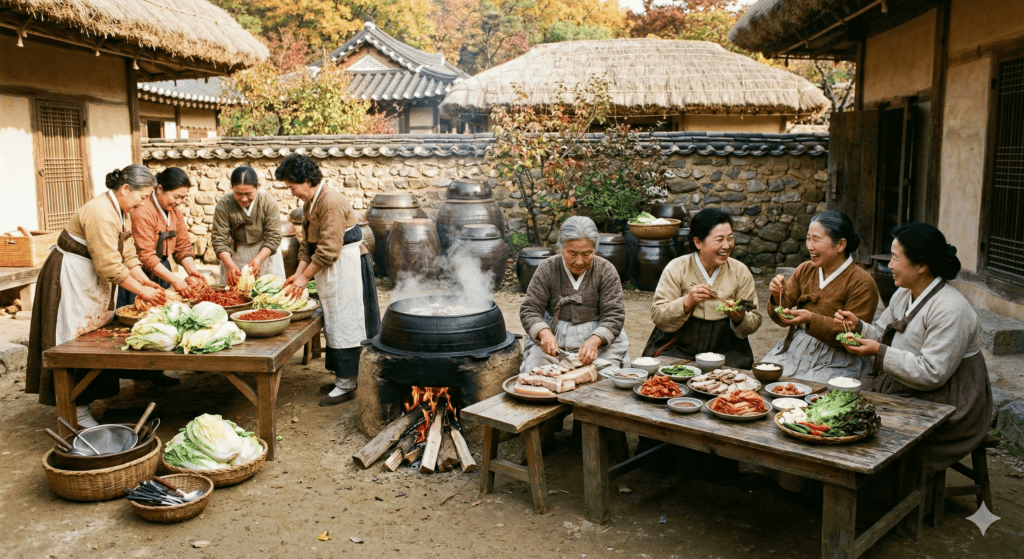
Bossam is deeply connected to one of Korea’s most important traditions: “Kimjang.” This is the season when families and neighbors gather to prepare large batches of kimchi for the winter. After the hard labor is done, it is a long-standing tradition to share freshly boiled pork with the crisp, newly made kimchi. Please refer to my previous post on ‘Kimjang‘ for more details.
Because of this, the true star of Bossam is often the “Bossam Kimchi” that accompanies it. Slightly sweeter and spicier than regular kimchi, it perfectly complements the mild flavor of the boiled pork. For Koreans, Bossam is more than just a meal; it is a food that embodies the “community spirit” of sharing food and affection with others.
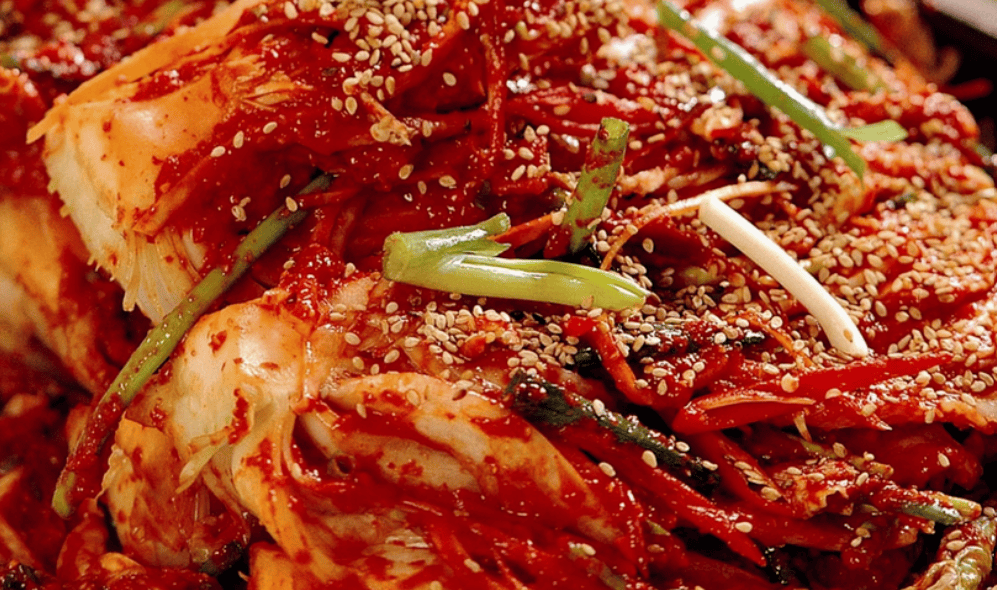
3) A Healthy Gourmet Choice
On days when fried or grilled meats feel a bit too heavy, Koreans unhesitatingly choose Bossam. Since it is steamed or boiled, it minimizes nutrient loss while keeping the calories low. For health-conscious foodies, Bossam is considered one of the most refined and elegant meat dishes in Korean cuisine.
3. The Art of “Ssam”: How to Eat Like a Pro
The true beauty of Korean cuisine isn’t just about eating a finished dish; it’s about “customizing” your own perfect bite right at the table. This ritual is known as “Ssam” (wrapping). Here is your step-by-step guide to achieving the perfect harmony of Jokbal and Bossam.
- Step 1: Choose Your Base – Place a fresh lettuce leaf or a fragrant perilla leaf on your palm. (Pro tip: Layering both adds even more depth!)
- Step 2: The Main Event – Place a piece of chewy Jokbal or tender Bossam right in the center.
- Step 3: The Magic Seasoning – This is the secret! Dip the meat lightly in Saeu-jeot (salted shrimp) first, then add a slice of garlic or green chili dabbed in Ssamjang (savory soybean paste).
- Step 4: The Finishing Touch – Top it off with some crunchy radish kimchi (mu-mallaengi) or fresh Bossam kimchi to complete the texture.
- Step 5: The “One-Shot” Rule – Don’t take small bites! A Ssam is meant to be eaten in one single bite. This allows all the ingredients to explode and harmonize in your mouth at once.
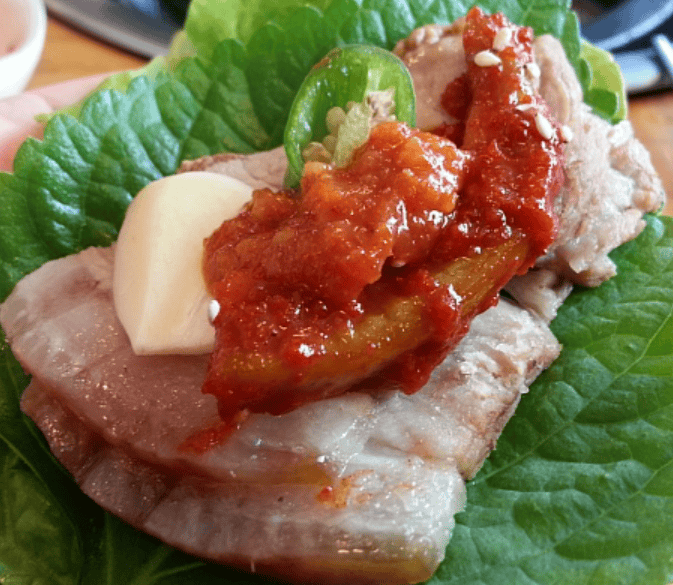
The Secret of Saeu-jeot: Ancient Wisdom in a Sauce
You’ll always find a small bowl of pink sauce—Saeu-jeot (salted shrimp)—served with these dishes. While it might be new to you, there’s a scientific reason behind it. Salted shrimp is rich in enzymes like lipase and protease, which help break down fats and proteins. It not only enhances the flavor but also acts as a natural digestive aid, making it the perfect partner for pork.

Saeu-Jeot
The Ultimate Duo: Ramyun or Makguksu
For an extra kick, try adding a small portion of spicy-and-sour Makguksu (buckwheat noodles) directly into your wrap. The contrast between the cold noodles and warm meat creates a festival of flavors!
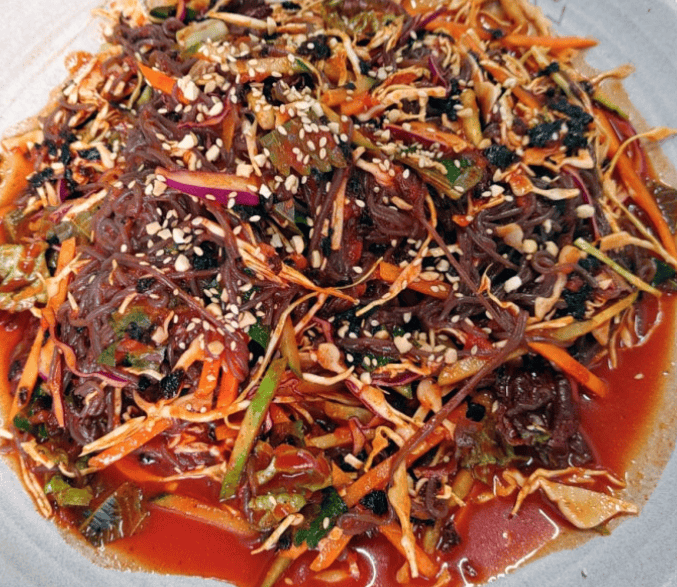
Makguksu
What is Makguksu?
Makguksu is a refreshing Korean noodle dish made from buckwheat. It features chilled noodles served in a tangy, spicy-sweet sauce with various fresh vegetables. Because of its light and zesty flavor, it is the legendary sidekick to Jokbal and Bossam—cutting through the richness of the meat and refreshing your palate with every bite.
4. The Best Places to Eat: Where Should You Go?
While you can easily find Jokbal and Bossam anywhere in Korea, there are specific ways to enjoy the atmosphere and flavor to the fullest. Choose the style that best fits your travel vibe!
1) For a Taste of History: “Jangchung-dong Jokbal Street”
If you are looking for the true “holy land” of Jokbal, head to Jangchung-dong in Seoul. This street is lined with decades-old restaurants where the history of Jokbal began. You’ll find a long row of time-honored Jokbal spots, each boasting a history that spans several decades. Many of these shops use a “master broth” that has been simmering for over 50 years, which is the secret to their deep, rich flavor. Dining in a rustic interior that holds the traces of time, surrounded by a lively local crowd, will be an unforgettable memory.
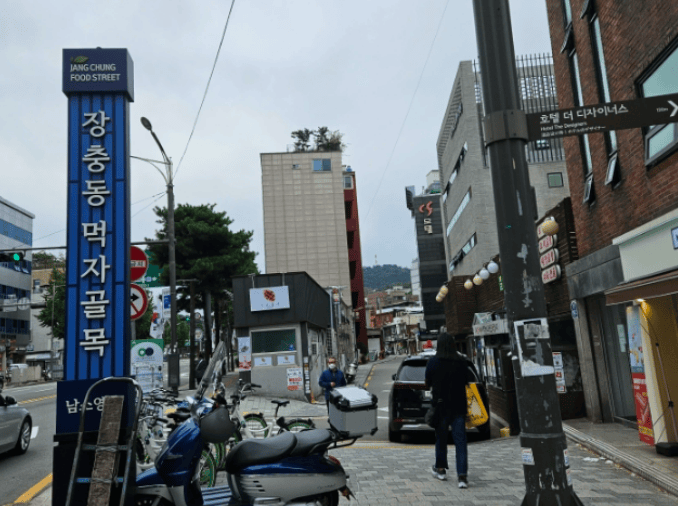
Jangchung Food Street
2) For the Local Market Vibe: “Gongdeok-dong Jokbal Alley”
To feel the vibrant energy of the locals, I recommend the Jokbal alley within the Gongdeok-dong market. The charm here is the incredible “Deom” (free extra) culture. Most places here will serve you Korean blood sausage (Sundae) and spicy sausage soup (Sundaeguk) for free when you order Jokbal. It’s an amazing way to experience a feast at a very affordable price.
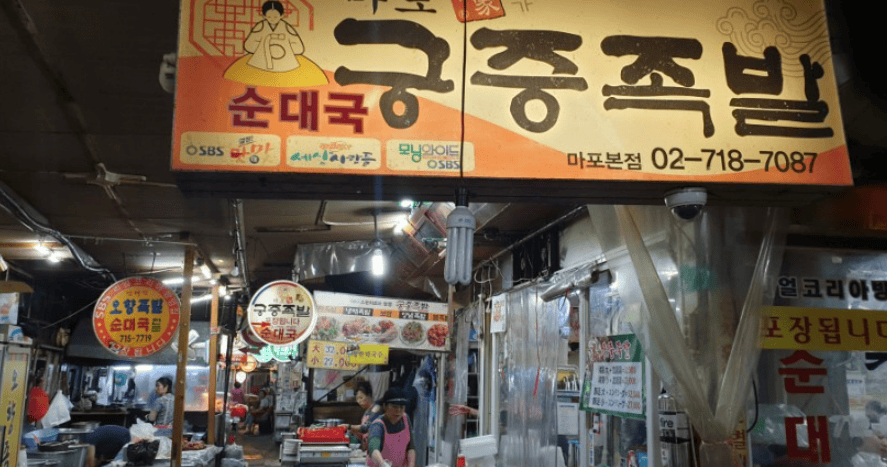
Gongdeok Jokbal Street
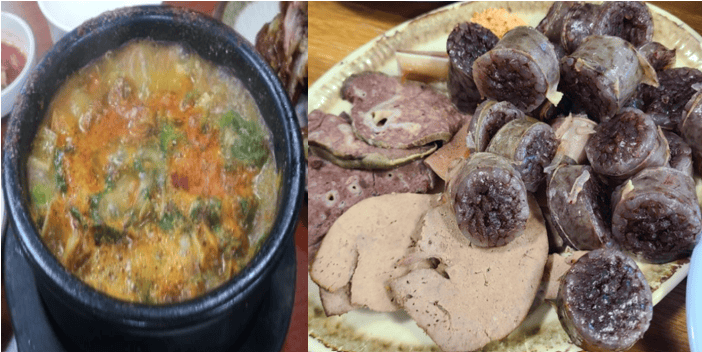
Sundaeguk – Sundae
3) The Ultimate Night Experience: “Hotel Delivery Service”
If you’re too exhausted from walking all day, this is the perfect chance to experience Korea’s world-famous “Delivery Culture” firsthand. By using Korean delivery apps (such as Yogiyo, Baemin, or Coupang Eats), you can have piping hot Jokbal or Bossam delivered right to your hotel lobby or accommodation doorstep.
If you’re traveling solo or a large portion feels a bit overwhelming, don’t worry! You can order a simple “Bossam Dosirak” (Bossam Lunchbox) from popular franchise restaurants like “Won Halmoni Bossam.” It’s a great way to enjoy a perfectly portioned, high-quality meal without the pressure of a giant feast.

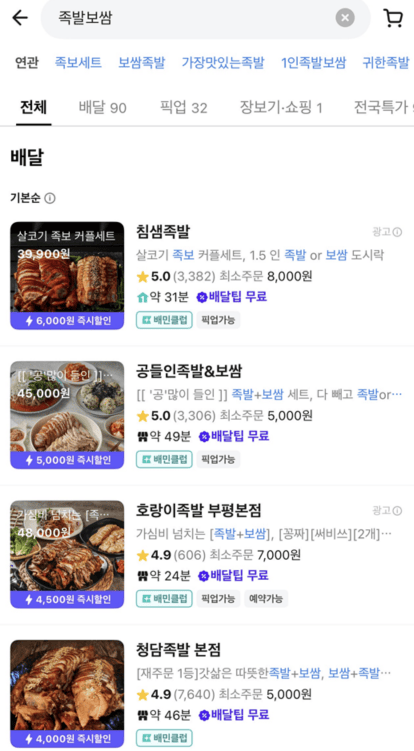
5. Conclusion: A Meal That Captures the True Taste and “Jeong” of Korea
In Korea, Jokbal and Bossam are more than just boiled or braised pork dishes. They serve as a warm medium through which people check in on one another and find comfort after a long, exhausting day.
The moment you place a piece of meat on a large leaf, carefully wrap it, and take that perfect, full bite, you’ll experience more than just a harmony of Korean ingredients—you’ll feel the care and heart put into the meal. Whether it’s the sight of someone lovingly making a wrap (Ssam) to hand to another, or the generous “Deom” (free extras) offered by market vendors, you can discover the unique Korean sentiment of “Jeong” (deep affection and attachment) in every corner of this dining experience.
While visiting fine restaurants is a wonderful part of any trip, I highly recommend visiting a bustling Jokbal alley filled with locals or enjoying a delivery meal in the comfort of your accommodation. The lively, noisy, and vibrant atmosphere found there is truly the most authentic side of Korea.
So, what is your choice? Is it the chewy and bouncy Jokbal, or the melt-in-your-mouth, savory Bossam? Or perhaps you have a memorable late-night food story from your travels in Korea? Please share them in the comments!
We hope your next journey to Korea is as flavorful and full of happiness as this hearty feast. Find Your Korea!
Jokbal #Bossam #KoreanFood #KFood #FindYourKorea #PigTrotters #BoiledPork #KoreanCuisine #ChewyAndTender #CollagenBoost #ComfortFood #SoulFood #Jangchungdong #Gongdeok #KoreanDelivery #LateNightSnack #Yasik #족발 #보쌈 #한국음식