
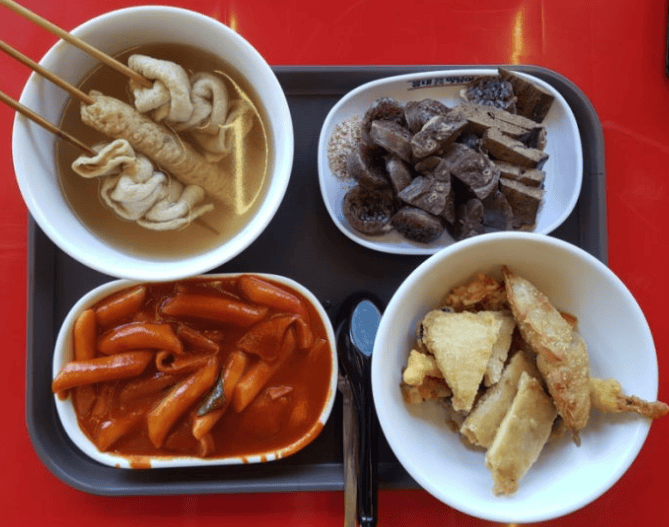
Experience the “Red Flavor” of K-Dramas: Meeting Korea’s Soul Food
If you enjoy Korean movies or dramas, you’ve likely seen scenes where the characters stand on the street, happily devouring a bright red dish amidst clouds of steam. Despite sweating from the spice, they can’t seem to stop, smiling brightly while sipping broth from a paper cup. This is the sight of people enjoying Korea’s representative street food—Tteokbokki—and its “best friends.”
For Koreans, street food is much more than just a quick snack to fill the stomach. It is a cherished childhood memory of huddling with friends after school to share a meal with pocket money. It is also a warm comfort that melts away the chill of a long workday on the way home.
The menu is a perfect harmony: spicy and sweet Tteokbokki, savory and clean Soondae, hot Eomuk (Fish Cakes) that you blow on to cool down, and crispy Fried Snacks soaked in that delicious red sauce. While fancy dishes at sophisticated restaurants are wonderful, there are times when the happiness found in a simple plastic bowl of Tteokbokki, Soondae, and a cup of fish cake broth feels even greater.
In this post, I invite you to the “World of Street Food,” a place where the real daily lives of Koreans unfold—details you won’t find in any flashy guidebook. Beyond just tasting delicious food, would you like to experience the vibrant energy and the unique Korean sentiment of “Jeong” with me?
1. The “Fantastic Four” of Korean Street Food
No matter which market you visit in Korea, you will find four main characters that always move together like a team. We call them the “Fantastic Four” of Korean street food.
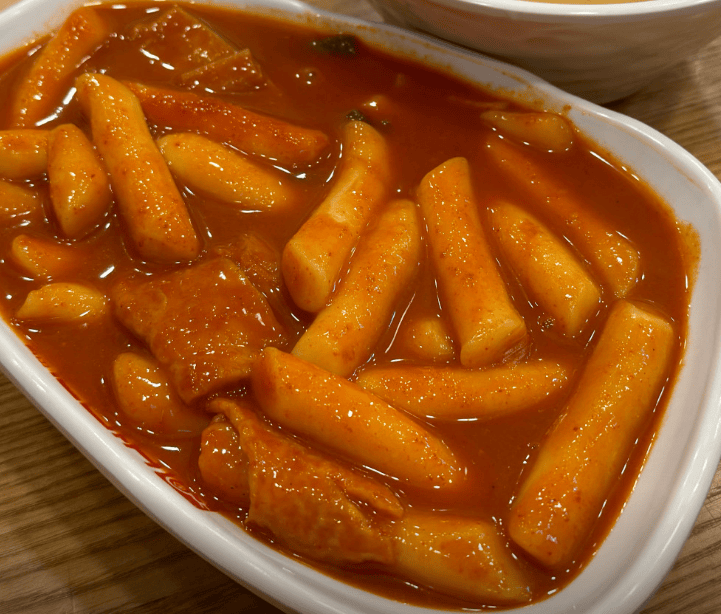
1) Tteokbokki: The Source of Sweet and Spicy Energy
The first hero is, without a doubt, Tteokbokki. It is made by simmering chewy rice cakes in a sweet and spicy sauce based on gochujang (red chili paste). While the bright red color might surprise you at first, don’t worry—many places offer mild versions! Once you try it, you’ll be captivated by its addictive flavor. I wonder which you’ll prefer: the soft texture of wheat cakes (mil-tteok) or the heavy, dense chewiness of rice cakes (ssal-tteok)!
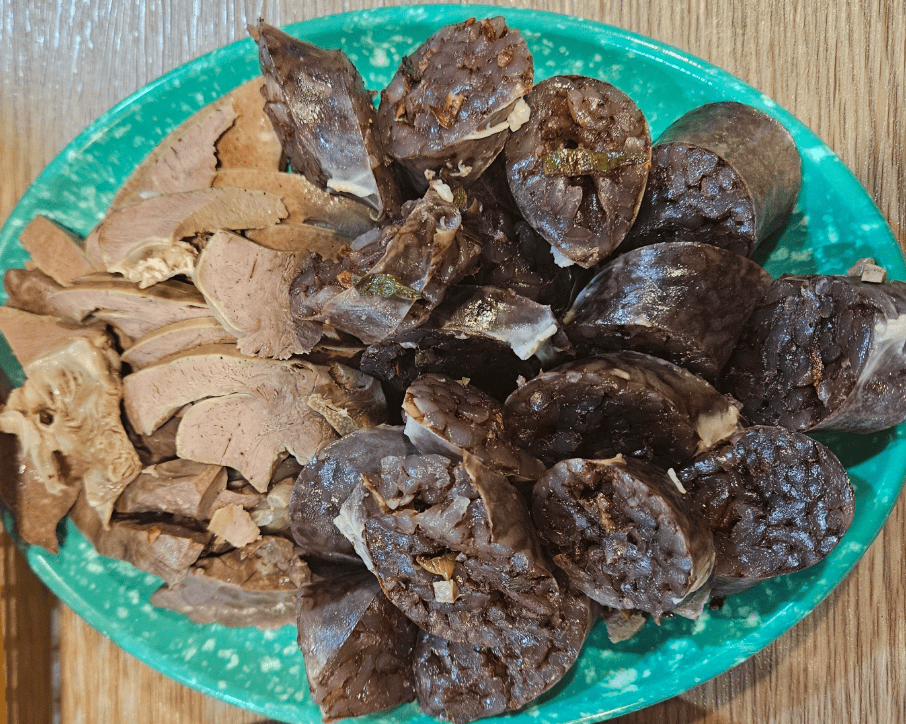
2) Soondae: The Surprising Charm of the “K-Sausage”
When I describe this to my foreign friends as “glass noodle sausage made with pork blood,” they sometimes hesitate at first. However, once they take a bite, they usually give it a big thumbs up for its savory and clean taste. While dipping it in salt is the standard, Korea has interesting regional cultures: people in Jeolla-do use red chili paste (chojang), while those in Gyeongsang-do use soybean paste (ssamjang). Dipping Soondae in Tteokbokki sauce is also a must-try “special flavor.”
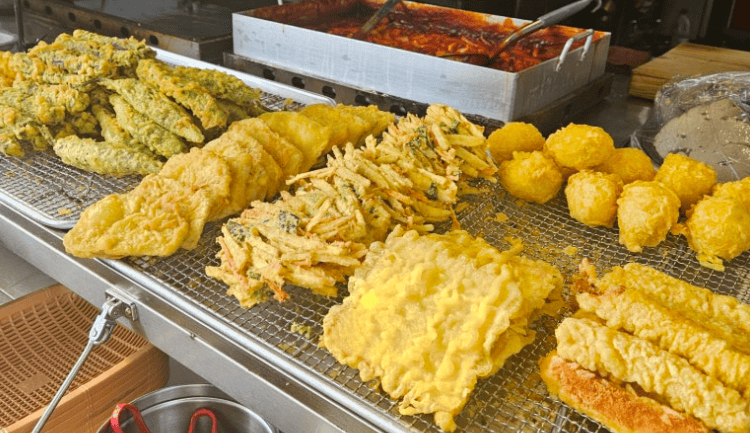
3) Fried Snacks (Twigim): The Peak of Crunchiness
This category includes various ingredients like Gim-mari (glass noodles wrapped in seaweed), sweet potatoes, and squid, all fried to a perfect crisp. While they are delicious dipped in soy sauce, you must drench them in Tteokbokki sauce to enjoy them like a true local. The harmony between the crispy batter and the spicy sauce is simply fantastic.
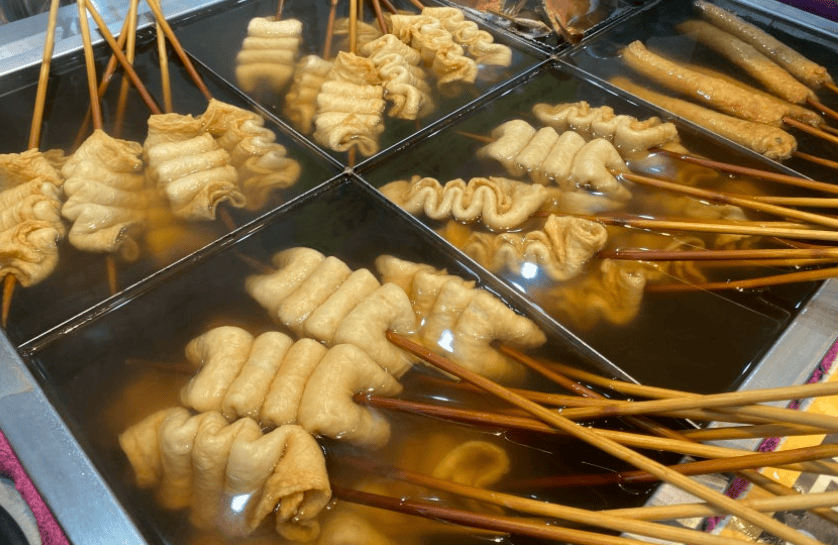
4) Eomuk (Fish Cakes): Warm Broth That Melts the Soul
On a cold winter day, a steaming skewer of fish cake and a paper cup of hot broth are like the best medicine for Koreans. At street stalls, the broth is usually a “free refill” service, almost like a gift. It is the menu where you can best feel the generous heart (Insim) of the shop owner.
2. New Trends: The Evolution of Korean Tteokbokki
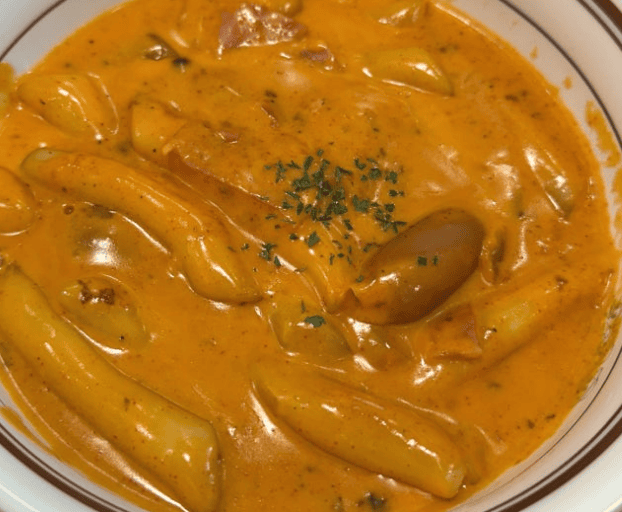
1) Rosé Tteokbokki: A Creamy Temptation
This has been the hottest menu item to sweep across Korea in recent years. It’s made by blending traditional gochujang (red chili paste) with smooth heavy cream or milk—a perfect marriage between “K-Gochujang” and “Western-style cream.” Since the spiciness is neutralized, it offers a savory and thick, creamy texture that is simply top-notch. It’s always the first dish I recommend to my foreign friends who aren’t comfortable with high spice levels. A “golden rule” among locals is to add wide glass noodles (Joong-guk-dang-myeon) or potato starch noodles (Bun-mo-ja) to soak up every bit of that delicious sauce.
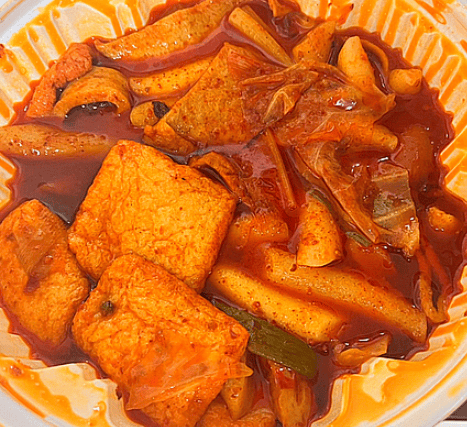
2) Mala Tteokbokki: A Numbing, Addictive Kick
The “Mala” fever, which has taken Korea’s Gen Z by storm, has finally met Tteokbokki. This dish delivers an intense experience by adding the pungent and numbing Szechuan-style Mala spices to the Tteokbokki sauce. Beyond the standard ingredients, you get the fun of picking and choosing toppings typically found in Mala-tang, such as thin-sliced beef (woo-sam-gyeop), fried tofu, and dried tofu skin (poo-ju). I highly recommend this to anyone looking for a dynamic and bold flavor adventure!
3) Jjajang & Oil Tteokbokki: Rediscovering the Classics
For those who prefer a break from the heat, Jjajang Tteokbokki is a crowd-pleaser for both children and international visitors. Made with a sweet and savory black bean sauce instead of spicy chili paste, it offers a universally loved flavor.
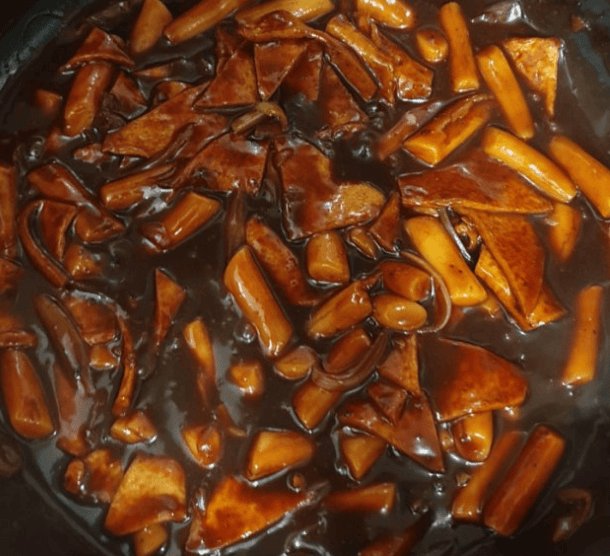
Jjajang Tteokbokki
On the other hand, the famous Oil Tteokbokki of Tongin Market—stir-fried in oil without any broth—is a must-try. Its “crispy on the outside, chewy on the inside” texture makes it perfect for readers seeking a truly authentic yet unique Korean experience.
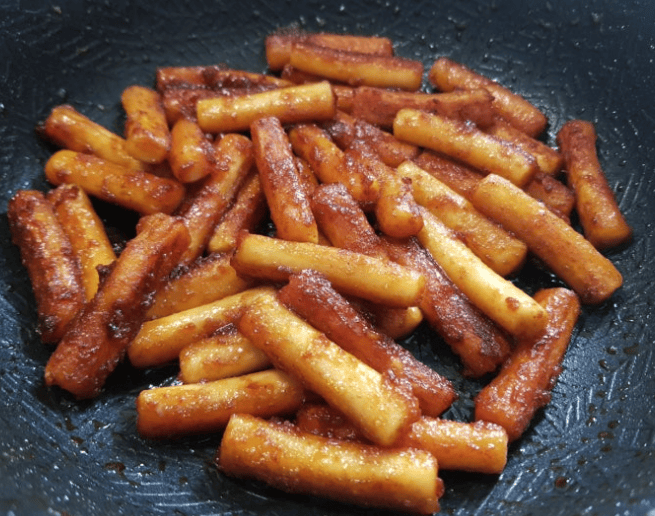
Oil Tteokbokki
“Nowadays, a wide variety of Tteokbokki is available as meal kits through online stores, making it incredibly easy to prepare and enjoy right at home.”
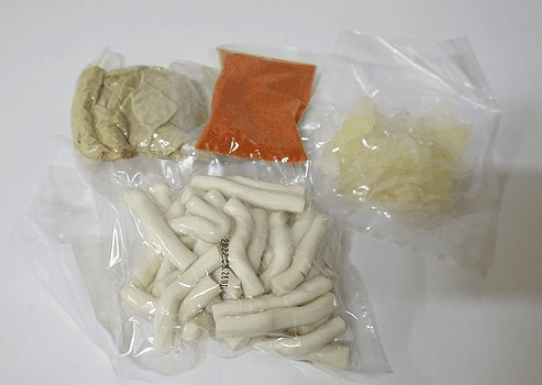
3. Pro Tips: How to Eat Like a Local
“Are you curious about how to go beyond simply ‘tasting’ Korean street food and start ‘enjoying’ it like a true local? Having introduced Korea to friends from all over the world for over 12 years, I’m sharing my top three secret tips with you.”
1) The Art of “Jjik-meok” vs. “Beombeok” (Dipping vs. Mixing)
Koreans rarely eat Tteokbokki on its own. When you order fried snacks or Soondae, try saying this to the vendor: “Tteokbokki so-seu-e mut-hyeo ju-se-yo” (Please mix it with the Tteokbokki sauce). We call this style “Beombeok.” The moment the spicy-sweet sauce soaks into the crispy batter, you will truly open your eyes to the authentic flavors of Korea. On the other hand, if you prefer to keep the crunchiness intact, you can go for the “Jjik-meok” style by asking for the sauce on the side to dip at your own pace.
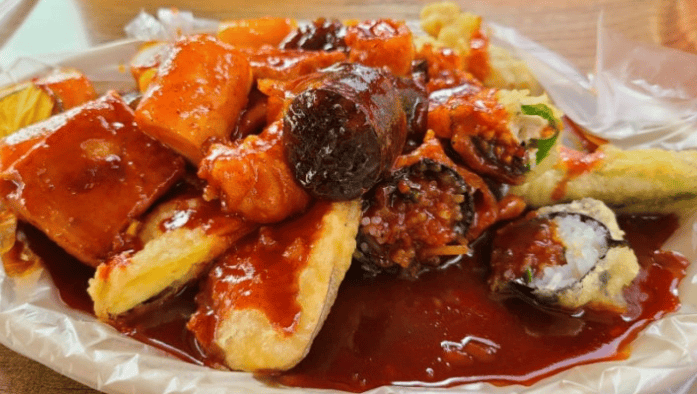
2) The Magic of Fish Cake Broth (Eomuk Gukmul)
When you stand in front of a street stall, the first thing you should do is grab a paper cup. Then, use the ladle to scoop some of the steaming broth from the large pot where the fish cakes are simmering. This broth is usually free and comes with unlimited refills! When your mouth is tingling from the spicy Tteokbokki, a sip of this warm, savory broth will magically soothe your palate. The atmosphere itself—standing there, sipping hot broth while rubbing shoulders with locals—is the best seasoning you could ask for.
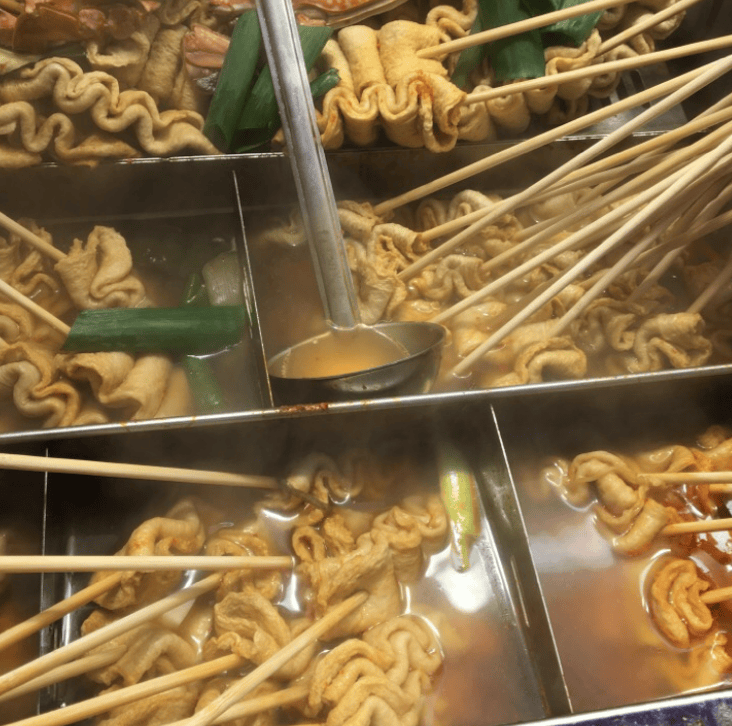
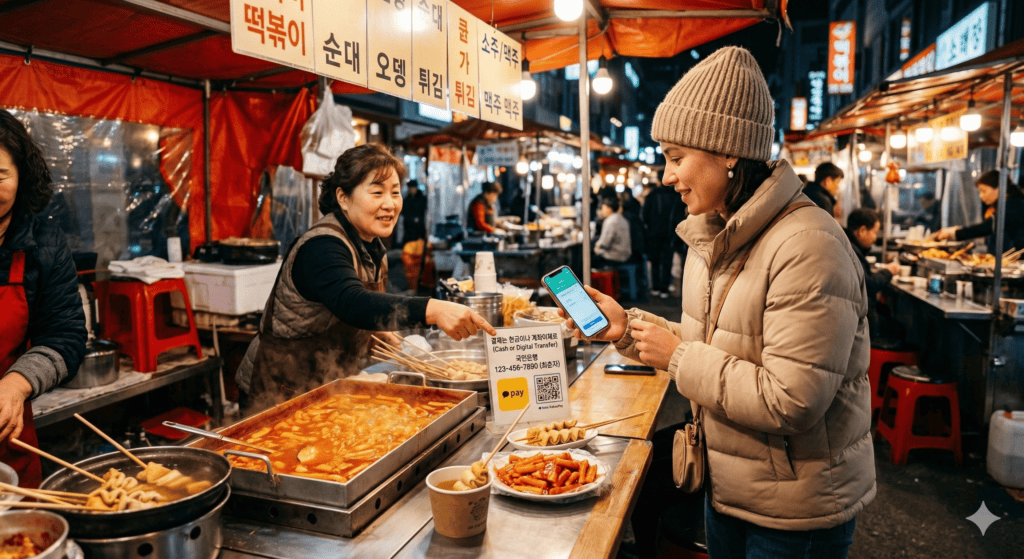
3) Cash or Digital Transfer: The Local Way to Pay
While many street stalls have started accepting credit cards, traditional markets and small street vendors still prefer cash. If you don’t have any cash on you, don’t panic! It is a very common and natural sight in Korea to see customers sending money via smartphone banking to the bank account number displayed on the stall. This “Digital Transfer” is not just a payment method—it’s a fun and authentic way to experience Korea’s advanced digital culture firsthand.
4. Invisible Values: “Jeong” and “Deom” (The Heart of Korea)
In Korean street food, there is one very special ‘ingredient’ that cannot be explained by the price tag on the menu alone. It is the warm heart of the Korean people: ‘Jeong’ and ‘Deom’.
1) “Jeong”: A Warm Energy Connecting Heart to Heart
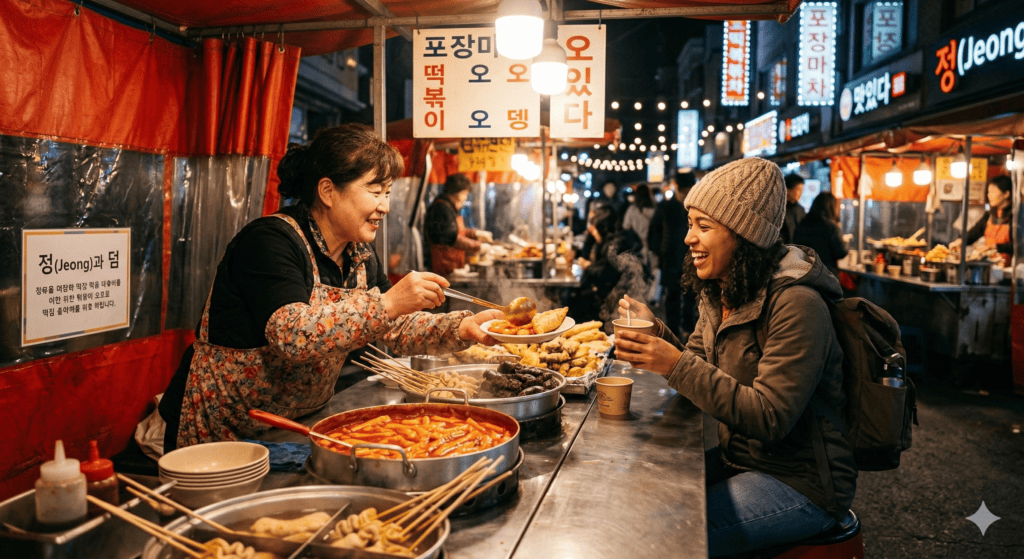
“Jeong” is a uniquely Korean sentiment that is difficult to fully translate with Western words like “Affection” or “Compassion.” It is the spirit of showing genuine kindness even to total strangers. When you sit at a street stall in a market alley, you can feel this “Jeong” in the warm eye contact from the vendor who says, “You’ve come a long way, you must be tired,” or in the invisible consideration of strangers who slightly shift their shoulders to make room for you on a narrow bench.
In many videos by foreign YouTubers traveling in Korea, we often see them moved to tears by the unexpected kindness and care shown by locals. This heartwarming connection, shared freely with someone they’ve just met, is the true essence of “Jeong.”
2) “Deom”: A Gift Not Found on the Receipt
The most surprising moment you might experience in a Korean market is when you receive “Deom.” Imagine ordering just one serving of Soondae, and the vendor casually tosses in a piece of fried snack, saying, “Here, have a taste of this too.” Or finding a few extra pieces of fish cake added to your plate of Tteokbokki as a “service.” This is exactly what “Deom” is.
“Deom” is much more than just a “freebie.” It is a precious gift containing the vendor’s sincere heart, wishing for you to truly enjoy your meal and be happy. It is a small gesture that says, “I care about your experience.”
3) The “Sarangbang” of the Streets: A Community Hub
Thanks to this warm culture, Korea’s market alleys become more than just places to eat—they serve as a “Sarangbang,” a traditional Korean reception room where people gather to talk and connect. Instead of sleek kiosks or the cold, robotic sounds of machines, you’ll find brief yet meaningful conversations like, “The Tteokbokki is especially delicious today!” This place, where human connection flows as naturally as the food, is the “Real Korea” that I truly want to show you.
5. Where to Go: Top Market Picks
Here are the best spots where you can experience Korean street food at its most vibrant. I have carefully selected three locations, each offering a unique and distinct charm.
1) Tongin Market: Build Your Own Lunchbox with Brass Coins
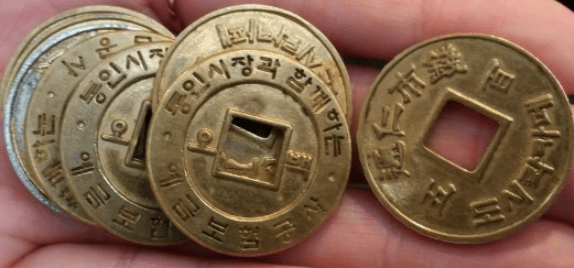
Located near Gyeongbokgung Palace in Seoul, this market offers a truly unique experience. It is famous for its “Yeopjeon (Brass Coin) Lunchbox” system. You can purchase traditional Korean brass coins at the market entrance and use them to pick and choose different foods as you walk through the stalls. Don’t miss their signature dish, “Oil Tteokbokki.” Stir-fried in a hot cauldron lid without any broth, its savory and crispy texture is simply top-notch. It’s an experience you definitely shouldn’t miss!

Oil Tteokbokki
Yeopjeon
2) Gwangjang Market: The Living Pulse of Korea
Boasting over 100 years of history, this is one of the largest and oldest traditional markets in Seoul. The moment you step into the central “Meokja-golmok” (Food Alley), you will feel an overwhelming energy created by thousands of people and mountains of food. Must-try items here include the piles of savory Soondae, steaming Tteokbokki, and crispy Mung Bean Pancakes (Bindaetteok). It is a delightful experience to rub shoulders with strangers in the bustling crowd while enjoying a hot meal.


3) Local Traditional Markets: Discovering the True Heart of Korea
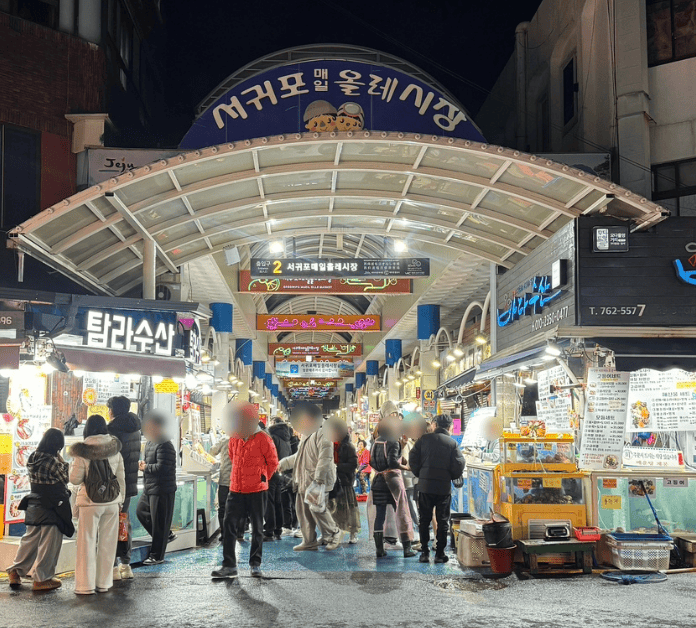
“Korea is home to over 1,400 traditional markets across the country. While the famous markets in Seoul are fantastic, the true charm of Korea often lies in the ‘5-day markets’ found in smaller provinces. In these local gems, you can experience a traditional lifestyle that has remained beautifully unchanged for decades.”

Noryangjin Fisheries Wholesale Market (Seoul)
Jeju Olle Market (Jeju Island)
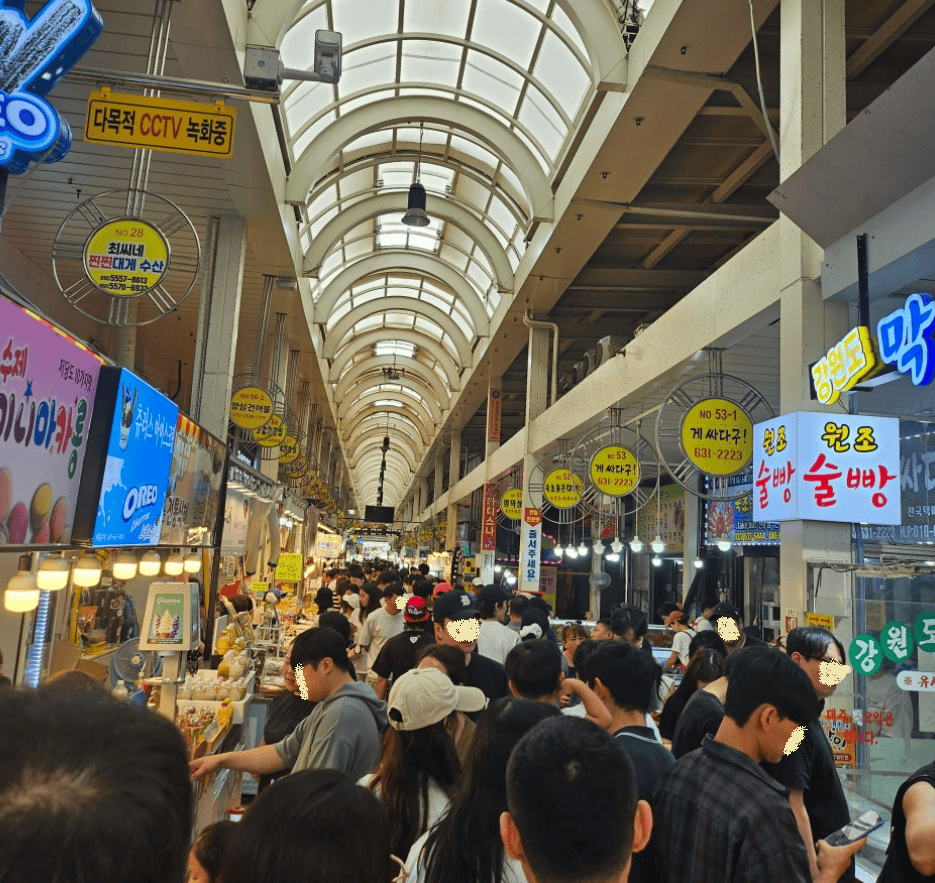
Sokcho Jungang Market (Sokcho)
6. Conclusion: A Bite to Remember
A meal at a Michelin-star restaurant is wonderful, but if you want to feel the true pulse of Korea, step into a market alley. The passion in the red sauce, the comfort in a cup of broth, and the kindness in the “Deom”… these are the things that will turn your trip into a lifelong memory.
During my seven years of studying in Texas, one of the things I missed most wasn’t a fancy gala dinner, but the spicy-sweet aroma drifting from the market alleys back home. I realized then that a simple plastic bowl of Tteokbokki is more than just food; it’s a warm hug for the soul.
I hope you find your own “Aha!” moment in a crowded Korean market. What is the first street food you want to try? Let me know in the comments! If you need specific recommendations or have questions about driving to these hidden gems, feel free to reach out to me at benchoi@findyourkorea.com.
KoreanStreet Food #KFood #VisitKorea #KoreanCulture #Tteokbokki #SoulFood #LocalExperience #TravelKorea #FoodieAdventure #Soondae #Eomuk #GwangjangMarket #TonginMarket #KFoodie #FindYourKorea #LocalProTips