
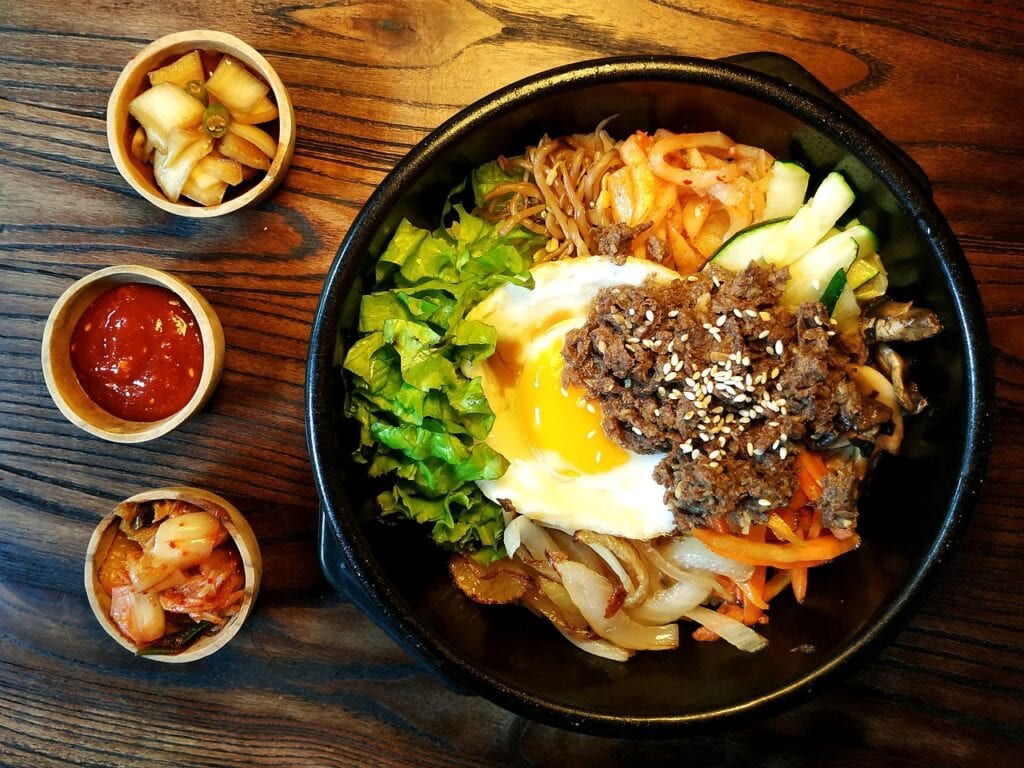
Welcome back to Part 2 of Bibimbap!
Today, we are going to dive deeper into the real experience of Bibimbap. In this post, we will cover:
- How to eat like a local (Hint: Don’t just eat it without mixing!)
- Why Jeonju? (The City of Gastronomy)
4. How to eat like a local (Hint: Don’t just eat it without mixing!)
How to Eat Bibimbap Like a Local: 3 Pro Tips
When your Bibimbap first arrives at the table, it looks like a work of art. The colorful toppings are arranged so perfectly that you might feel guilty about ruining them. But here is the truth: if you want to experience the authentic taste of Korea, you have to be bold and destroy that beautiful masterpiece!
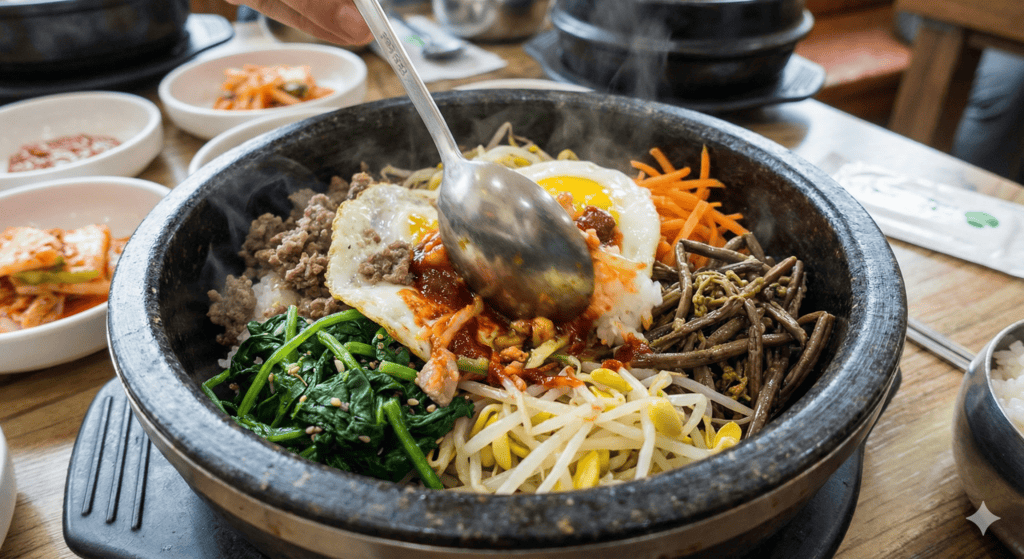
Here is the local way to do it:
1) Mix Everything Together! (Remember, Bibim literally means “to mix”!)
The biggest mistake foreigners make is eating the ingredients one by one, picking at them like a salad. Don’t do that!
- The Rule: You must mix the rice, vegetables, and Gochujang thoroughly until no white rice is visible.
- The Goal: Every single spoonful should have a little bit of every ingredient. Trust me, the messier the bowl looks, the better it tastes!
2) No Chopsticks, YES Spoon 🥄
For rice dishes like Bibimbap, Koreans always use a spoon.
Why? Because it makes mixing so much easier! More importantly, a spoon allows you to scoop up a massive mouthful. The true joy of Bibimbap comes from stuffing your cheeks with a spoon full of rice, meat, and veggies all at once.
3) The Art of Patience (For Dolsot Only)
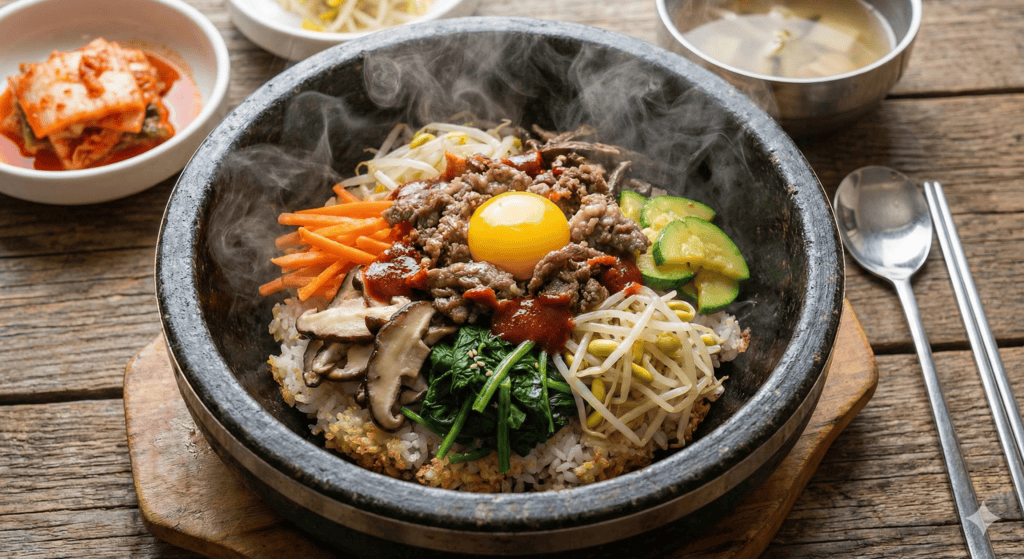
If you ordered the hot stone pot (Dolsot) version, do not mix it immediately!
- Wait for 1-2 minutes. Let the rice sizzle against the hot stone. This allows the bottom layer of rice to turn into a golden, crispy crust.
- Listen to the sound. When the loud crackling sound starts to slow down, that is your cue to mix.
- The Reward: You will be rewarded with a perfect crunch in every bite!
5. Why Jeonju? (The City of Gastronomy)
If you ask any Korean, “Where is the best food city in Korea?” 9 out of 10 will instantly answer: “Jeonju.”
Jeonju is not just about Bibimbap; it is revered as a culinary mecca for all types of Korean cuisine. Designated as a UNESCO City of Gastronomy, Jeonju is famous for its unique take on Bibimbap, often hailed as the “Royal Version” of the dish. Here is what makes it so special:
1) The Rice is Different (It’s Not Just Water!)
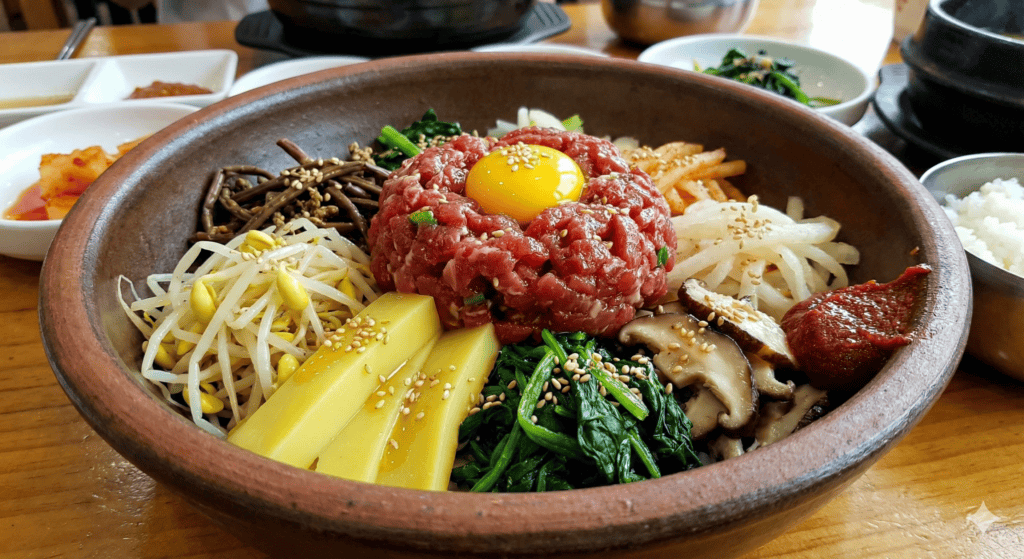
Unlike standard Bibimbap, the rice in Jeonju Bibimbap is not cooked in plain water. Instead, it is steamed in a rich beef brisket broth. This technique infuses every grain with flavor and gives the rice a glossy sheen. It also prevents the rice from becoming too sticky, ensuring the grains separate perfectly when you mix them.
2) Exclusive Ingredients Found Only Here
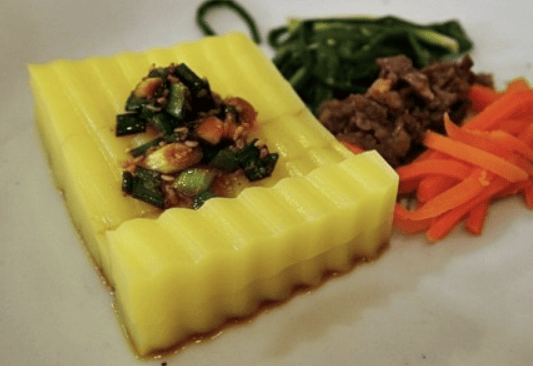
- Yellow Mung Bean Jelly (Hwangpomuk): This jiggly yellow jelly is essential for the color balance of the dish. It adds a soft, smooth texture that contrasts beautifully with the crunchy vegetables.
Tip: The Story of the Yellow Jelly (Hwangpomuk)
“Originally, the jelly made from mung bean starch is white and translucent, known as Cheongpomuk. It has long been valued in Korea for its health benefits, such as lowering body heat, detoxifying the body, and boosting stamina.
So, why is the jelly in Jeonju Bibimbap yellow? It is called Hwangpomuk. The white jelly is dyed yellow using natural gardenia seeds (Chija). This was done purely for aesthetics—to add a vibrant splash of color and style to the dish, making it a feast for the eyes as well as the palate.”
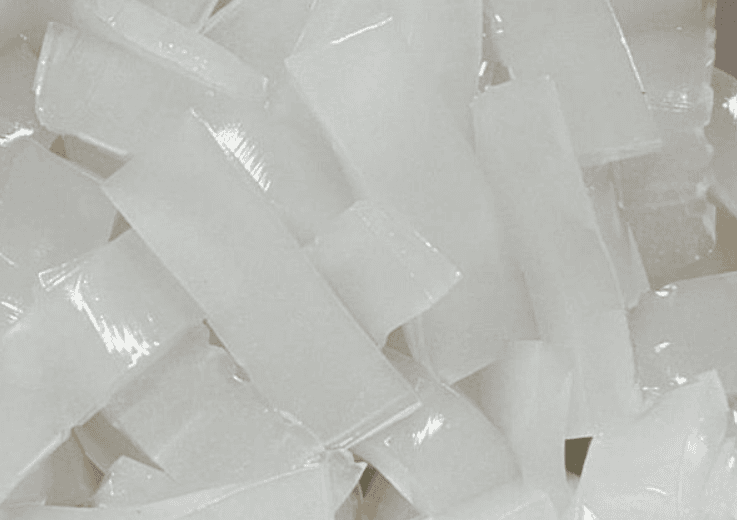
Cheongpo Muk
Hwangpo Muk
- Jeonju Bean Sprouts (Kongnamul): Jeonju is famous for its pristine water quality, which allows locals to grow the crunchiest bean sprouts in the country. You can really taste the difference in freshness.
- Korean Beef Tartare (Yukhoe): While standard Bibimbap uses cooked meat, the authentic Jeonju style is topped with fresh, seasoned raw beef. This adds a luxurious, rich, and creamy texture that melts in your mouth as you mix it with the warm rice.
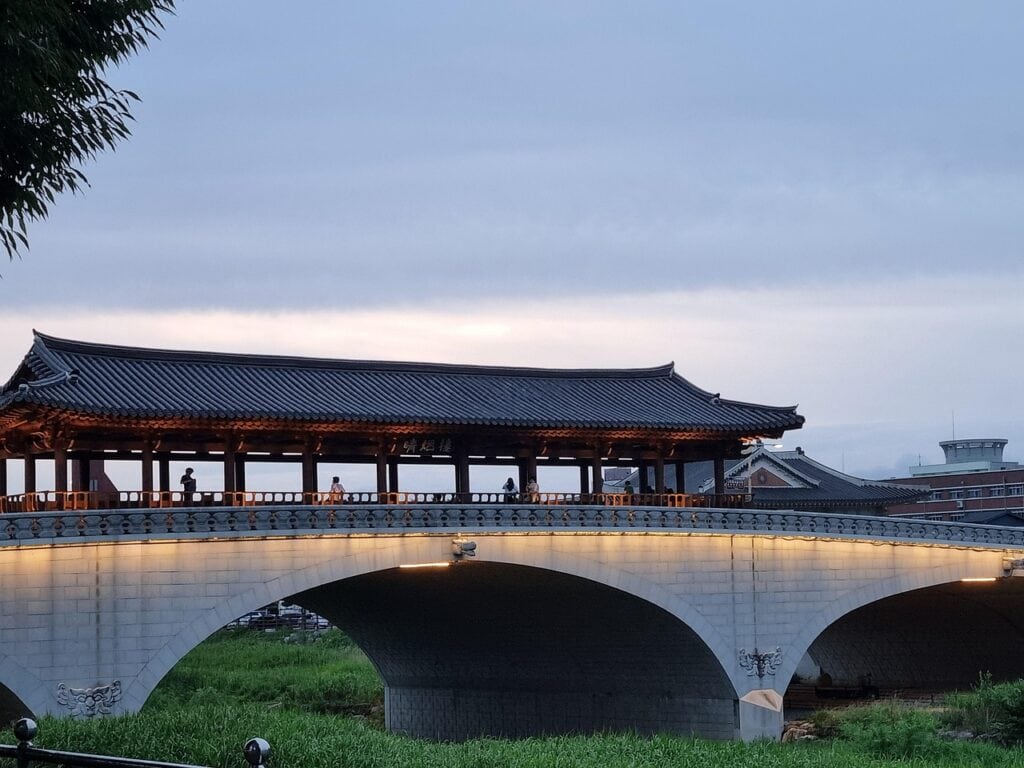
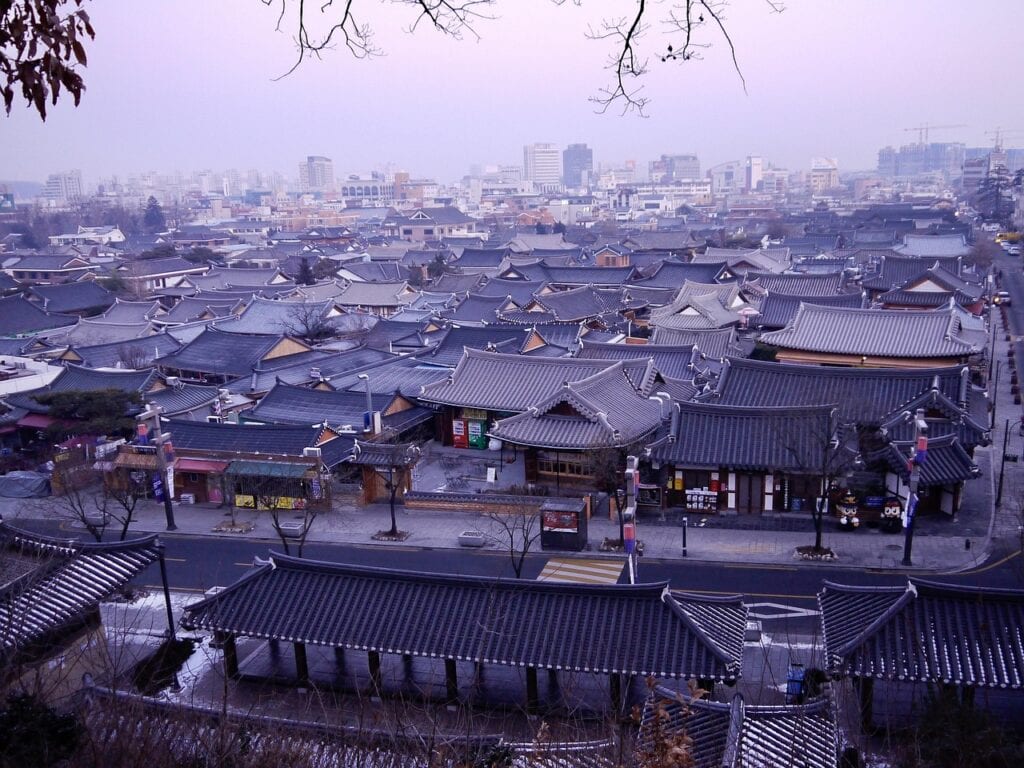
As mentioned, Jeonju is famous as Korea’s City of Gastronomy. But it is more than just a food destination. It is a place where you can rent a Hanbok (traditional Korean attire), stroll through the beautiful Hanok Village, take stunning photos, and enjoy an endless variety of delicious street foods.
I am actually planning a new series where I will introduce Korean cities in detail—covering their origins, history, local specialties and famous food, and hidden tourist spots. I promise to share a full, in-depth guide to Jeonju then, so please stay tuned!
Jeonju City Bridge
Jeonju Hanok Village
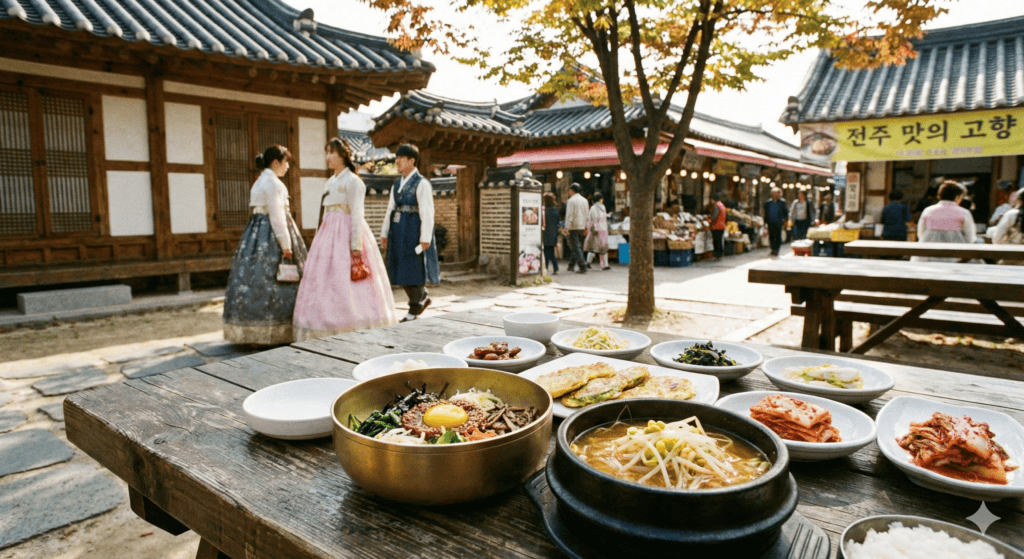
Jeonju Hanok Village Street
Bibimbap #HowToEat #EatLikeALocal #MixItUp #Nurungji #Jeonju #JeonjuBibimbap #CityOfGastronomy #JeonjuHanokVillage #VisitKorea #KoreaTravel #Yukhoe #KFood #FindYourKorea #FoodieAdventures