
If you’re looking for the perfect fusion of nutrition and flavor, look no further than Korean Kimbap.
Often referred to as the “Korean sandwich,” Kimbap is the centerpiece of Korea’s outdoor picnic culture and the ultimate grab-and-go meal that never compromises on health. Whether you are a vegan seeking fresh vegetable fillings or a meat lover craving savory Bulgogi, Kimbap can be customized to satisfy any palate.
Discover why this iconic roll is the very first thing Koreans pack when they head out on a journey.
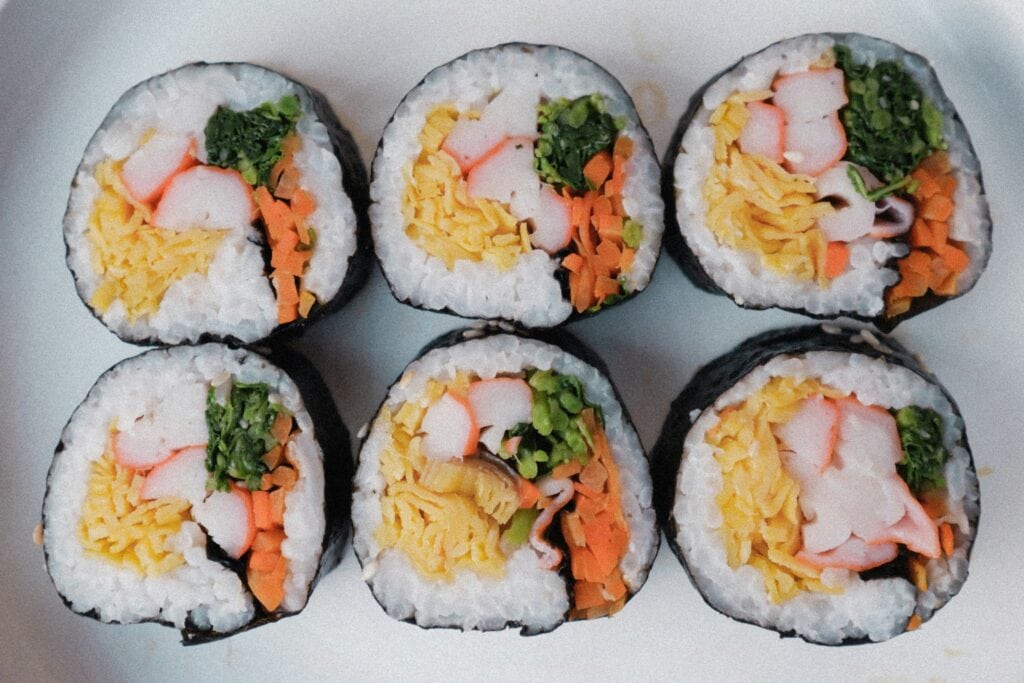
1. The Story of Kimbap: A Meticulously Designed Nutritional Powerhouse
“Harmony: The Perfect Balance of Rice, Seaweed, and Vibrant Fillings”
The 5 Essentials of Kimbap
A single roll of Kimbap contains a perfect ratio of carbohydrates, proteins, and dietary fiber. The basic ingredients are as follows:
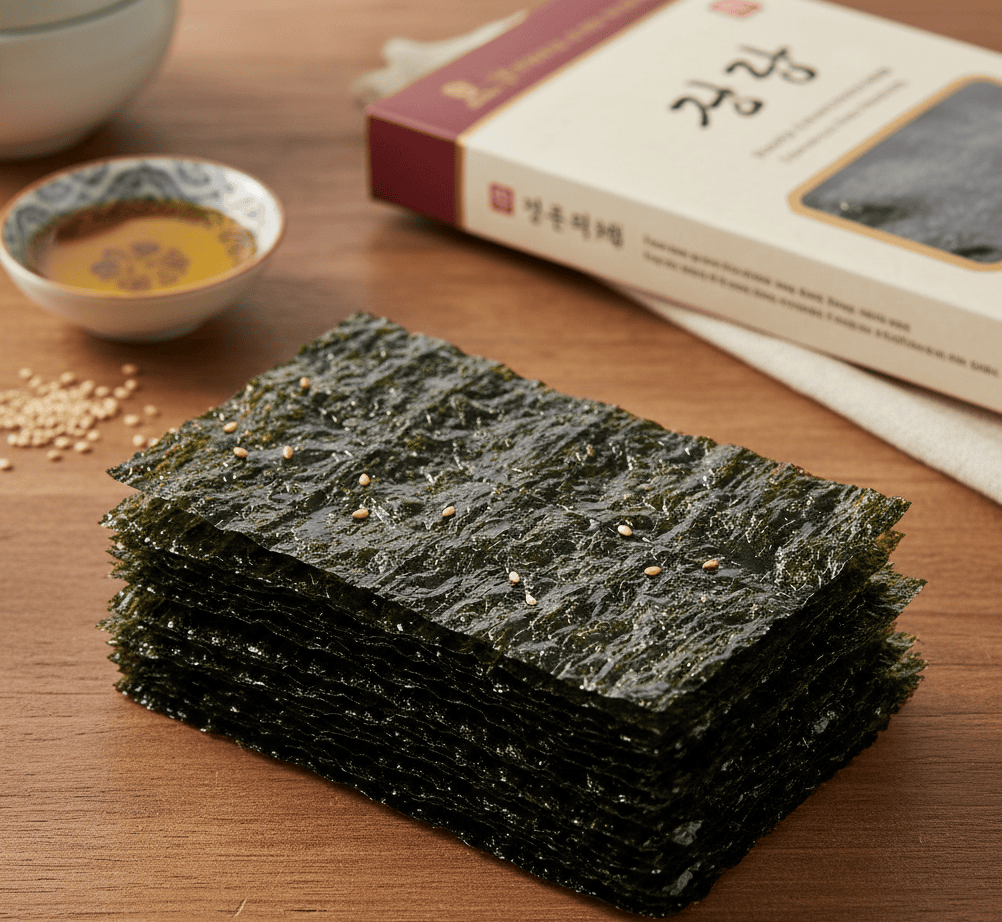
1) Gim (Roasted Seaweed):
The outer shell of Kimbap and the source of its savory aroma. While thin, it serves as a sturdy foundation that holds all the ingredients together, providing an abundance of minerals and vitamins unique to seaweed.
2) Bap (Seasoned Rice):
It’s not just plain white rice. It is delicately seasoned with sesame oil and a pinch of salt, allowing a rich, nutty aroma to fill your mouth with every bite. The rice serves as the “glue” that holds all the ingredients together and acts as a “blank canvas” that brings harmony to the entire roll.
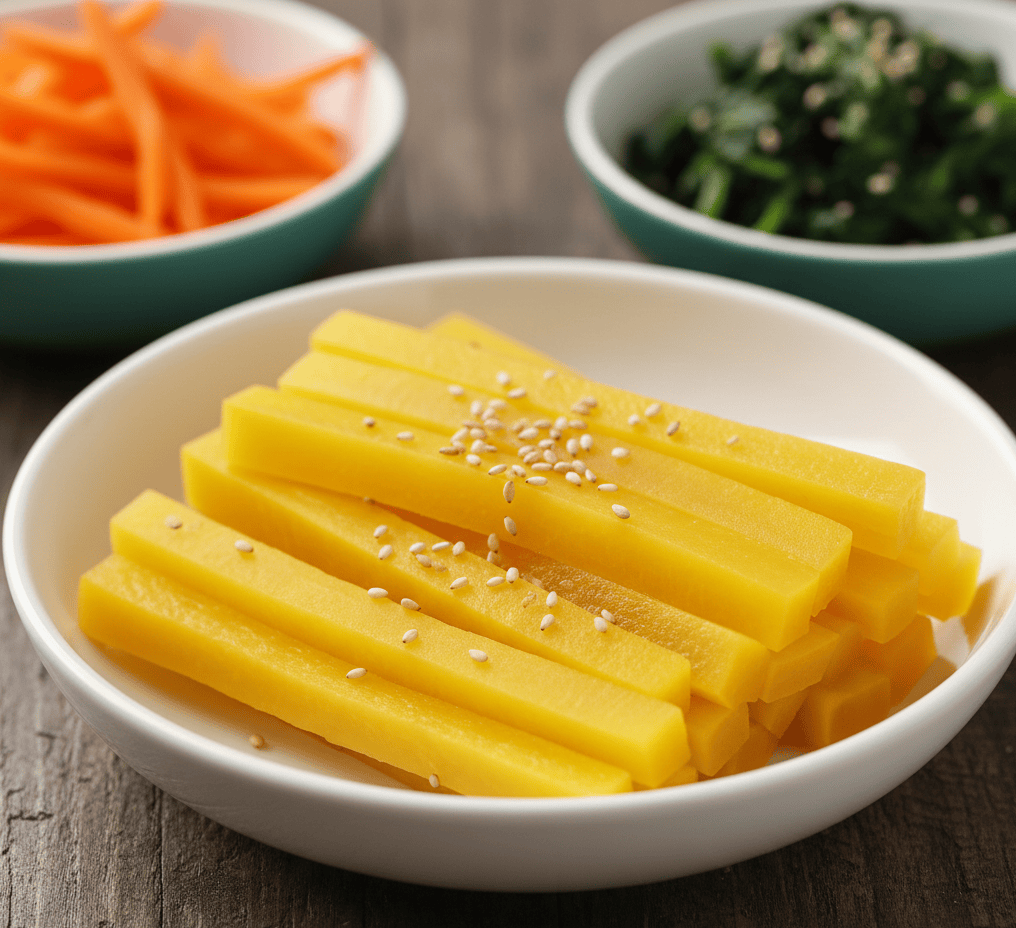
3) Danmuji (Yellow Pickled Radish):
This ingredient is essentially the identity of Kimbap. With its crunchy texture and sweet-and-sour flavor, it perfectly balances any richness from other ingredients. Its vibrant yellow color also adds a delightful visual appeal to every slice.
4) The Vegetable Medley:
- Carrots: Finely shredded and lightly sautéed to add a subtle sweetness and a vibrant orange hue to the roll.
- Spinach & Cucumber: These provide the refreshing green color and a crisp texture. Spinach is typically blanched and seasoned with sesame oil, while cucumber is used fresh to maximize its natural crunch.
5) The Protein Star:
- Egg Strips (Gyeran-jidan): These add a fluffy, soft texture and a mild, comforting flavor to every bite.
- Ham or Fish Cakes: These are responsible for the savory, salty kick (umami) that rounds out the flavor of the roll.
6) The Finishing Touch: Sesame Oil and Seeds
The final magic happens once the roll is complete. A thin layer of sesame oil is brushed over the surface, followed by a gentle sprinkle of toasted sesame seeds. The moment you take a bite, the rich, nutty aroma awakens your senses and instantly whets your appetite.
Kimbap is like a customizable canvas. Beyond the basic ingredients, you can add anything—from savory Bulgogi to creamy cream cheese—to create your own unique flavor!
This is why the fillings (such as vegetables) can vary slightly depending on the restaurant. Besides the “Basic Kimbap” (often called Vegetable Kimbap), there are countless varieties named after their star ingredient: Tuna Kimbap, Bulgogi Kimbap, Cheese Kimbap, Tonkatsu (Pork Cutlet) Kimbap, Keto Kimbap, Shrimp Kimbap, Anchovy Kimbap, and Sausage Kimbap. The possibilities are truly endless!
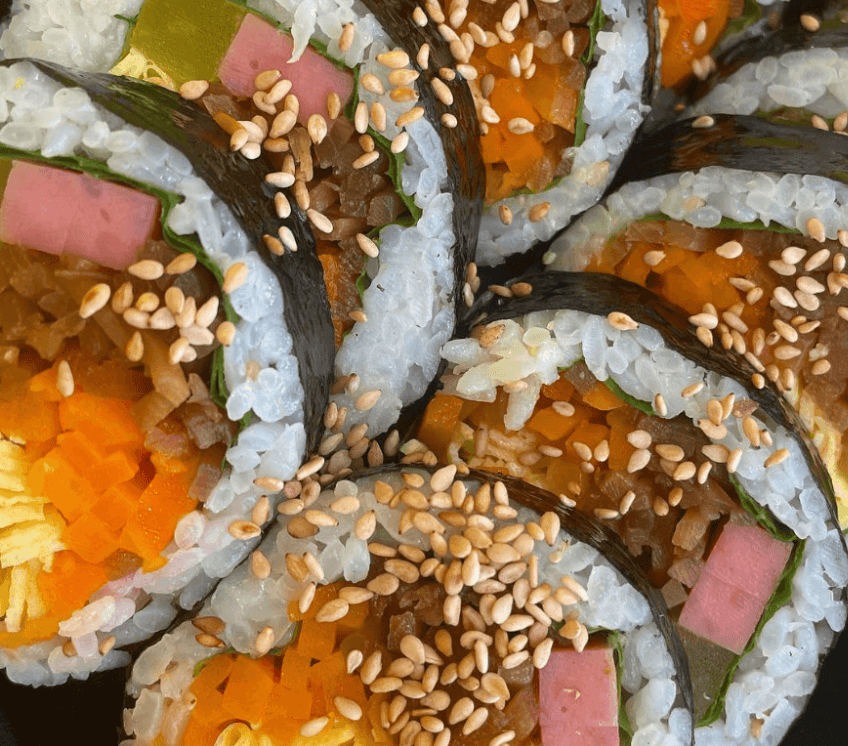
Vegetable Kimbap
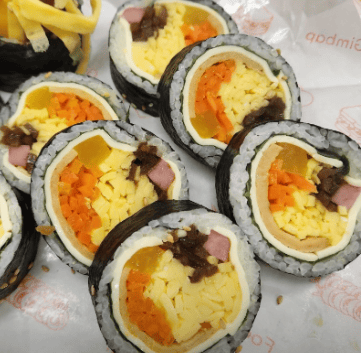
Cheese Kimbap
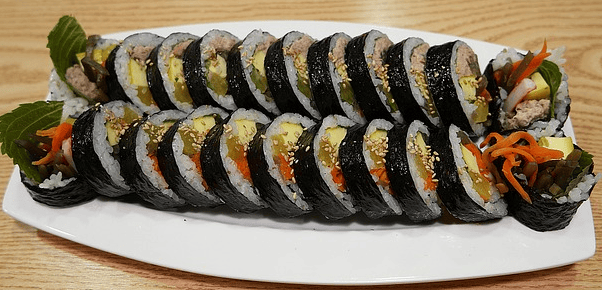
Tuna Kimbap
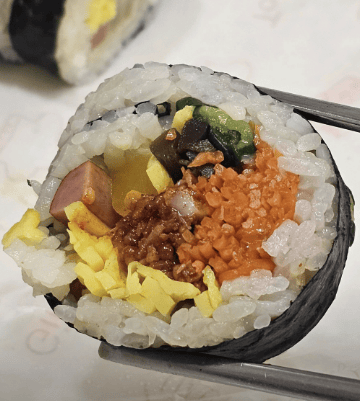
Jinmichae Kimbap(Dried Shredded Squid Kimbap)
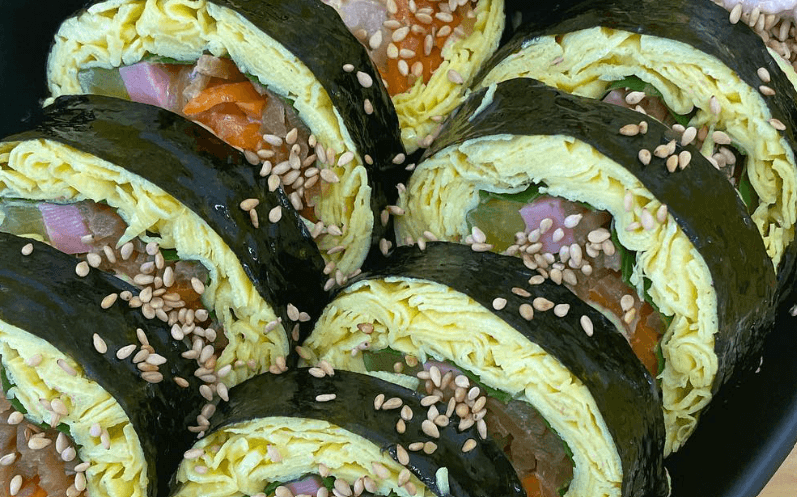
Keto Kimbap
2. A Unique Kimbap: Chungmu Kimbap
Unlike the standard Kimbap, this is a very different and unique style of Kimbap. Instead of having the fillings inside, it consists of bite-sized, finger-thin rolls of plain rice wrapped in seaweed, served with various side dishes on the side.
1) What’s in the Set?
- Plain Rice Rolls: Bite-sized rolls made by wrapping plain rice in unseasoned roasted seaweed.
- Spicy Squid & Fish Cake Salad: Chewy squid and fish cakes tossed in a vibrant, sweet-and-spicy seasoning.
- Seokbakji: Large, crunchy slices of well-fermented radish kimchi that provide a refreshing contrast.
How to Enjoy: To eat like a local, use a small bamboo skewer to pick up a rice roll, a piece of squid, and a slice of radish kimchi one after another, enjoying the perfect harmony of flavors and textures in every bite.
2) The Fascinating Origin Story
- Lunch on the Sea: Chungmu (now known as Tongyeong) is a historic port city located on the southernmost tip of South Korea. In the past, fishermen would head out to sea with Kimbap for lunch. However, the warm coastal weather often caused the fillings inside the rolls to spoil quickly.
- A Wise Solution: Legend has it that a fisherman’s wife, saddened by her husband having to skip meals, came up with a brilliant idea. She began packing the rice and side dishes separately. To prevent the food from spoiling, she seasoned the side dishes with a bold, spicy, and salty blend—marking the birth of the iconic Chungmu Kimbap we know today.
3) Why You Should Try It
- The Perfect Texture: Experience an exquisite contrast of textures—soft rice, chewy squid, and crunchy, refreshing Seokbakji (radish kimchi) all coming together in one perfect bite.
- Customizable Heat: Since the side dishes are served separately, you can control the spice level yourself by choosing how much squid to pair with your rice. It’s a great way for international foodies to challenge themselves with Korean spices!
- The Authentic Experience: Sitting by the seaside at Gangguan Harbor in Tongyeong, enjoying Chungmu Kimbap while feeling the ocean breeze, will become an unforgettable highlight of your trip to Korea.
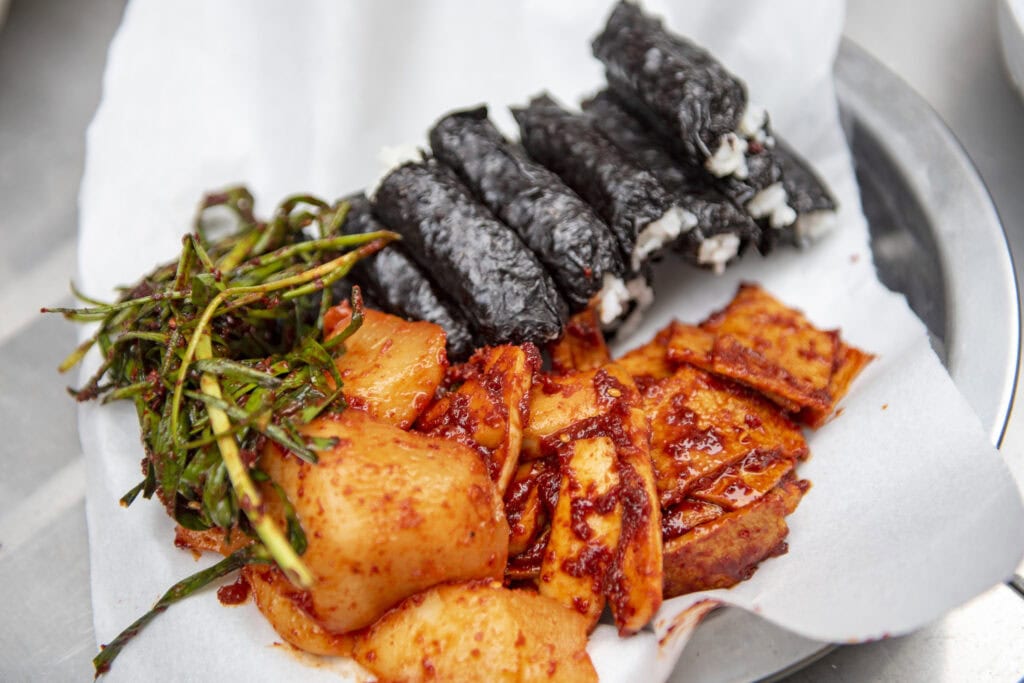
Chungmu Kimbap / Source: Busan Metropolitan City via Gonggongnuri (KOGL Type 1)
Stay tuned! I’ll be sharing a more detailed guide to Tongyeong, including everything you need to know about this beautiful city, in a future post. You won’t want to miss it!
3. How to Make Delicious Kimbap: You Can Make It at Home, Too!
[Step 1] Prepare the Ingredients
Get the basic components ready as we learned earlier:
- Rice: Cook the rice to a slightly firm texture. Season it with sesame oil, salt, and sesame seeds, then let it cool down for a bit. (If the rice is too hot, the seaweed will become soggy.)
- Fillings: Slice the pickled radish, sautéed carrots, blanched spinach, egg strips, and ham into long, thin strips. (Feel free to substitute or add any other ingredients according to your preference!)
- Tools: Using a bamboo mat will make the rolling process much easier and smoother.
[Step 2] Positioning the Seaweed
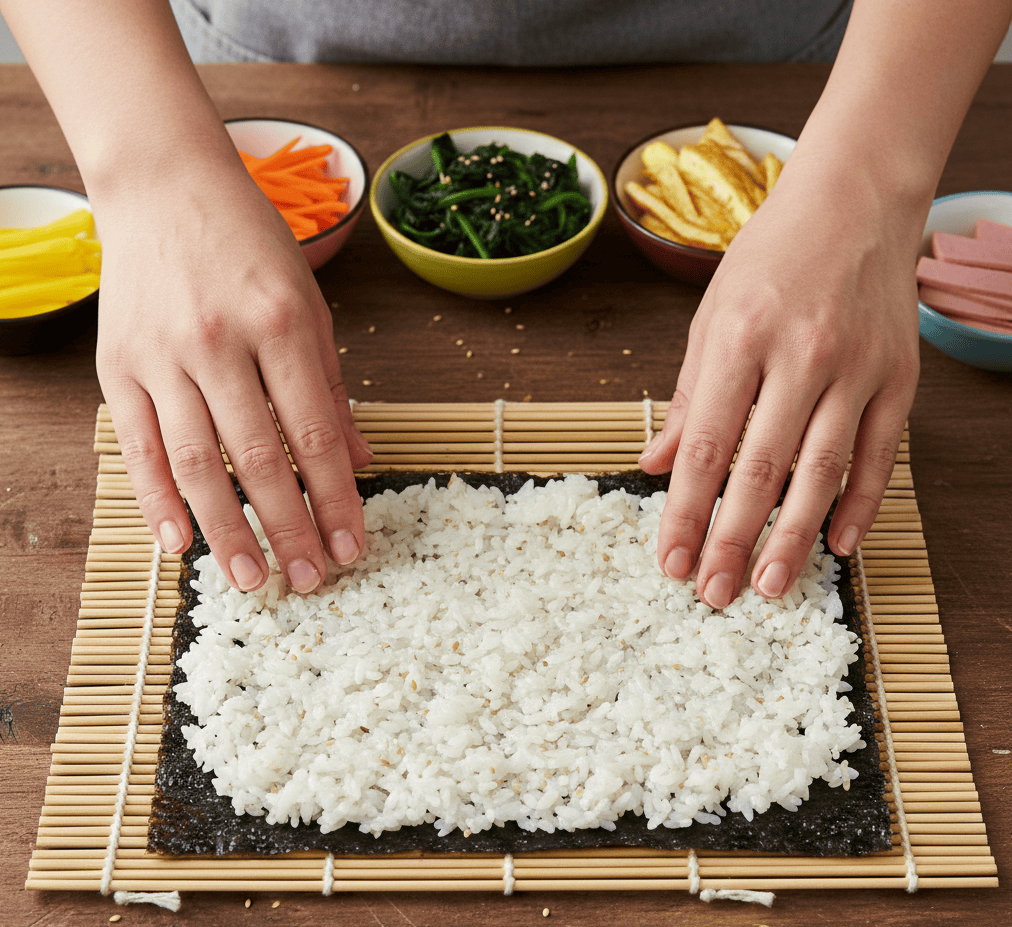
Place the seaweed sheet on the bamboo mat with the rough side facing up and the smooth side facing down. This is because the rice adheres much better to the rough surface, keeping your roll secure.
[Step 3] Spreading the Rice
Take a handful of rice—roughly the size of a baseball—and spread it thinly and evenly over about 80% of the seaweed. Tip: Leave about 2–3 cm of empty space at the top of the seaweed sheet. This “margin” acts as a seal to ensure the roll stays together at the end.
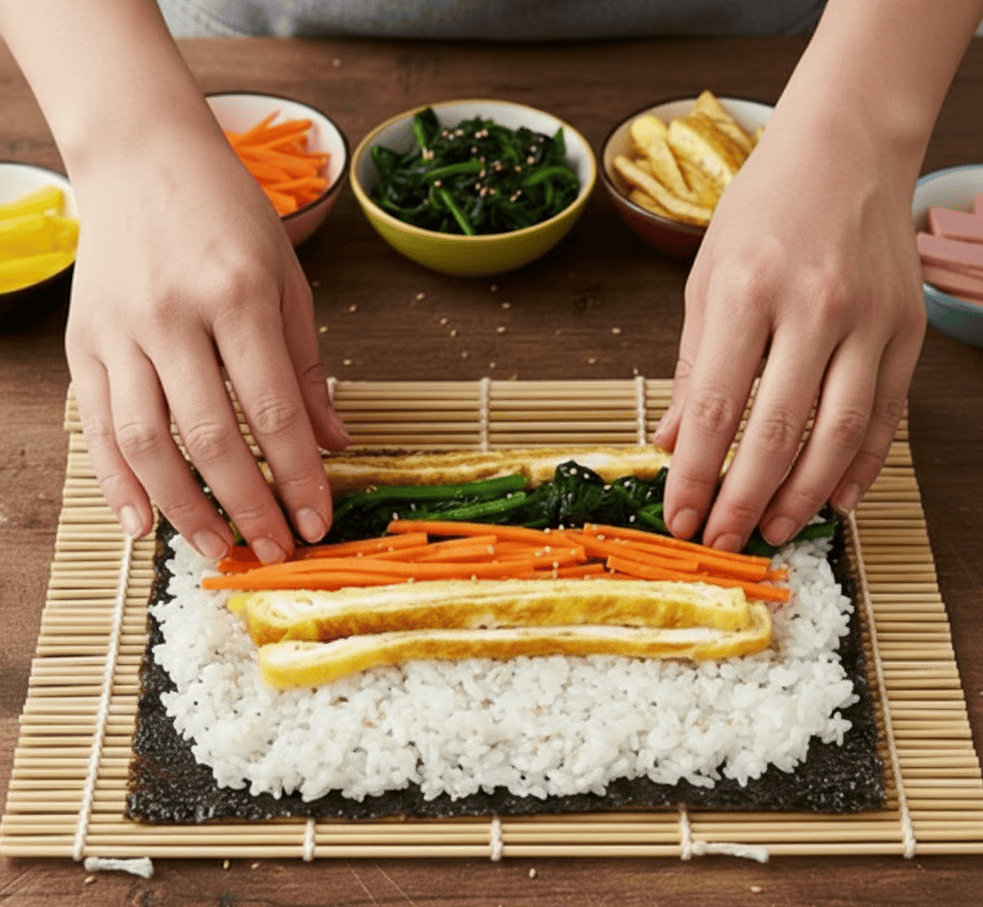
[Step 4] Layering the Fillings
Stack your prepared ingredients neatly, slightly below the center of the rice.
Tip: Place firm ingredients like pickled radish and ham at the bottom first to create a sturdy base. Then, layer loose ingredients like carrots and spinach on top. This makes the stacking and rolling process much easier!
[Step 5] The Rolling Technique
Using the bamboo mat, roll the seaweed forward, gently tucking the ingredients inside the rice. It is crucial to apply firm, even pressure with your fingers as you roll to ensure the Kimbap is tightly packed.
Tip: Lightly dab a small amount of water or a few grains of mashed rice onto the empty edge of the seaweed. This acts as a natural “glue” to keep the roll from unraveling.
[Step 6] The Finishing Touch
Lightly brush the surface of the completed roll with a coat of sesame oil. This not only adds a rich, nutty aroma but also prevents the seaweed from drying out and helps the knife slide through much more easily when slicing.
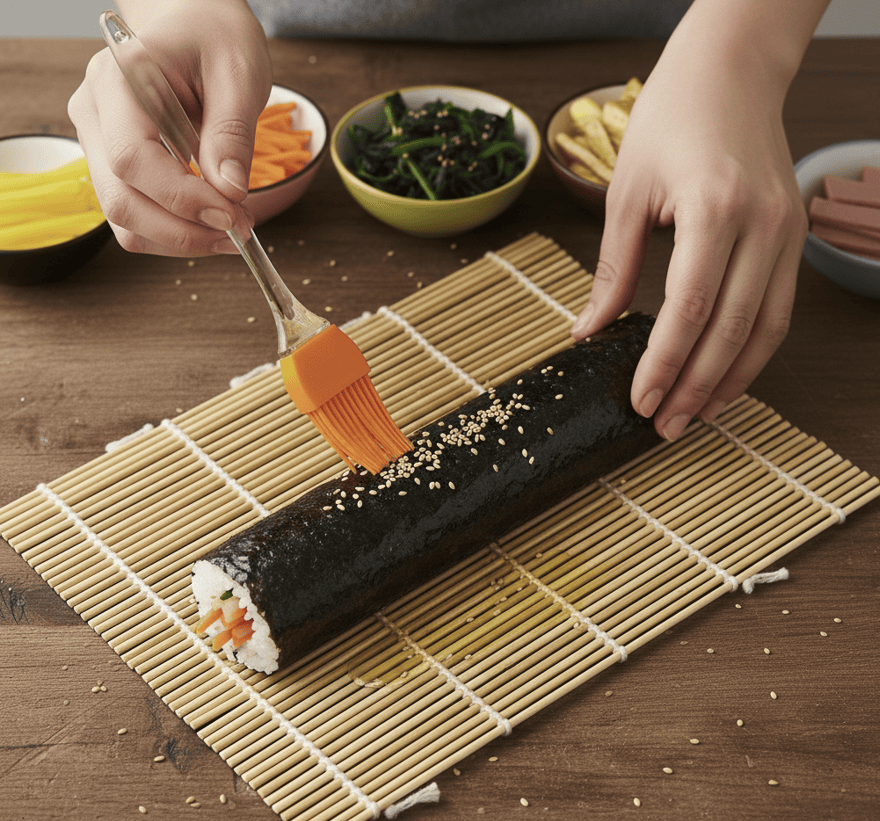
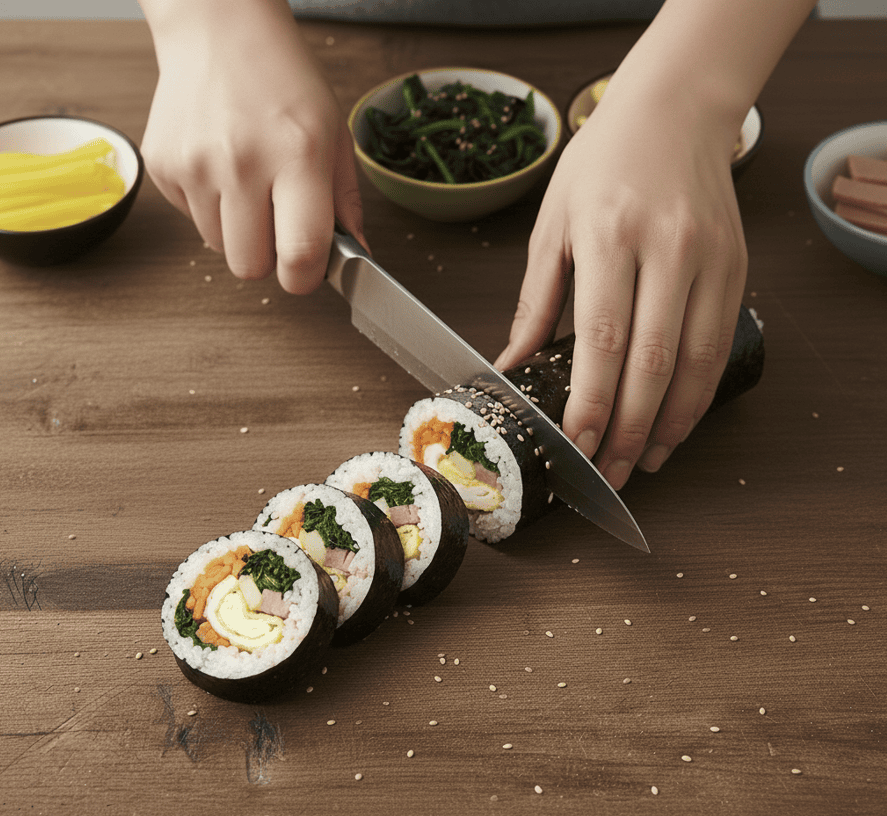
[Step 7] Slicing the Roll
Using a sharp knife lightly coated with sesame oil, slice the roll into even pieces (about 1.5 cm thick). Instead of pressing down hard, use a gentle sawing motion to keep the roll’s round shape perfectly intact.
💡 “Guaranteed Success” Tips for Readers “Don’t overstuff!”
If you get too greedy and add too many ingredients, the seaweed might burst. Try practicing with a moderate amount first!
“How did your very first Kimbap turn out? Share your stories and flavors in the comments below!”
4. The Origin and History of Kimbap: The Evolution of Korea’s Ultimate Convenience Food
1) Ancient Roots: Korea’s ‘Ssam’ Culture
Koreans have a long-standing tradition of Ssam, the practice of wrapping rice and other ingredients in leafy vegetables or seaweed.
- Bokssam: Historically, during Jeongwol Daeboreum (the first full moon of the lunar year), people ate rice wrapped in dried seaweed or aster leaves (chwinamul) to pray for a bountiful harvest. This custom, known as Bokssam, is considered the earliest ancestral form of the modern Kimbap.
2) Historical Records of Gim (Seaweed)
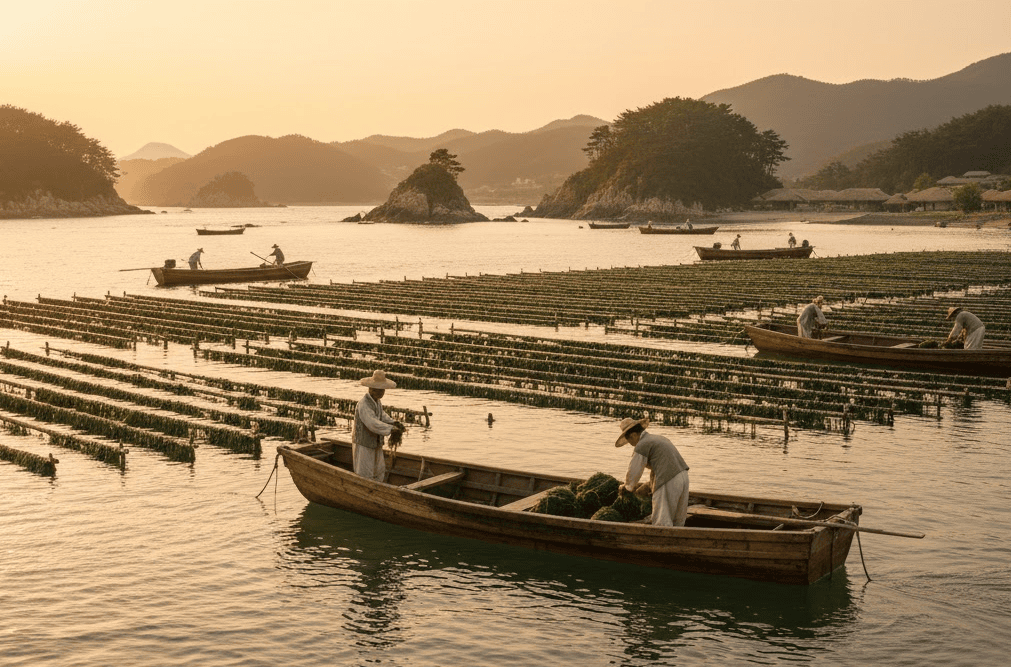
The history of consuming gim (seaweed) in Korea runs incredibly deep.
- Samguk Yusa (Memorabilia of the Three Kingdoms): Records show that gim has been part of the Korean diet since the Silla Dynasty (57 BC – 935 AD).
- Boncho Gangmok & Gyeongsang-do Jiriji: According to Joseon Dynasty records, gim was actively farmed and consumed along the southern coast, particularly in regions like Gwangyang and Wando. These documents provide detailed accounts of early mariculture in Korea.
3) The Birth of Modern Kimbap
The Kimbap we know today took its definitive shape throughout the 20th century.
- Modern Transitions: While some suggest that Kimbap was influenced by Japanese Norimaki during the colonial period, Korea already had a long-standing tradition of wrapping rice in seaweed. Over time, Koreans adapted and evolved this practice to suit local tastes, creating a unique culinary identity.
- Key Differences: Unlike the Japanese style, which uses vinegar for seasoning, Korean Kimbap is seasoned with sesame oil for a rich, nutty flavor. It is also distinguished by its diverse and hearty fillings—such as sautéed vegetables, ham, and eggs—giving it a much more “abundant and comforting” feel.
4. Becoming a National Soul Food
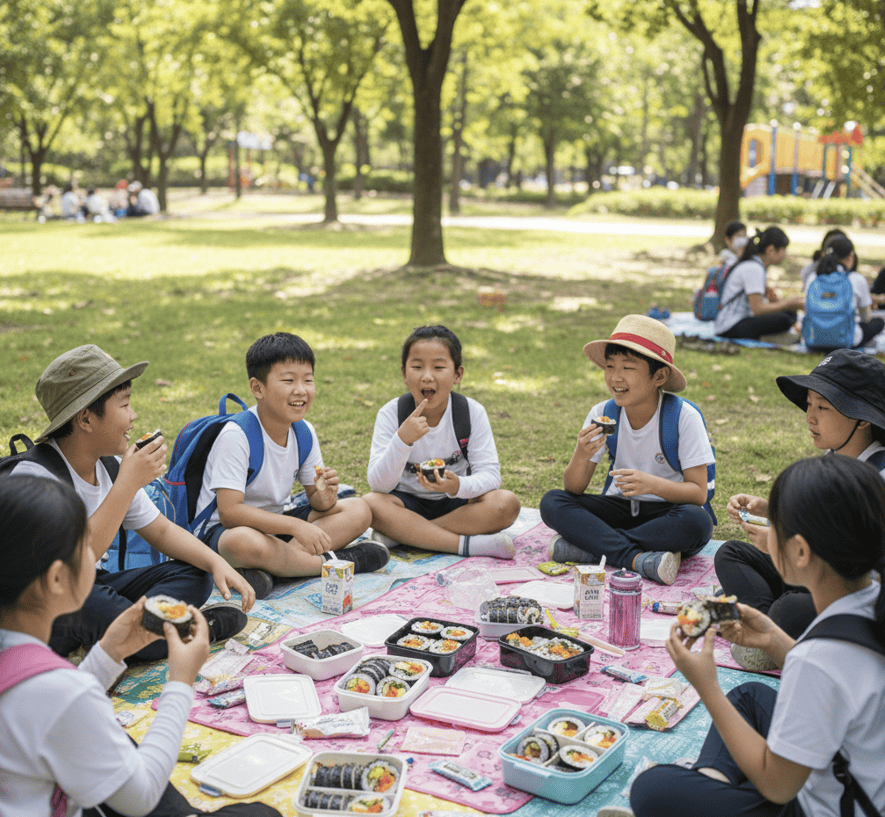
- The 1960s–1980s: A Symbol of Excitement. During this era, Kimbap was a special treat reserved for memorable days like school picnics and sports days. It was a symbol of “fluttering excitement” that every child looked forward to.
- The 1990s and Beyond: Everyday Convenience. With the rise of dedicated “Kimbap specialty restaurants,” it transformed into a popular, everyday meal. Today, it has firmly established itself as a go-to, convenient dish that can be enjoyed anytime, anywhere.
Kimbap #KoreanFood #KFood #KoreanRecipe #HomeCooking #FindYourKorea #HealthyFood #AsianCuisine #StreetFood #KimbapMaking #CookingClass #KoreanCulture #FoodHistory #KoreanHeritage