
The Real Korean Soul Food: Exploring the Hidden Treasures of Local Markets
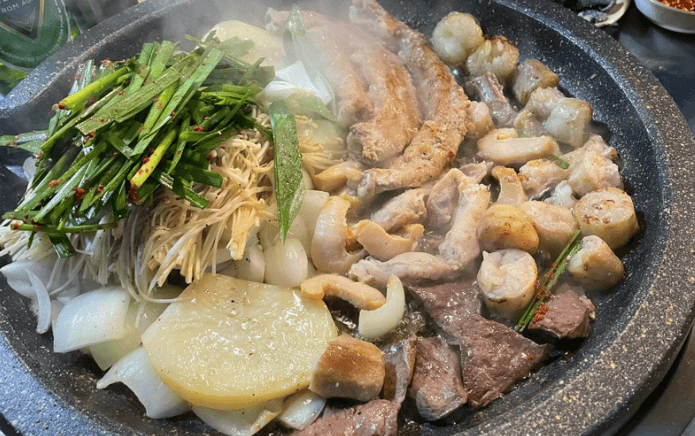
Gopchang and Daechang Gui
Many travelers are drawn to Korea by the glittering skylines of Seoul or the elegant curves of Gyeongbokgung Palace. The vibrant colors of Bibimbap, the sweet aroma of Bulgogi, and the sizzling K-BBQ on the grill are undoubtedly perfect introductions to Korean cuisine. However, if you truly want to experience the authentic lifestyle of Koreans and the “real” Korea, you must step away from the flashy main streets for a moment. Head toward the narrow, weathered alleys where the pungent, savory smell of oil and the spicy scent of seasoning fill the air.
In those hidden corners, “hidden treasures” await that might seem baffling or even bizarre to first-timers: cattle and pork small intestines (Gopchang), spicy-red chicken feet (Dakbal), and chewy pork rinds (Dwaeji-kkeopdegi). While these “specialty cuts” might require a leap of faith for some, for Koreans, they are more than just food—they are true “Soul Food” that offers comfort at the end of a long, exhausting day.
Don’t worry if you lack the courage to try them because of their unusual appearance. In fact, many Koreans can’t eat these dishes either, so it’s perfectly natural for a foreigner to feel hesitant.
Now, are you ready to open the worn-out door of an old local tavern (Nopo) with me? Let me introduce you to the fiercest yet warmest “real tastes” of Korea, reserved only for the most adventurous foodies.
1. Korea’s Unique “Specialty Cuts” Culture: Why Do We Eat Them?
When you first encounter sizzling Gopchang (small intestines) or fiery-red Dakbal (chicken feet) in a narrow Korean market alley, a natural question might pop into your head: “Why on earth do people eat these specific parts?” What’s funny is that, to be honest, I still ask myself that same question sometimes—truth be told, I’m not even a big fan of them myself! (haha ^^) However, the real answer doesn’t lie in the taste alone; it’s found in Korea’s dynamic history and our respectful, “waste-not” attitude toward every single ingredient.
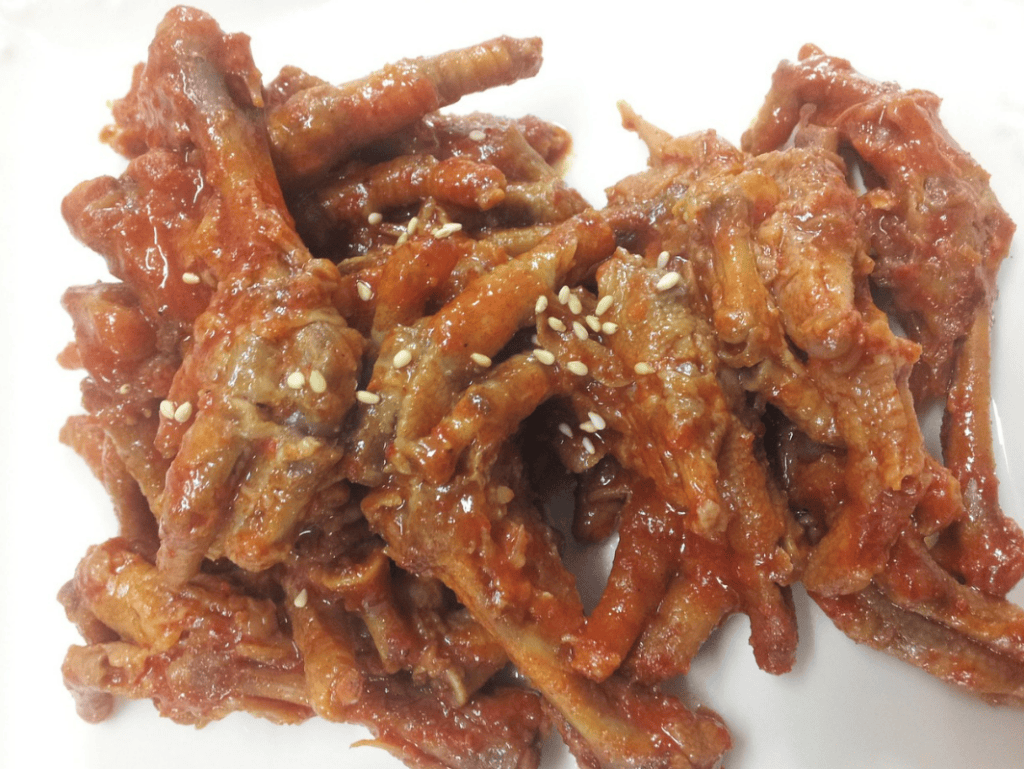
Dakbal(Chicken Feet)
There is a poignant story behind these dishes. Following the Korean War in the 1950s, the nation faced extreme poverty and severe food shortages. While cattle and pigs were precious sources of protein, the expensive cuts of meat were a luxury that ordinary people could only dream of.
In the end, what remained for the common people were the “leftover” parts that no one else wanted—the intestines, the feet, and the rinds. These humble specialty cuts were all that was left to fill the empty stomachs of those struggling to survive during Korea’s most difficult times.
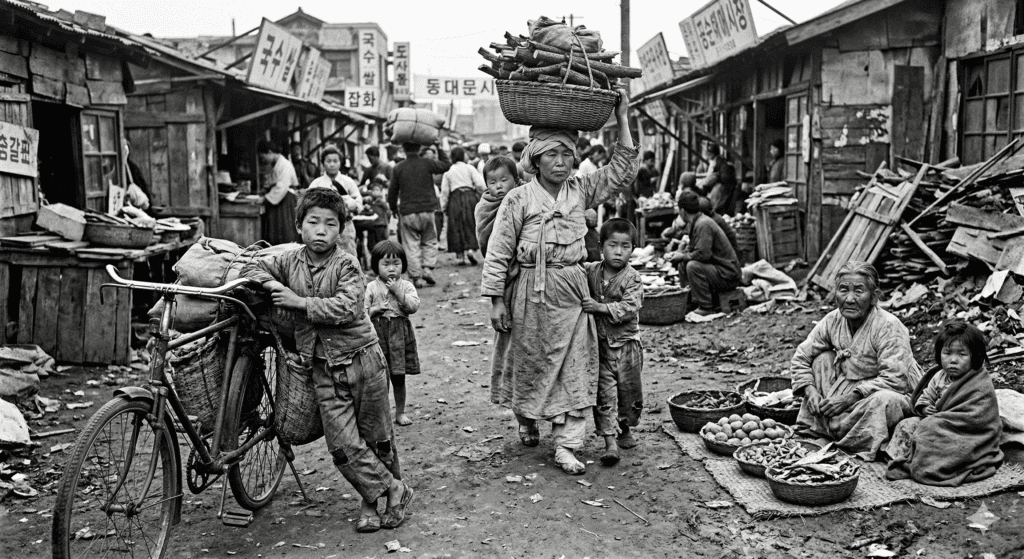
1950s in Korea
However, instead of letting these parts go to waste, Koreans used their characteristic diligence to transform them. They meticulously cleaned the ingredients to remove any unpleasant odors and infused them with bold seasonings like garlic, ginger, and Gochujang (red chili paste), reinventing them into unique delicacies found nowhere else in the world.
Today, these once-neglected parts are celebrated as “specialty cuts” of pork and chicken, served in bustling restaurants as the ultimate Anju (food paired with alcohol) for countless Koreans. It was the devoted hearts of mothers—who tried to feed their families every possible scrap during those difficult times—that laid the hidden foundation for the world-renowned K-BBQ we celebrate today.
2. Korean Specialty Cuts: A Deep Dive and Taste Challenge
Now that you understand the historical background, it’s time to dive deep into the world of culinary delights unfolding right on the sizzling grill. Let me introduce you to the “Big Three” you’ll encounter in the heart of Korea’s vibrant market alleys.
1) Gopchang & Daechang: The Epitome of Nutty and Rich Flavors
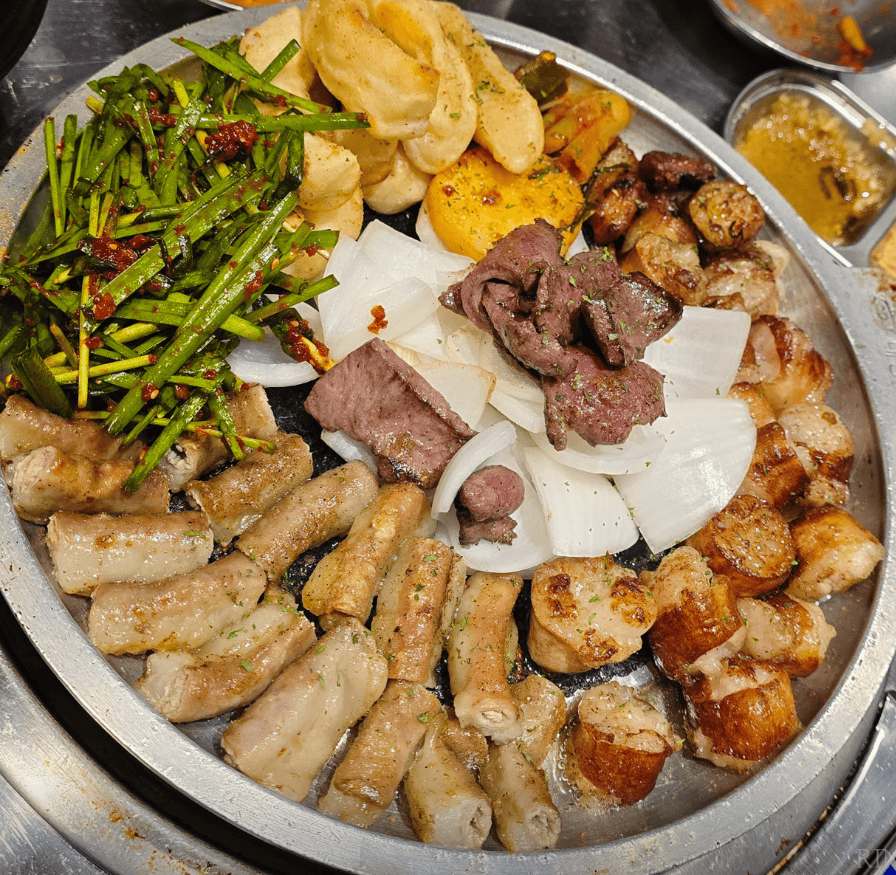
As you stroll through the night streets of Korea, you’ll inevitably find yourself stopping in your tracks, drawn by a tantalizing sizzle and a rich, nutty aroma wafting from a nearby eatery. The stars of this sensory experience are ‘Gopchang’ (small intestines) and ‘Daechang’ (large intestines), grilled to perfection right at your table.
While their raw appearance might be a bit startling at first, your appetite will quickly surge as you watch them turn a beautiful golden brown. The true charm of ‘Gopchang’ lies in the ‘Gop’—the creamy, savory filling that offers a deep, luscious taste. Meanwhile, ‘Daechang’ is prized for its melt-in-your-mouth fat that delivers an explosion of rich flavor with every bite. The chewy texture followed by a lingering, nutty finish immediately proves why Koreans are so passionate about this dish.
Expert Tip: Don’t you dare leave just because the grill is empty! Using the leftover flavorful oil, a serving of ‘Fried Rice’ (Bokkumbap) mixed with spicy seasoning, kimchi, and seaweed flakes is the true grand finale of any Korean culinary journey.

2) Spicy Dakbal: Experience Korea’s Addictive and Fiery Soul Food
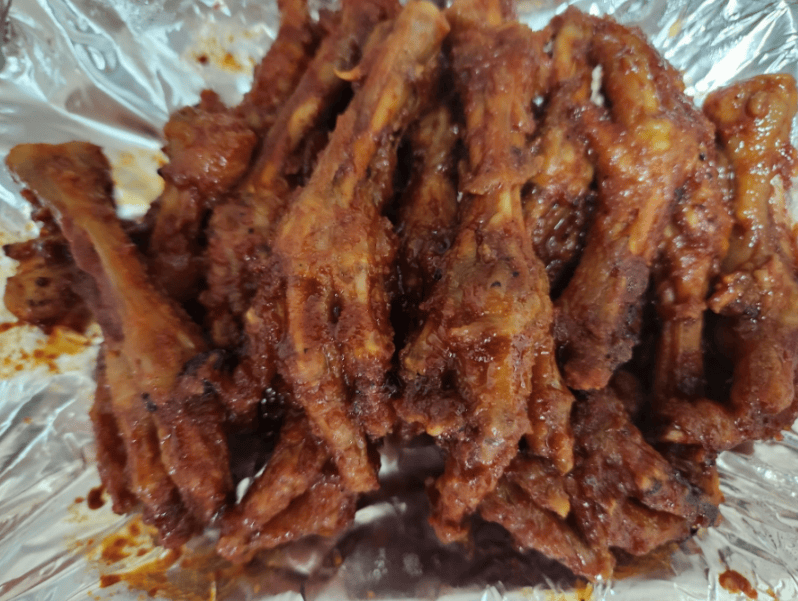
If you truly want to experience Korea’s “authentic” spicy kick and unique texture, ‘Dakbal’ (Chicken Feet) is an unavoidable choice. Don’t let the initial visual make you take a step back—the addictive flavor hidden within is beyond anything you can imagine.
The true essence of Dakbal lies in the fun of nibbling through the bones and the fiery seasoning that leaves your mouth tingling with heat. It’s a chewy, collagen-rich delight. To enjoy it like a local, you must follow the perfect course: take a bite of the spicy chicken feet, then soothe your palate with a spoonful of fluffy ‘Gyeran-jjim’ (Steamed Egg) and a savory ‘Jumeok-bap’ (Hand-rolled Rice Balls). This combination is the ultimate soul-soothing remedy for many Koreans.
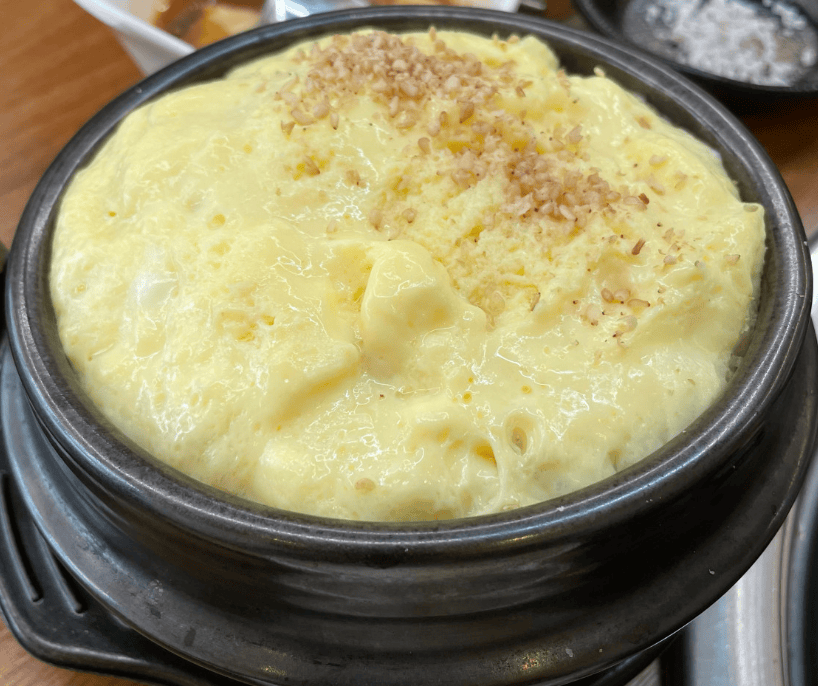
Steamed Egg
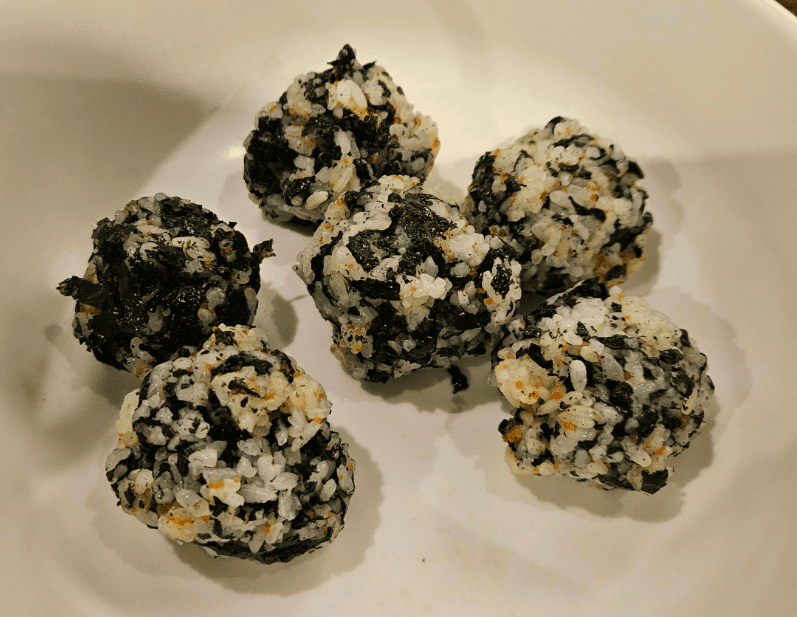
Rice Ball
Expert Tip: If it’s your first time, I highly recommend starting with ‘Mubbyeo Dakbal’ (Boneless Chicken Feet). This way, you can fully enjoy the signature chewy texture without having to worry about navigating the bones. It’s a much easier and more convenient way to experience this unique delicacy!
3) Dwaeji-kkeopdegi: Discovering the Addictive Texture of Korean Pork Rinds

After finishing the main meat course, watching ‘Dwaeji-kkeopdegi’ (Grilled Pork Rind) sizzle and pop on the grill will make you truly admire the culinary ingenuity of Koreans. Pork rinds are the quintessential example of the beloved Korean food texture: ‘Geot-ba-sok-chok’—perfectly crispy on the outside while remaining incredibly chewy and tender on the inside.
Specifically, the unique way of dipping the grilled pork rinds into a generous amount of nutty ‘Injeolmi-garu’ (Roasted Soybean Powder) offers a refreshing and unforgettable culinary surprise for travelers.
Beyond the taste, it’s a beloved menu item for people of all ages because it’s known to be packed with collagen, which many believe is excellent for skin health. This combination of “beauty food” and a savory snack makes it a win-win for any adventurous foodie!
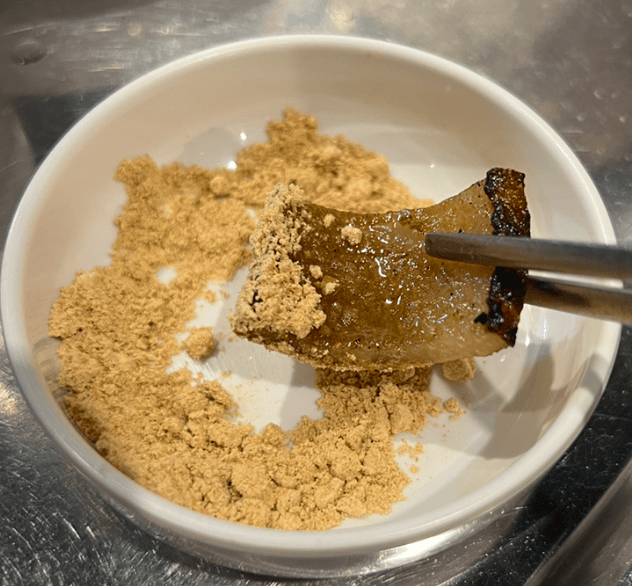
Roasted Soybean Powder
Expert Tip: The longer you grill the pork rinds, the crispier they become—just like a crunchy snack! For the best experience, grill them until they are golden brown and well-done to enjoy that perfect cracker-like crunch.
3. The Korean Drinking Table: Understanding the Culture of ‘Anju’
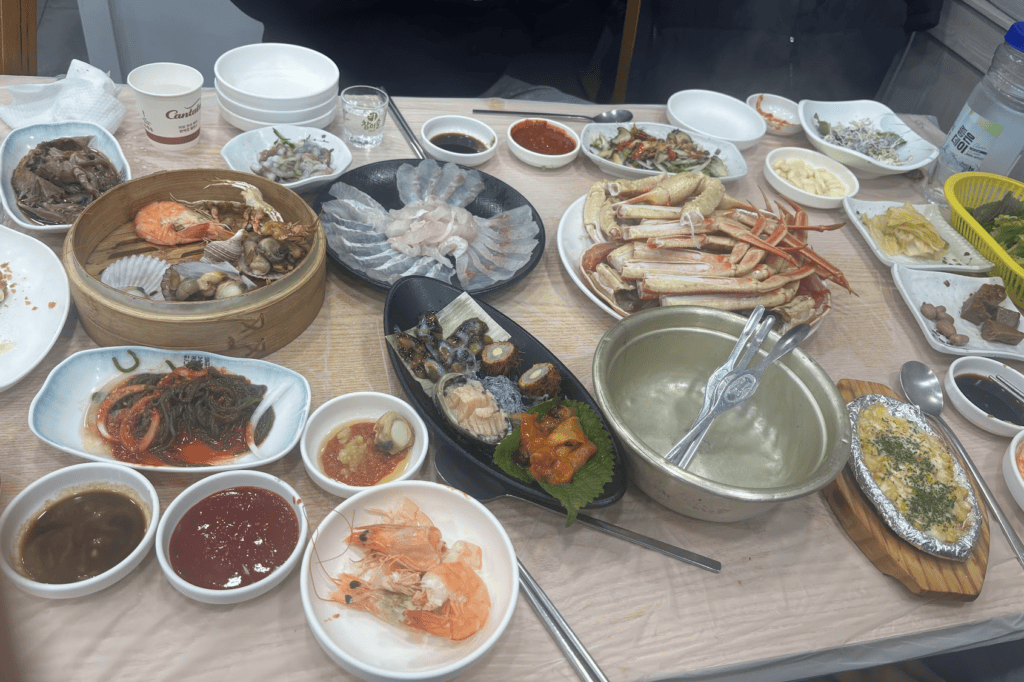
A Full Feast of Steamed Snow Crab: The Ultimate ‘Anju’ Table
When enjoying a drink in Korea, there is one word you simply cannot miss: ‘Anju.’ While it might seem similar to Western concepts like ‘side dishes’ or ‘snacks,’ Anju is a distinct category of its own. It refers to dishes specifically and elaborately prepared to be paired with alcohol.
The world of Anju is too vast to list in its entirety. It includes the K-BBQ, Jokbal (pig’s trotters), and Bossam (boiled pork) I’ve previously shared on this blog, as well as raw fish, seafood, savory pancakes (Jeon), and the Gopchang, Dakbal, and Pork Rinds we explored today. The variety is truly endless.
For Koreans, Anju is far more than just a tool to help you get tipsy. It is the protagonist of the table—it completes the flavor of the alcohol, protects your stomach, and keeps the conversation flowing.
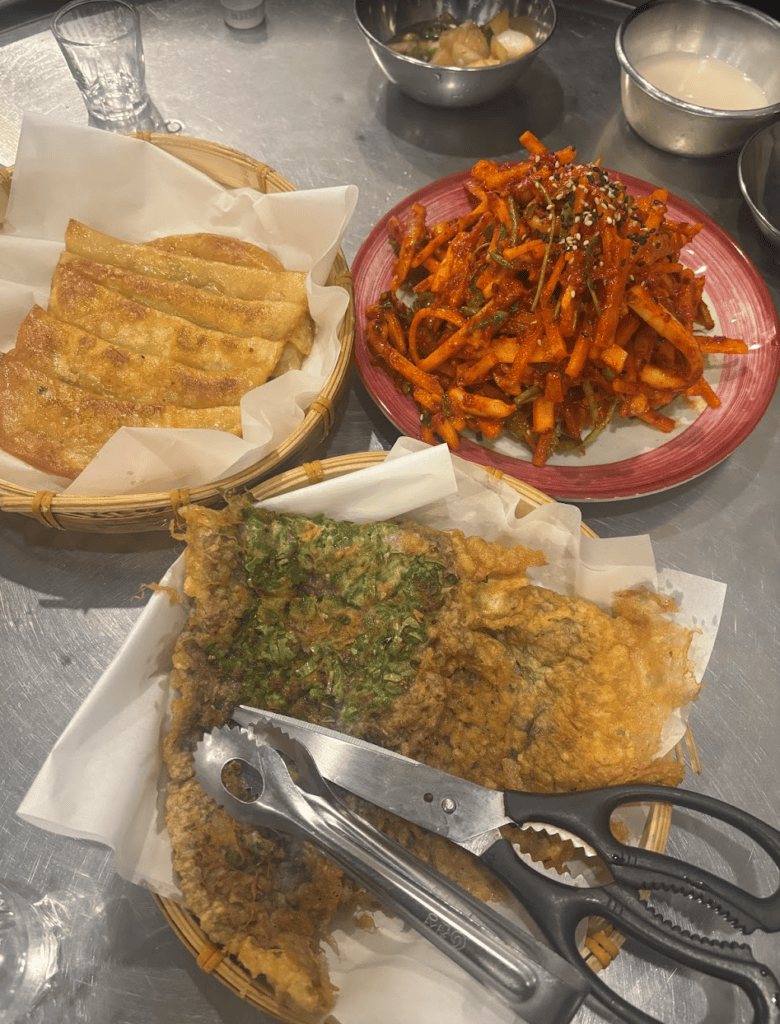
Yukjeon, Flat Mandu, and Spicy Squid Salad
In fact, one of the most common everyday scenes you’ll find in Korea is colleagues gathering after work, tilting a glass of chilled Soju together. As the Gopchang sizzles on the grill as their chosen Anju, they talk away the stresses of the day. The more delicious the Anju, the smoother the drinks go down, and the deeper and more heartfelt our conversations become.
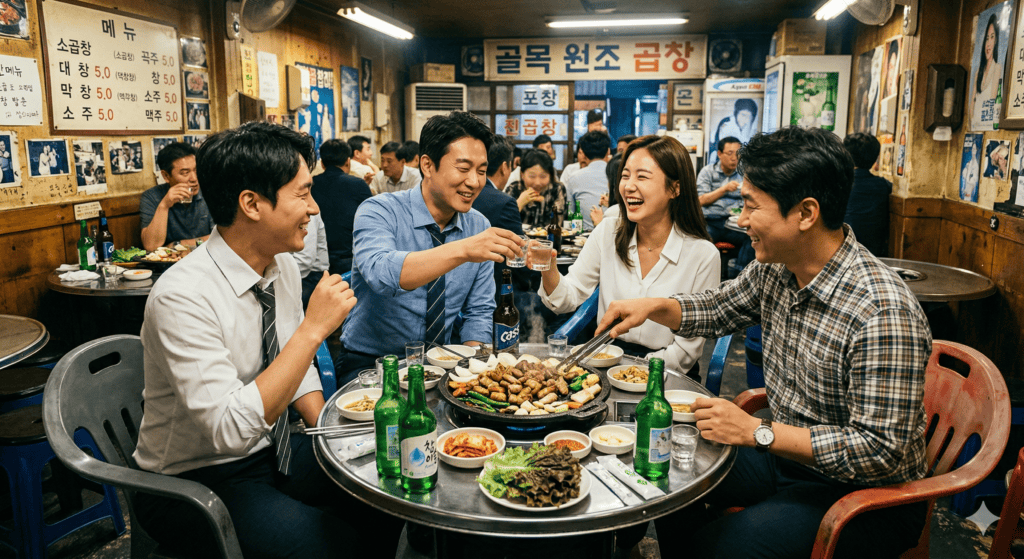
The true pinnacle of this Anju culture can be found in the sight of people gathered around a table in a weathered market alley or a Pojangmacha (street stall), sharing dishes together. This is the exact moment when Korea’s unique sentiment of ‘Jeong’—a deep, warm bond of affection—truly comes to life.
Rather than eating alone, enjoying these specialty cuts in a lively, bustling atmosphere with others will offer you the most authentic experience of Korean social joy. We invite you to experience for yourself the warm human connection tucked into every single bite of Anju.
4. Tips for Beginners: Where and How to Start Your Journey?
Are you eager to try Korea’s specialty cuts but hesitant about where to go? Don’t worry! No matter where you are in Korea, you’ll find places serving pork and chicken specialty parts incredibly easily—they are practically everywhere.
If I were to recommend specific spots, Gwangjang Market in Seoul or the Gopchang Alley in Jongno 3-ga are the top choices for first-time travelers. These areas are filled with bustling crowds and vibrant energy, making it easy for even a first-timer to naturally blend into the lively atmosphere.
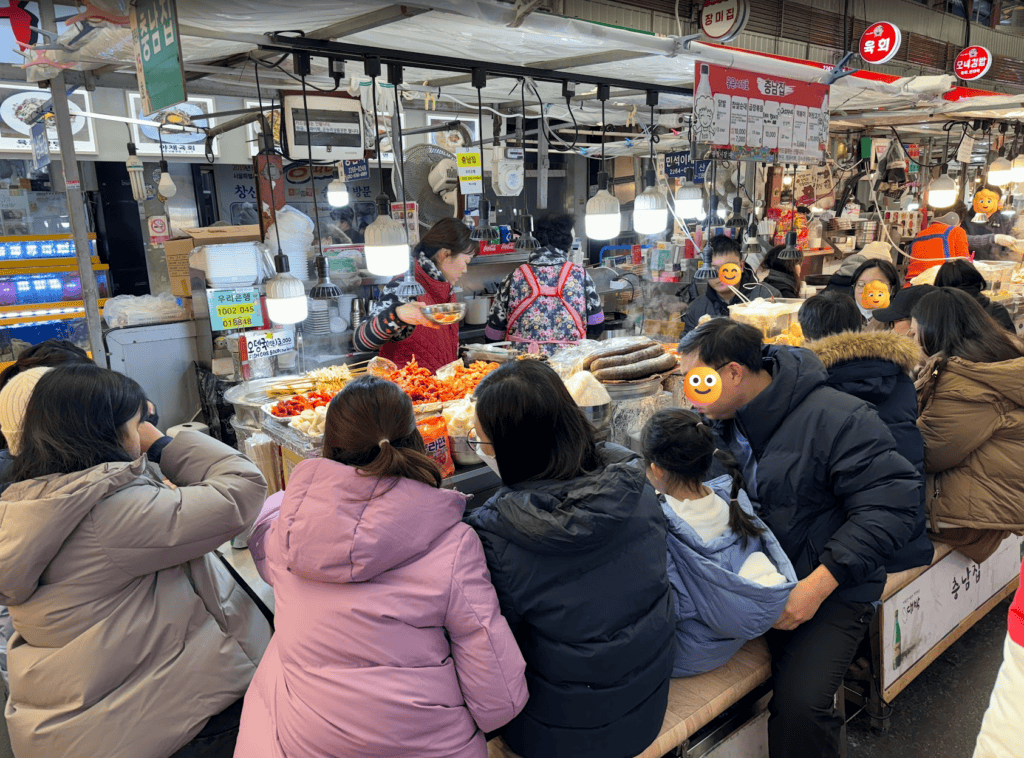
Gwangjang Market in Seoul
When you step into a restaurant, try calling out to the staff with a friendly “Imonim!” (meaning “Auntie”). Most owners of these local gems are warm, mother-like figures who will go out of their way to help, even if your ordering skills are a bit rusty.
If you’re worried about the heat, don’t hesitate to ask, “Deol-maep-ge hae-ju-se-yo” (Less spicy, please). It’s a perfectly common request, and it’s the best way to ensure you enjoy the flavor without being overwhelmed by the spice!
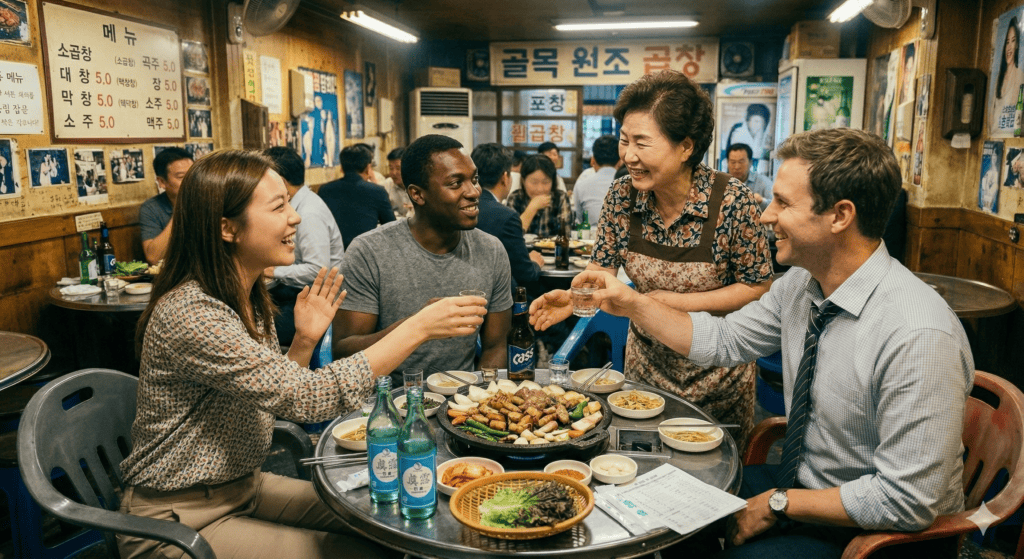
The most important tip is this: Don’t let the initial visual overwhelm you. If you can gather the courage to take just one bite, you will instantly understand why so many Koreans are obsessed with these chewy, nutty, and savory flavors. Remember, a bold culinary challenge often becomes the most delicious and unforgettable memory of your entire journey.
5. Final Thoughts: Welcome to the World of Authentic Korean Foodies
Now, you understand not just the glittering exterior of Korea, but also the authentic flavors and sentiments hidden within the smoke of old alleyway taverns. If you feel ready to embrace these adventurous dishes—Gopchang, Dakbal, and Pork Rinds—then you have already moved beyond being a mere tourist. You are now a “True Traveler” who truly loves and understands the heart of Korea.
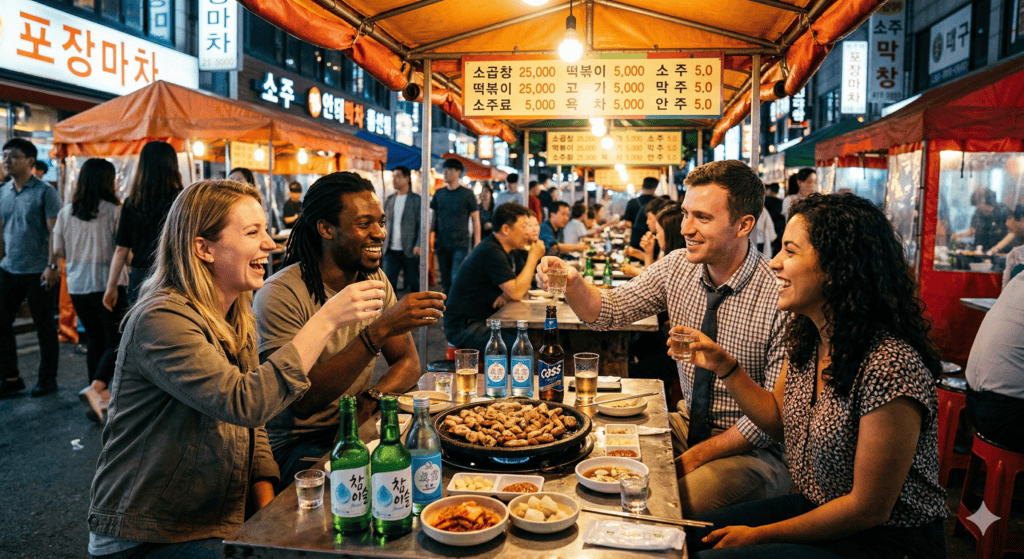
These dishes are far more than just a meal; they are precious cultural assets where the lives and history of Koreans are deeply embedded. Be sure to add these hidden gems of the alleyways to your next South Korea itinerary. Your journey will be filled with far richer and more delicious memories than ever before.
What menu item are you most excited to challenge yourself with? Or, if you’ve already tried them, what was your experience like? Please share your exciting culinary adventures in the comments below!
KoreanFood #KoreanCuisine #AuthenticKorea #SeoulFoodGuide #KoreanSoulFood #KFood #Gopchang #Dakbal #KoreanBBQ #AnjuCulture #GwangjangMarket #Pojangmacha #SpicyKoreanFood #BraveEaters #AdventurousFoodie #FearlessDining #EatLikeALocal #HiddenGemsKorea #StreetFoodAdventure #SeoulEats #KoreaTrip #FoodTravel #TravelKorea #FindYourKorea #KCulture