
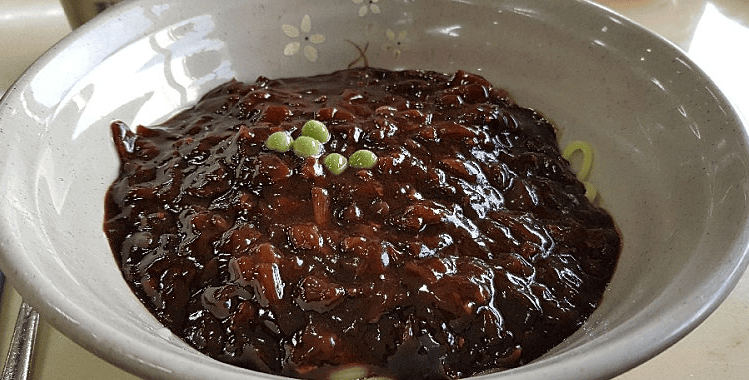
Introduction: The Epitome of Korea’s Favorite “Dining Out” Experience
Traveling through Korea, it is remarkably easy to spot a red sign for a “Jung-guk-jip” (Chinese restaurant) on almost every street corner. However, what makes these places truly fascinating is that Korean-Chinese cuisine has undergone a unique evolution, branching away from mainland Chinese traditions to develop a flavor profile all its own.
While the roots of these dishes can be traced back to China, they have been meticulously adapted over a century to suit the specific palate of Koreans. For locals, this cuisine is far more than just “foreign food”; it has established itself as the ultimate epitome of “dining out,” serving as a constant companion through life’s most significant milestones and cherished memories.
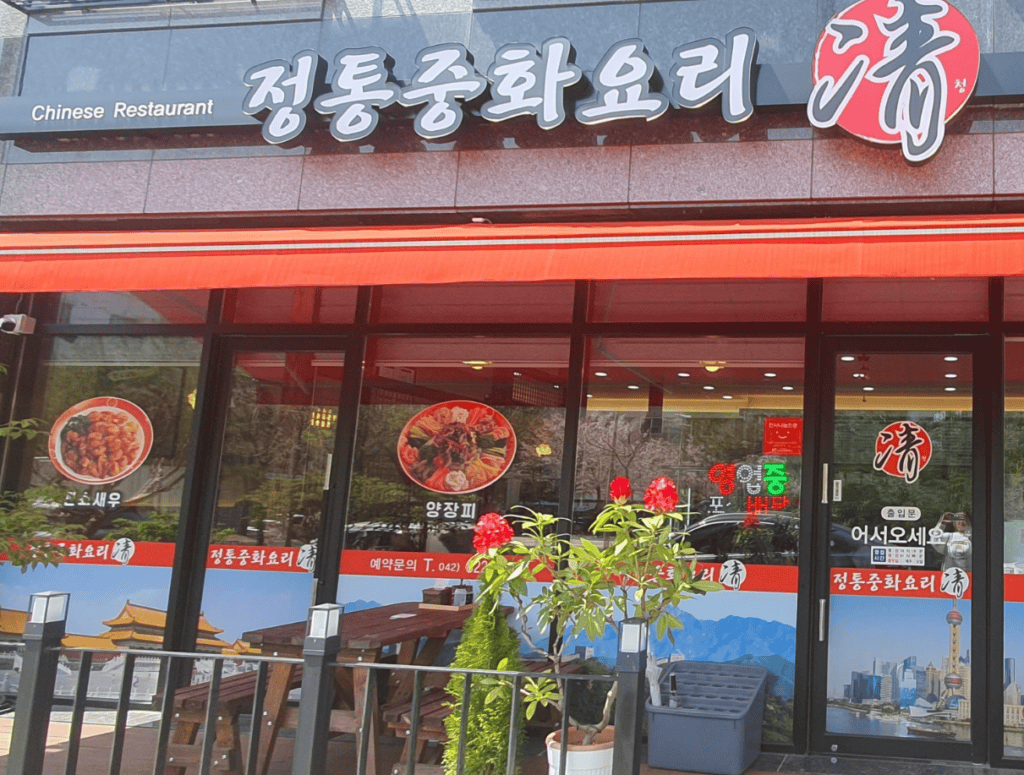
For those who grew up in Korea (though things might be a bit different for the children of 2026! ^^), the taste of a sweet bowl of Jajangmyeon and crispy Tangsuyuk is an unforgettable memory. Whether it was celebrating a perfect score on a spelling test, being the star of a birthday party, or marking the milestone of an elementary, middle, or high school graduation, these dishes were the ultimate reward from our parents. To Koreans, Chinese cuisine has always been the definitive food for celebrating “special days.”
Because of its immense popularity, this beloved flavor was even developed into a convenient instant noodle version called “Chapagetti,” which remains a massive hit to this day. You can enjoy the rich taste of black bean sauce right at home with just a pot of boiling water! (For more details, please check out my blog post on [Ramyun] K-Ramyun Guide: More Than Just Instant Noodles).
Furthermore, Korean-Chinese cuisine is the true pioneer of Korea’s world-renowned “Pali-pali” (hurry-hurry) delivery culture. Long before today’s modern delivery apps made almost every restaurant accessible from home, Chinese food was the undisputed king of delivery.

Even now, a bowl of Jajangmyeon remains the ultimate symbol of “Moving Day” in Korea. Sitting on the dusty living room floor of a new home, spreading out old newspapers as a makeshift table, and snapping apart wooden chopsticks to mix that black bean sauce—this ritual is the true signal to every Korean that the move is officially complete. This tradition is so deeply rooted that even today, when mealtime rolls around on a moving day, Jajangmyeon is almost always the guest of honor at the table.
Now, we are ready to unveil the fascinating 100-year history hidden within that thick black sauce and fiery red broth, exploring why Koreans are so passionately in love with this cuisine. More than just a meal to satisfy hunger, we invite you into the world of K-Chinese Cuisine—a culinary realm infused with the unique Korean sentiment of “Jeong” (affection) and a century of cherished memories.
1. History: A 100-Year Journey Beginning at Incheon Port
Tracing back the roots of Korean-Chinese cuisine leads us to Incheon’s Jemulpo Port in 1883, a time when the waves of opening Korea’s ports were at their peak. As the Qing Dynasty concession was established, a significant number of Chinese immigrants crossed the sea to Korea, bringing with them the authentic flavors and culinary traditions of their hometown in Shandong Province.
1) The Evolution of ‘Zhajiangmian’: Comfort Food for Dockworkers
For the Chinese laborers—known as ‘Coolies’—who carried heavy loads at Incheon Port, finding a quick and affordable meal was a dire necessity. They began preparing a familiar dish from their homeland called Zhajiangmyeon (炸醬麵), which consisted of noodles mixed with a salty Chinese fermented soybean paste known as ‘Mianjang.’ This humble dish served as the original prototype for the Jajangmyeon that is beloved worldwide today.
2) Evolution for the Korean Palate: The Birth of ‘Chunjang’
However, the original Zhajiangmian was somewhat too salty and thick for the local Korean palate. The turning point came in the mid-1950s when Chinese merchants developed a sweeter, smoother Korean-style black bean paste by adding sugar and caramel.
Central to this transformation was “Saja-pyo Chunjang” (Lion Brand Chunjang). First produced in 1948, it was Korea’s very first commercial Chunjang and remains a legendary monopoly, currently occupying about 95% of the market share in Korean-Chinese restaurants nationwide. With the creation of this glossy, dark sauce, Jajangmyeon was reborn as the ultimate soul food for Koreans, marking its explosive rise in popularity.
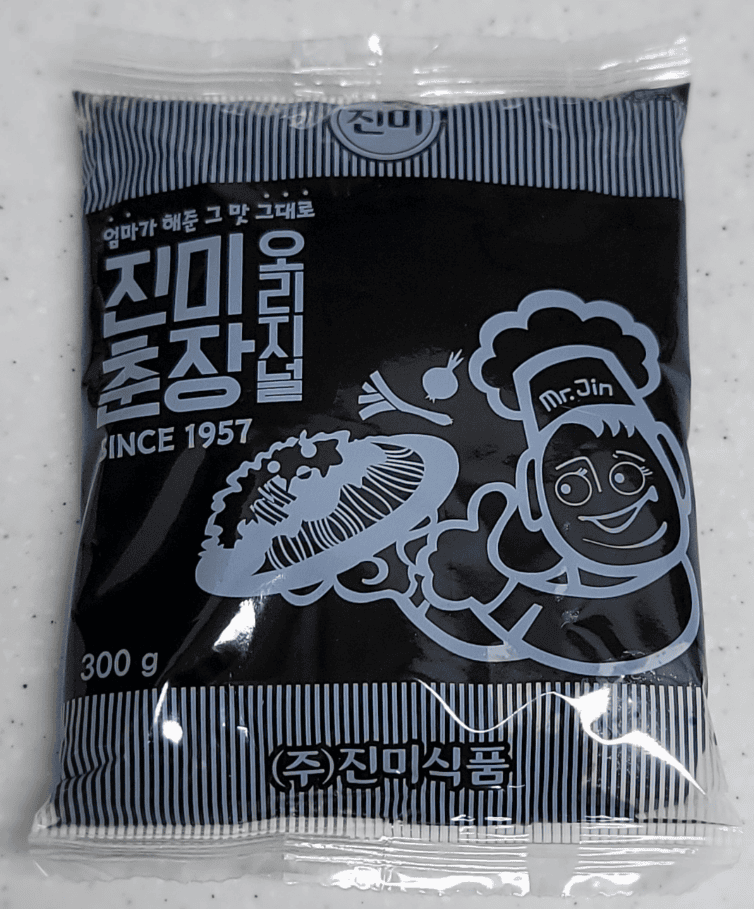
Chunjang
3) Gonghwachun: The Sacred Grounds of K-Chinese Cuisine
Opened in 1908 in Incheon Chinatown, ‘Gonghwachun’ is widely recognized as the very first restaurant to feature Jajangmyeon as an official menu item in Korea. The name translates to “Spring has arrived in the Republic,” reflecting its status at the time as a high-end establishment frequented by high-ranking officials. While it was once an elite dining hall, the original building has now been preserved as the Jajangmyeon Museum, continuing to breathe life into its 100-year legacy for visitors today.
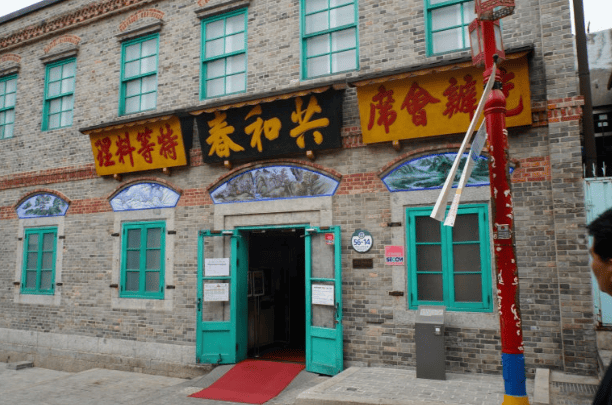
Jajangmyeon Museum
4) From an Outsider’s Dish to a National Favorite
Originating in the narrow alleyways of Incheon Port, this cuisine has pierced through the last 100 years of Korea’s modern history. It was a hearty meal during the hungry years following the war, the fastest delivery food during the era of rapid industrialization, and has now become an iconic representative of K-culture. After all, it’s hard to find a Korean who doesn’t love a good bowl of Jajangmyeon. Even today, in countless Chinese restaurants across the country, the rhythmic clanging of woks and the savory aroma of delicious food continue to fill the air, carrying on this timeless tradition.
2. ‘The Big 3’: An In-Depth Analysis of K-Chinese Essential Menus
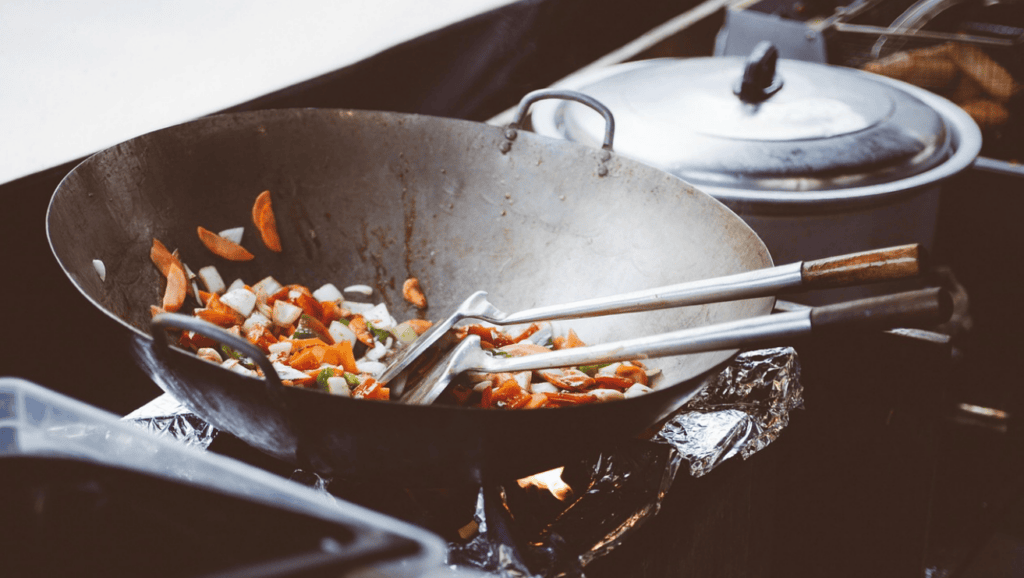
Step inside any Korean-Chinese restaurant, and you will find three undisputed stars dominating the very first page of the menu. We fondly refer to them as the “K-Chinese Trio.” Each possessing its own unique charm, these dishes are the reliable pillars of the Korean lunchtime rush. Let’s dive into a deep-dive analysis of the characteristics that make this trio so indispensable to the Korean palate.
1) Jajangmyeon: The Sweet and Savory Black Magic
Jajangmyeon is the undisputed king of Korean-Chinese cuisine. This iconic dish features a thick, black sauce made by frying Chunjang (black bean paste) in oil and simmering it with diced pork and onions. Its addictive flavor profile—a perfect balance of salty and sweet—is loved by people of all ages.
- The Secret: The true magic lies in the harmony between the nutty richness of the roasted bean paste and the natural sweetness of the onions. When this sauce meets chewy, hand-pulled (or high-quality wheat) noodles, it creates a culinary match made in heaven.
- Variations: One of the joys of Jajangmyeon is the variety. You can choose based on your preference:
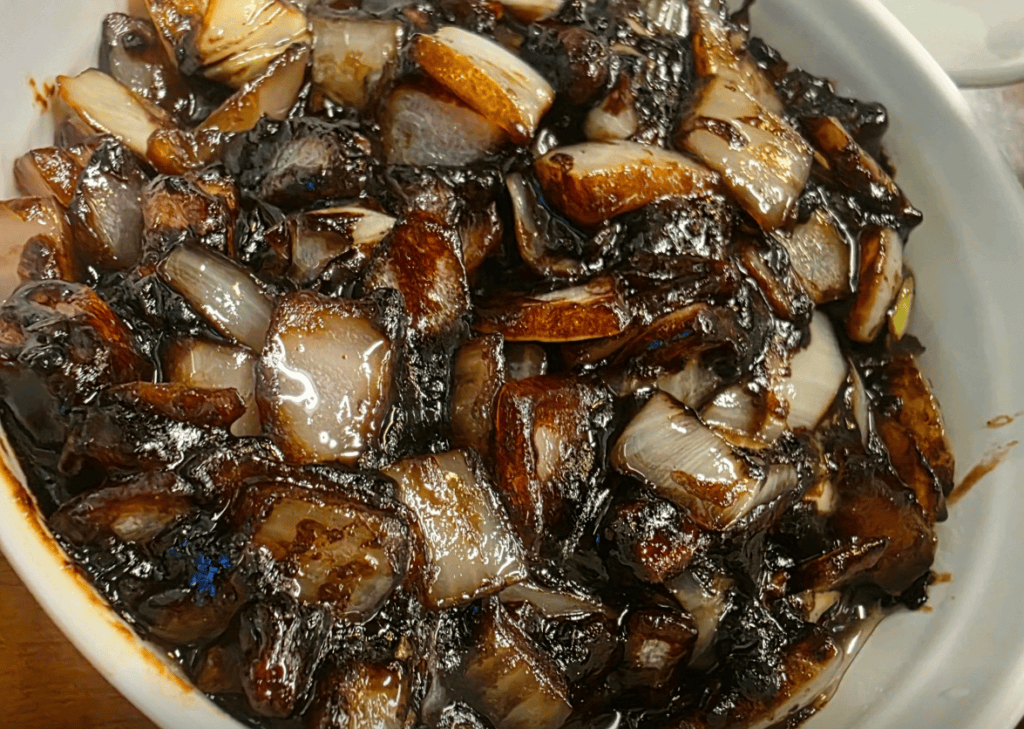
- Gan-jajang: The sauce is stir-fried instantly without water or starch, offering a smoky, intense flavor.
- Uni-jajang: All ingredients are finely minced, making the sauce smooth and easy to mix—perfect for kids or those who prefer a refined texture.
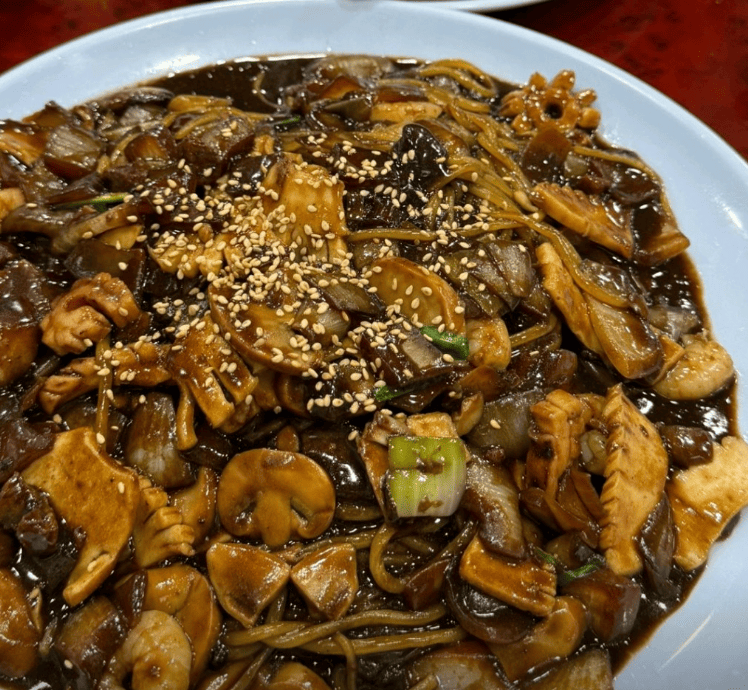
- Jaengban-jajang: The noodles and sauce are stir-fried together in a large wok and served on a massive platter, often packed with fresh seafood.
Gan-Jajang
Jaengban-jajang
2) Jjamppong: The Fiery Harmony of ‘Wok Hei’ and Seafood
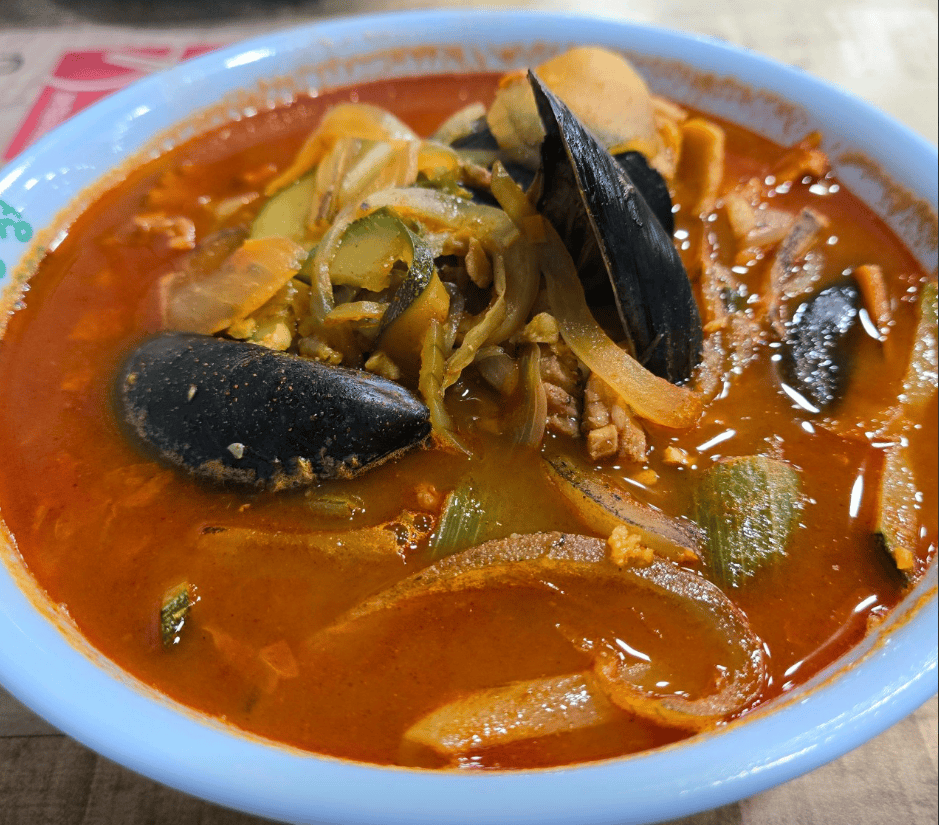
As the eternal rival to Jajangmyeon, Jjamppong is a spicy noodle soup that is famous for its ability to melt away stress. The soul of this dish lies in “Wok Hei” (the breath of the wok), a smoky charred flavor achieved by stir-frying fresh seafood and vegetables over an intense flame. Jjamppong has such a cult following that there are even popular YouTube channels dedicated solely to touring the best Jjamppong spots across the country.
- The Broth: A deep, refreshing broth made with mussels, squid, and pork creates a rich flavor profile. It is a legendary favorite among Koreans as a “hangover cure” due to its revitalizing and spicy kick.
- Variations: Foodies often seek out specific styles to suit their mood:
- Chadol-jjamppong: Topped with thinly sliced beef brisket, offering a heavier, savory meat-based richness.
- Gul-jjamppong: Infused with the briny, delicate flavor of fresh oysters—often served in a “white” (non-spicy) broth for those who prefer a cleaner taste.
Jjambbong
3) Bokkeumbap(Fried Rice): A Unique K-Chinese Ensemble
Korean-style Chinese fried rice boasts a distinctive composition that you won’t find anywhere else in the world. This is not just your ordinary fried rice; it features a perfectly fluffy, stir-fried base served with a side of savory Jajang sauce and a small bowl of spicy Jjamppong soup provided as a complimentary side. This triple-threat combination offers a flavor profile entirely different from the standard fried rice commonly found in other countries.
- The Harmony: While fried rice alone could feel a bit simple, the addition of sweet Jajang sauce and a fiery kick from the Jjamppong soup creates a complete culinary experience. It is the “ultimate value-for-money” dish, allowing you to enjoy all the core flavors of K-Chinese cuisine on a single plate.
- The Topping: The generous toppings of eggs, shrimp, and fresh vegetables serve as the crowning glory, completing the dish’s rich texture and visual appeal.
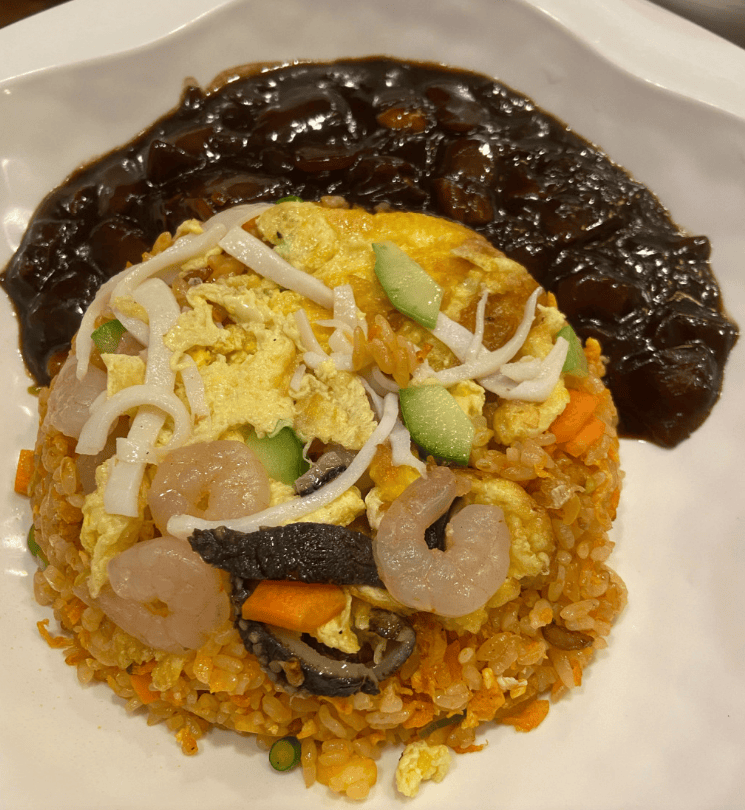
Bokkeumbap
3. The Crown Jewels of the Menu: Tangsuyuk and Palbochae
When a simple meal doesn’t quite feel like enough, the first thing Koreans look for are the heavy hitters from the “Specialty Dishes” (Yori-bu) section of the menu. Among them, the universally beloved Tangsuyuk, the sophisticated Palbochae perfect for formal gatherings, and the vibrant Yangjangpi stand out as the true “crown jewels” that showcase the most glamorous side of K-Chinese cuisine.
1) Tangsuyuk: Irresistible Crispiness and Sweetness
Tangsuyuk is the undisputed “National Specialty Dish” of Korean-Chinese cuisine. It consists of bite-sized pieces of pork coated in a potato or cornstarch batter, deep-fried to perfection, and served with a vibrant sweet-and-sour sauce made from sugar and vinegar. It is the most frequently ordered dish when Koreans want something a step above a basic meal.
- The Texture: The real addiction comes from the contrast between the “Crispiness” of the freshly fried pork and the “Gooeyness” of the thick, translucent sauce.
- The “Pour vs. Dip” Debate: There is a legendary, lighthearted, yet surprisingly serious debate among Koreans: “Bumuk” (The Pourers) vs. “Jjikmuk” (The Dippers).
- The Dippers (Jjikmuk): Prefer dipping each piece into the sauce individually to maintain the maximum crunch until the very last bite.
- The Pourers (Bumuk): Love to drench the entire plate in sauce, allowing it to soak into the batter for a soft, savory, and tender texture.
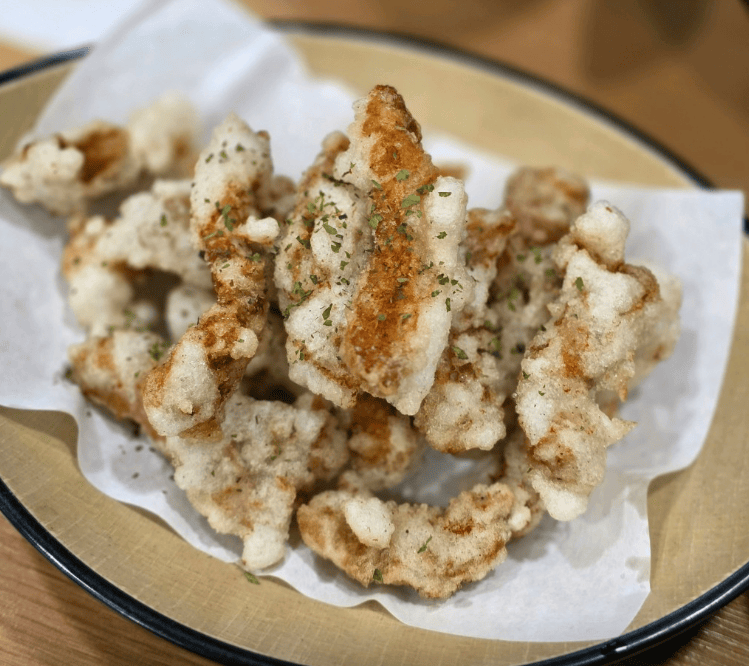
Tangsuyuk
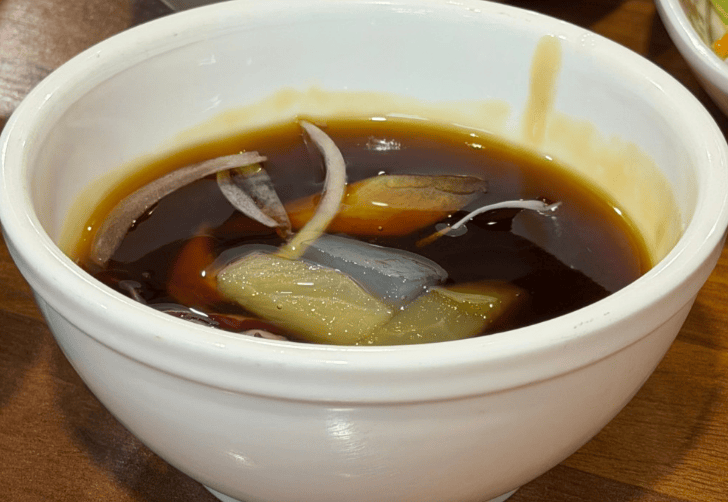
Tangsuyuk Source
2) Palbochae: The Stir-fried Feast of Eight Precious Treasures
Meaning “a dish made by stir-frying eight precious ingredients,” Palbochae is the ultimate choice for seafood lovers. It offers a more refined and savory depth compared to the fried sweetness of Tangsuyuk, showcasing a cleaner yet richer flavor profile.
- The Ingredients: A harmonious medley of fresh seafood—such as sea cucumbers, squid, shrimp, and abalone—meets a vibrant array of vegetables, including bamboo shoots, bok choy, and shiitake mushrooms.
- The Flavor: A subtle hint of spicy chili oil provides a gentle kick, while a silky starch sauce elegantly coats each ingredient. This allows you to savor the natural taste and distinct texture of every single component. For “Brave Eaters,” Palbochae offers a much more multi-layered and sophisticated tasting experience than simple fried meat dishes.
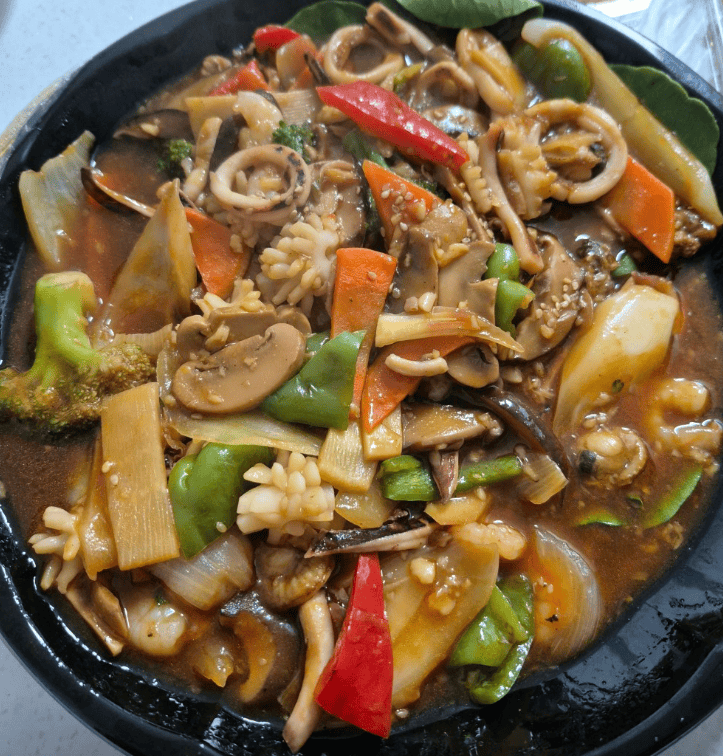
Palbochae
3) Yangjangpi: A Vibrant Seafood Platter that Awakens the Senses
The name Yangjangpi originates from the “two sheets of starch skin” (pi) used in the dish. It features an array of fresh vegetables and seafood arranged beautifully around a central pile of stir-fried meat and translucent starch sheets. Thanks to its explosion of colors, it is the ultimate “visual centerpiece” often served at parties or for hosting special guests.
- The Components: Along the edge of the plate, thinly sliced cucumbers, carrots, and egg garnish bloom like a flower alongside fresh shrimp, squid, and sea cucumber. At the center sits a savory mix of pork and vegetables stir-fried in oyster sauce, topped with chewy, transparent starch sheets (Yangjangpi).
- The Zesty Punch: The true star of this dish is undoubtedly the “Mustard Sauce.” The moment you mix it in, the sharp, pungent kick stimulates your nose and instantly wakes up your palate with a refreshing tingle. A pro tip: Pour the sauce little by little and taste as you go! Drenching the whole plate at once can turn your delicious meal into a tear-inducing “painful” experience. ^^
- The Experience: It is the perfect partner to cut through the richness of fried dishes like Tangsuyuk. For “Brave Eaters,” this nose-tingling, electrifying sensation will be the most thrilling “culinary adventure” you can find in Korean-Chinese cuisine.
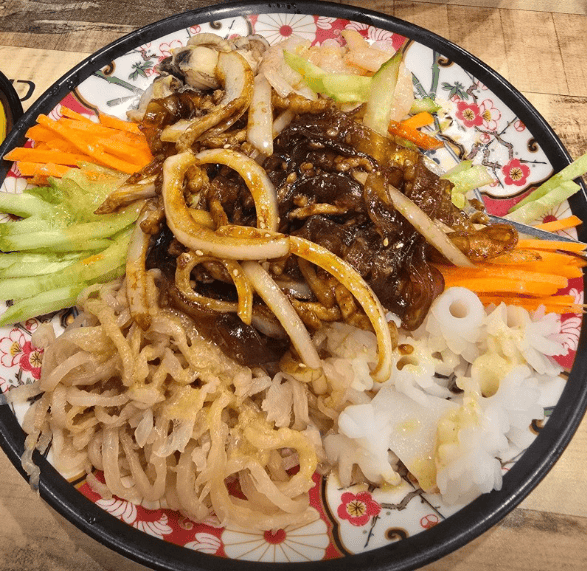
Yangjangpi
4. Culture and Etiquette: How to Enjoy K-Chinese Cuisine Like a Local
A Korean-Chinese restaurant is more than just a place to grab a bite; it is a vibrant space where unique dining etiquette and fascinating local traditions coexist. To help you navigate the table naturally—just like a local—here are a few essential tips for enjoying K-Chinese cuisine to the fullest.
1) Danmuji and Onions: The Eternal Sidekicks
The moment you sit down in a Korean-Chinese restaurant, a set of “basic side dishes” (Banchan) is served even before you place your order. This classic set consists of bright yellow Danmuji (pickled radish), sliced raw onions, and a small dollop of black Chunjang (fermented soybean paste).
- The Role: The sweet and tangy Danmuji perfectly cuts through the richness of Jajangmyeon, while the raw onions dipped in Chunjang provide a sharp, refreshing bite that cleanses your palate.
- Etiquette: If you run out of these sides, simply say, “Danmuji jom deo juseyo” (Please give me some more pickled radish). In Korea, these basic side dishes are almost always refilled for free upon request.
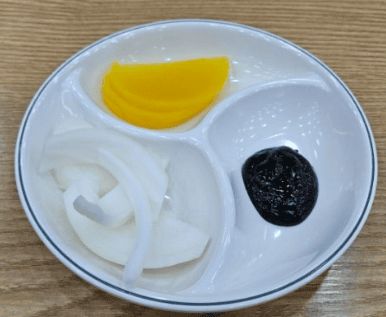
2) Jjam-jja-myeon: The Genius Invention for the Indecisive
“Should I have Jajangmyeon or Jjamppong?” This question has long been one of the greatest dilemmas in a Korean’s daily life. To solve this, the ‘Jjam-jja-myeon’ was born—a brilliant bowl divided down the middle, serving both dishes side-by-side. Beyond the classic Jjam-jja-myeon, you can find other creative combos like Jja-bok-myeon (Jajangmyeon & Fried Rice) or Jja-tang-myeon (Jajangmyeon & Tangsuyuk).
- The Wisdom: By serving half-portions of two different menus in a single bowl, it allows you to satisfy both cravings without the stress of choosing. For travelers, it is the ultimate “best of both worlds” choice to experience the two pillars of K-Chinese cuisine in one sitting.
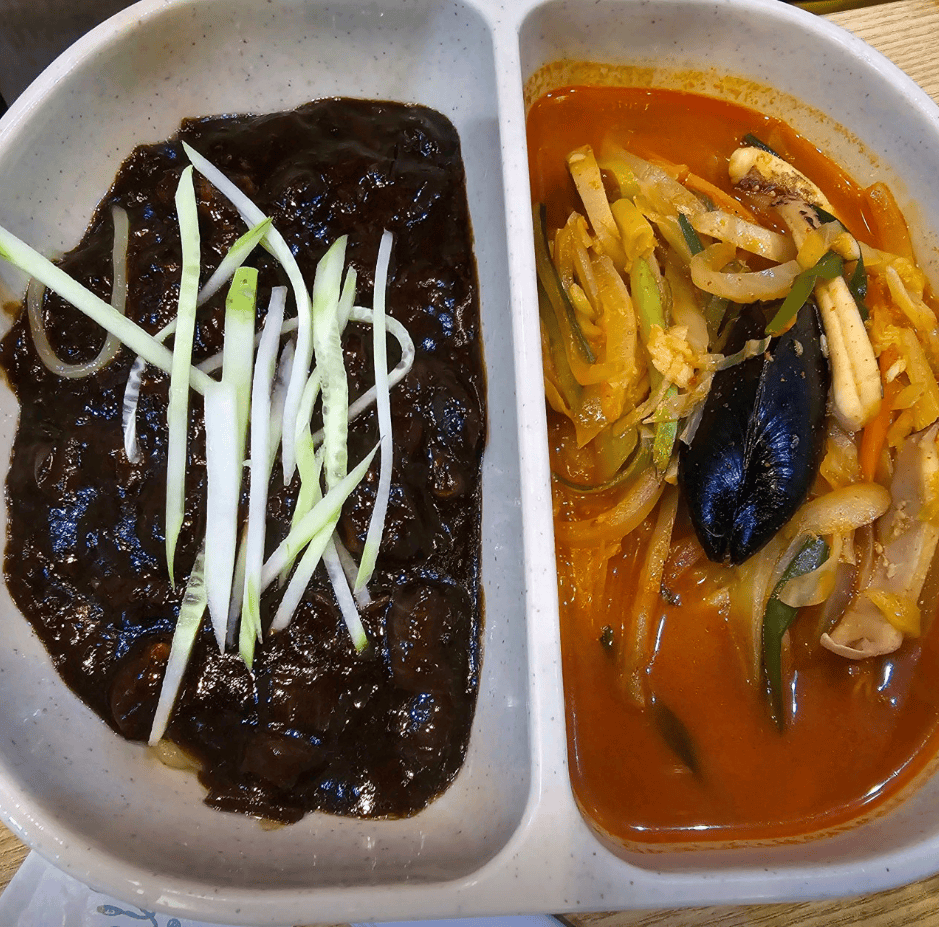
Jjam-jja-myeon
3) ‘Bumuk’ (The Pourer) vs ‘Jjikmuk’ (The Dipper): The Ultimate Rivalry
When eating Tangsuyuk, Koreans often engage in a surprisingly passionate debate over how the sauce should be applied. This isn’t just about taste; it’s a lifestyle choice!
- Pouring Style (Bumuk): “Bumuk” fans love to pour the sauce directly over the fried pork. This allows the crispy batter to absorb the sauce, making it tender, moist, and flavorful throughout.
- Dipping Style (Jjikmuk): “Jjikmuk” enthusiasts prefer to dip each piece of pork into the sauce individually. Their goal is to preserve the original “crunch” of the fried batter until the very last bite.
- Etiquette Tip: When dining in a group, it is considered essential manners to ask before pouring the sauce over the communal plate. Always check with your companions first: “Bueo-do doelkka-yo?” (May I pour the sauce?).
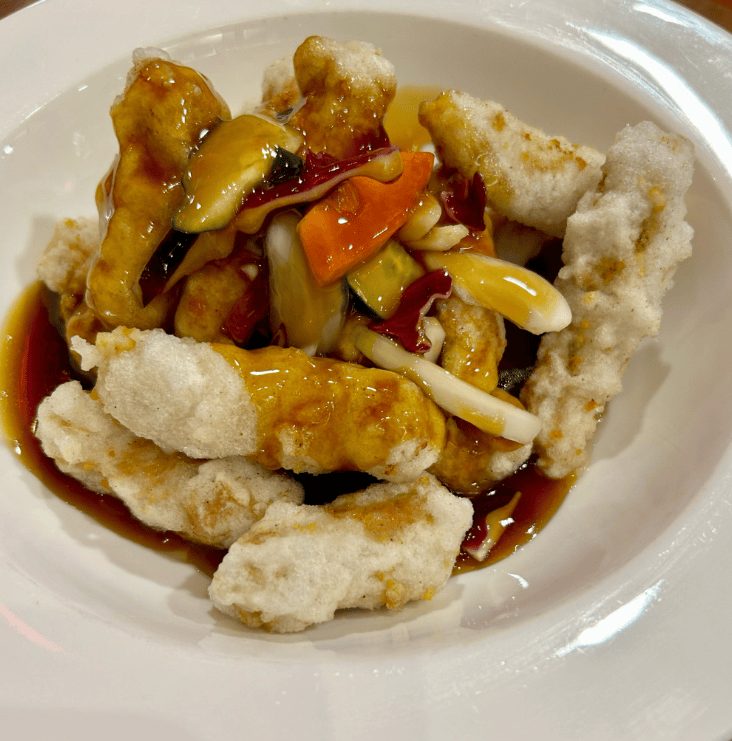
Bumuk
4) The Art of Chili Powder (Gochugaru)
There is a secret “kick” that Koreans use to elevate the flavor of Jajangmyeon even further. It involves lightly sprinkling Gochugaru (Korean chili powder)—usually found in a small container on every table—directly over the black bean sauce. This subtle hint of spice perfectly cuts through the richness of the Jajang sauce, ensuring that every bite, right down to the very last one, remains savory and refreshing.
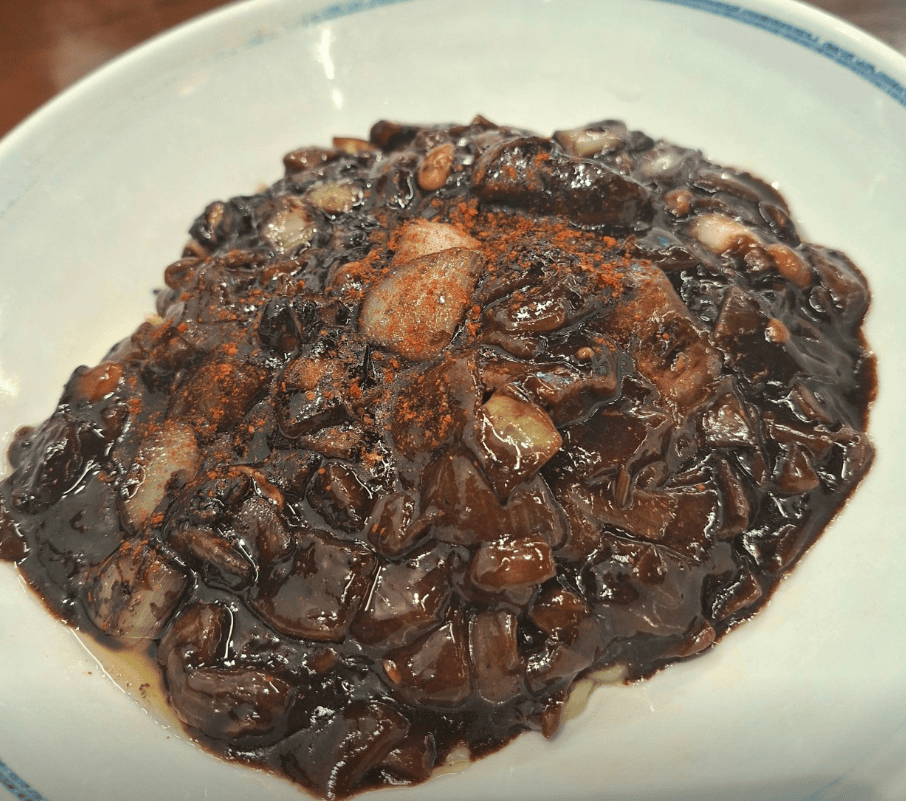
Chili powder on top
5. The Final Bite: A Warm Bowl of Korean Hospitality
From the history of Jajangmyeon, which began in the red-brick alleys of Incheon Port, to the “Pour vs. Dip” rivalry that remains an eternal dilemma for Koreans, we have explored the diverse facets of Korean-Chinese cuisine.
To a traveler, K-Chinese food might initially seem like a mere “derivative of Chinese cuisine.” However, within that bowl of dark Jajang sauce and the spicy kick of Jjamppong broth lies the entire trajectory of Korean life over the last century. It was a hearty meal that satisfied the hunger of laborers, the greatest gift parents could offer their children during leaner times, and today, the fastest delivery food for busy modern souls. For a very long time, it has stood by us as Korea’s ultimate soul food.
A Korean-Chinese restaurant is not just a place to satisfy hunger. It is a space of “Jeong” (Affection)—a place where the excitement of graduation days, the exhaustion of moving into a new home, and the joy of sharing drinks with friends all intersect.
If you visit Korea, fine dining is wonderful, but I encourage you to step into a small, local Chinese restaurant on a quiet street corner. Order a bowl of Jajangmyeon. Within that humble yet generous serving, you will discover the “Authentic Taste of Korea” that locals truly cherish.
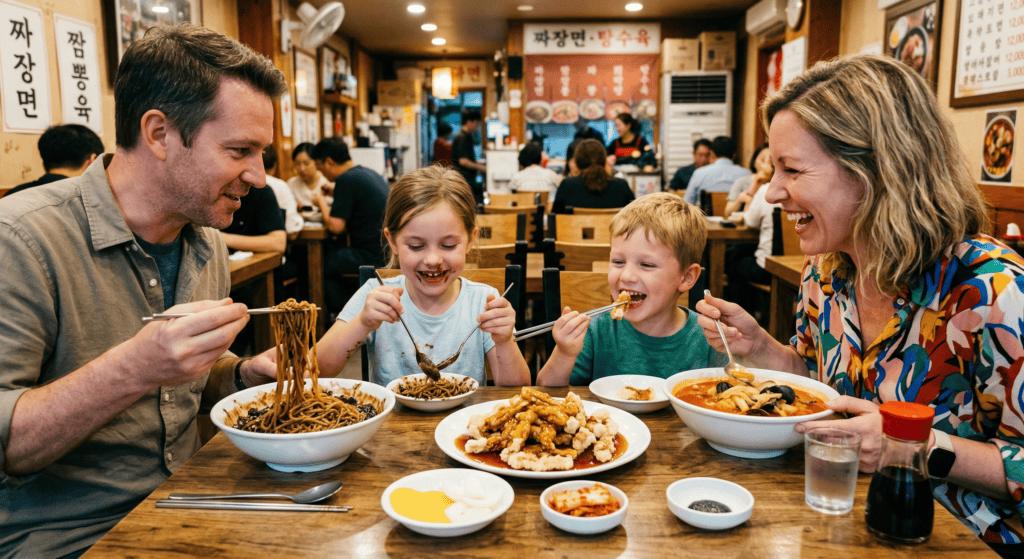
Which Korean-Chinese dish left the strongest impression on you? Or which one are you most excited to try? Share your foodie plans with us in the comments below!
KoreanChineseFood #KFood #Jajangmyeon #Jjamppong #Tangsuyuk #KoreanSoulFood #FoodieTravelKorea #AuthenticKorea #FindYourKorea #AsianCuisine #StreetFoodKorea #NoodleLover #BlackBeanNoodles #SpicySeafoodSoup #KoreanDiningCulture #KoreanChineseCuisineHistory #JajangmyeonMuseum #Gonghwachun #KoreanFoodGuide #TravelKoreaFood #IncheonChinatown #BumukVsJjikmuk #KoreanDiningEtiquette #SoulFoodKorea #KFoodExperience #KoreanCultureBlog #HiddenGemKorea #KoreanHistoryThroughFood #CulturalHeritageKorea #IncheonTravel #FamilyFriendlyKorea #SharingFoodCulture #GroupDiningKorea #Chunjang #HomemadeJajangmyeon #KoreanCooking