
Introduction
Defining Korean Aesthetics Through Curves and Hues
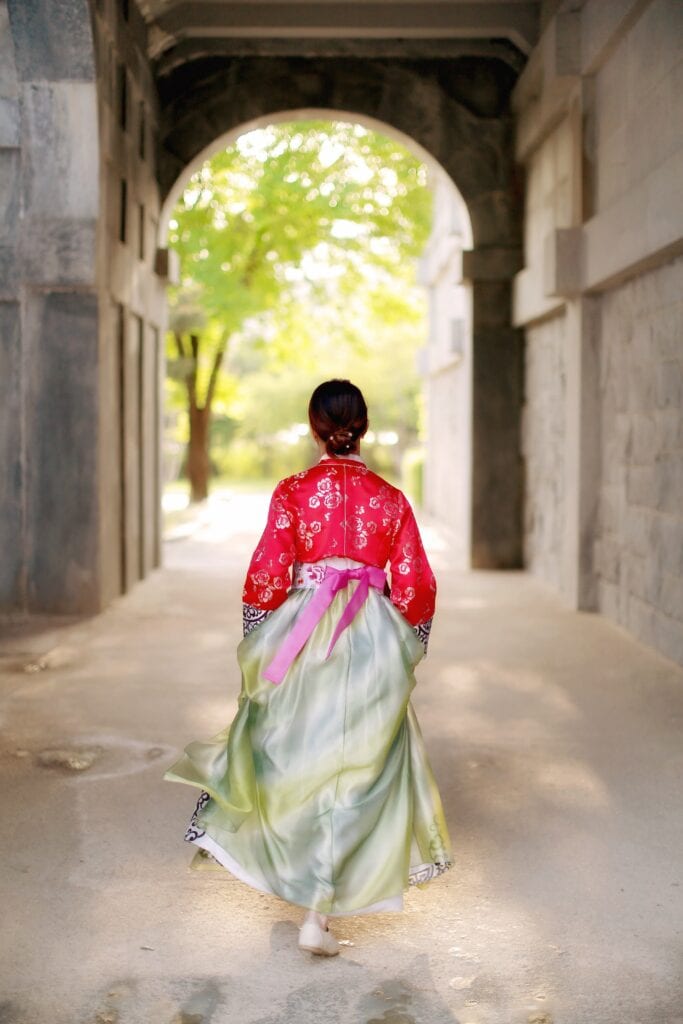
Nowadays, thanks to global platforms like Netflix and Disney+, the world has become captivated by the stunning stage outfits of K-pop idols and the dignified presence of ‘Seonbi’ (scholars) in historical dramas. Within these scenes, one can’t help but notice a unique aura—the essence of ‘Hanbok,’ Korea’s traditional attire. More than just clothing, Hanbok is a masterpiece that has embroidered the nature and philosophy of the Korean Peninsula onto fabric for thousands of years.
Korean tradition places immense value on the beauty of ‘lines,’ a concept also deeply rooted in traditional dance. The greatest charm of Hanbok lies in this ‘harmony of lines.’ The resolute straightness of the collar (git) and the white neckband (dongjeong) finds a perfect balance only when it meets the gentle curves of the sleeves (baerae) and the voluminous silhouette of the skirt. This flow of lines—seemingly static yet dynamic as it flutters in the breeze—symbolizes the ‘restrained leisure’ (jeolje-doen yeoyu) that Koreans have long pursued.
Source: RemasterKingdom7.0 via YouTube > (Title: HUNTR/X – KPop Demon Hunters | Golden | Live @ The Oscars 2026)
Furthermore, the five cardinal colors used in Hanbok—known as Obangsaek (Yellow, Blue, White, Red, and Black)—go beyond mere visual splendor. They embody deep spiritual meanings, symbolizing the harmony of the universe and wishes for a long, healthy life. In this post, we will embark on an in-depth journey through the world of traditional Korean attire, where the life and spirit of the Korean people are woven into every detail—from the Gat (traditional hat) on the head to the Kkotsin (flower-embroidered shoes) on the feet. Through these hidden stories within Hanbok, I hope you find a moment to discover your very own ‘Korea.

Obangsaek: Korean Five Colors
1. The Basic Structure of Hanbok: The Aesthetics of Spacing That Embraces the Body
The most significant structural feature of Hanbok lies in its ‘Flat Pattern Cutting.’ Unlike Western clothing, which is tailored three-dimensionally to follow the curves of the body, Hanbok is created by cutting flat fabric in straight lines to wrap around the wearer. This reflects a profound philosophy: the garment does not restrain the body; instead, it provides ‘Yeoyu’—a generous space where a person can breathe and move freely within the clothes.
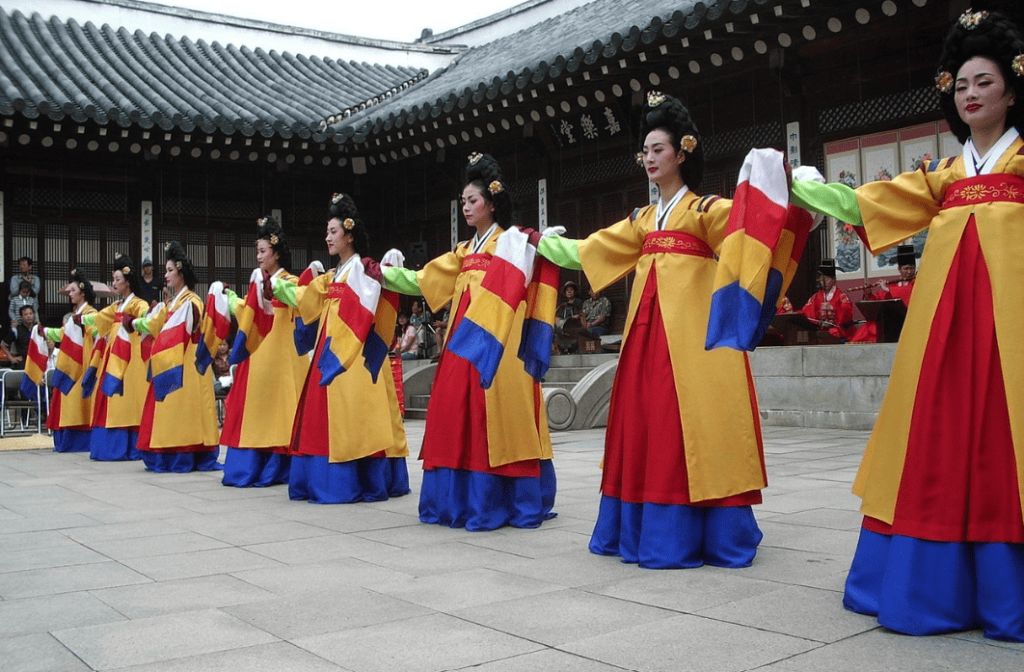
Women’s Hanbok is composed of a short ‘Jeogori’ that covers the upper body and a ‘Chima,’ a full, flowing skirt that spreads from above the waist down to the feet. The ‘Dongjeong,’ a crisp white neckband, acts like a natural reflector, brightening the wearer’s face, while the ‘Goreum’ (ribbon ties) serves as both a functional knot and a central decorative element. Notably, the voluminous silhouette of the Chima creates an elegant fullness through the natural layering of fabric alone—unlike the artificial skeletal structures of Western crinolines.

Women’s Hanbok / This work is licensed under the Korea Open Government License (KOGL) Type 1, courtesy of the National Museum of Korea.
Male Hanbok is centered around the ‘Jeogori’ (top) and wide-legged ‘Baji’ (pants), with an outer robe called ‘Po’ (such as Dopo or Durumagi) layered over them for formal occasions. A unique feature of the pants is the ‘Daenim,’ a set of ankle ties that not only enhance mobility but also provide exceptional comfort when sitting. Rather than accentuating the body’s contours, Hanbok embraces the wearer, showcasing the ‘Beauty of Empty Space’—an aesthetic where even the flow of air between the garment and the body becomes an integral part of the design.
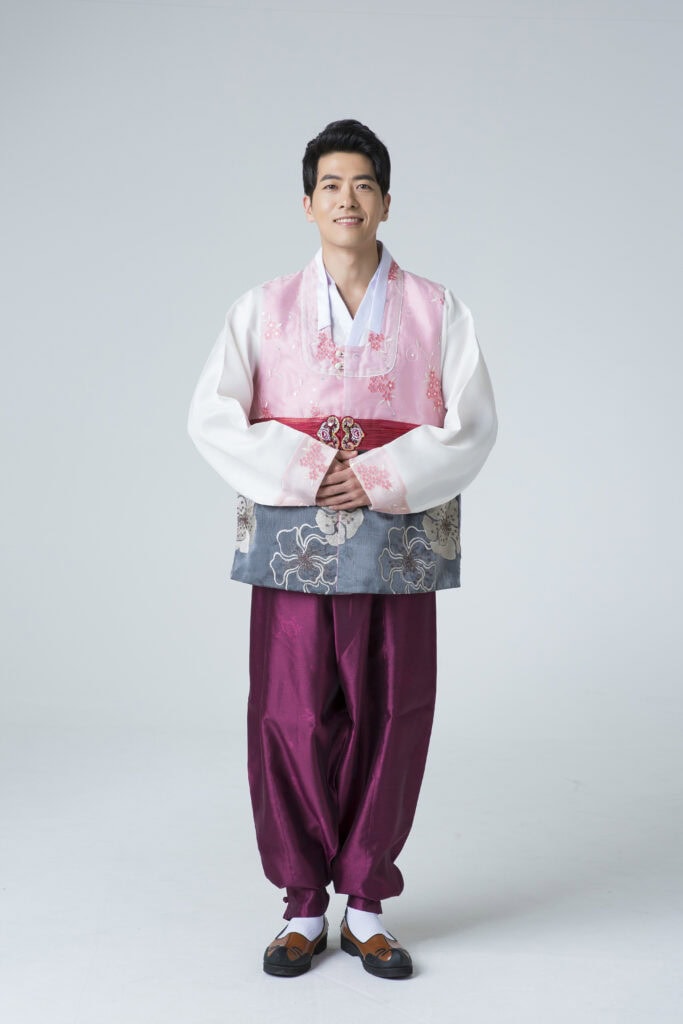
Male Hanbok / Source: Korea Copyright Commission (Title: Myeongjeol 001) Licensed under CC BY 4.0
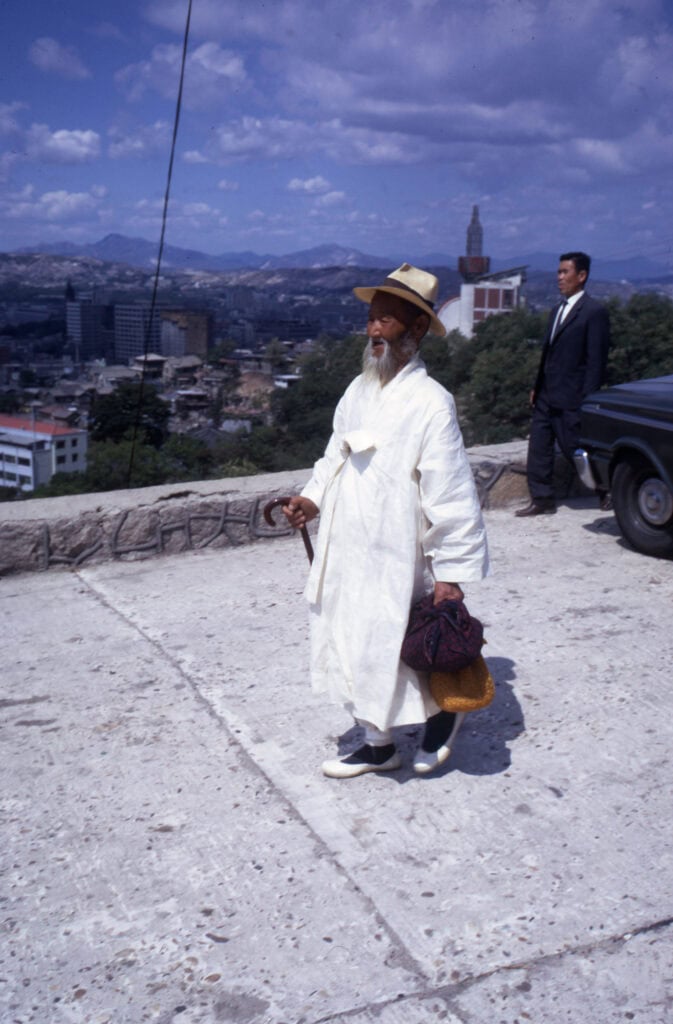
Durumagi / Source: Korea Copyright Commission (Title: An elderly man in a Durumagi at Namsan, Seoul, 1968) Licensed under CC BY
2. Headdresses of Dignity: Exploring the Gat and Korean Traditional Jewelry
In traditional Korean attire, headwear was far more than a simple covering; it served as a vital symbol of one’s social status and identity. In particular, the ‘Gat’—now famously dubbed ‘God’ by global fans following the success of Netflix series like Kingdom and K-Pop Demon Hunters (K-De-Heon)—embodies the very essence of the Seonbi (scholar) spirit. This cultural phenomenon reached new heights at the 2026 American Awards, where a breathtaking performance featuring the iconic Gat from K-De-Heon captivated the audience and dominated the stage.
Source: Netflix Korea via YouTube (Title: Saja Boys – YOUR IDOL | K-Pop Demon Hunters)
Woven from finely split bamboo or delicate horsehair, the Gat possesses a subtle, translucent quality. This semi-transparency symbolizes the scholar’s (Seonbi) commitment to self-discipline and the honest revelation of one’s inner self. The wide brim, known as Yangtae, serves not only the practical function of blocking sunlight but also adds an elegant rhythm to every step, completing a unique and dignified silhouette exclusive to Korean men.
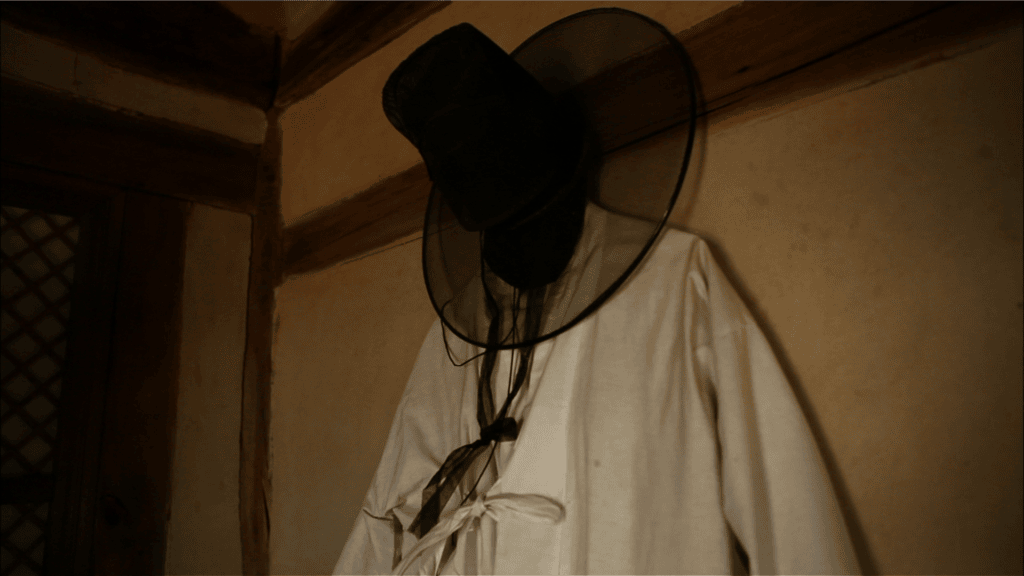
Gat / Source: EBS (Korea Educational Broadcasting System) Licensed under CC BY (Title: EBS_Still Life_0924)
For women, the Binyeo (ornamental hairpin) and Norigae (pendant) fulfilled a similar symbolic role. The Binyeo served as a tool to secure a bunned hairstyle while simultaneously signaling one’s social status and formality through its materials—such as gold, silver, or jade—and intricate patterns. The Norigae, worn at the chest, adds a three-dimensional touch to the flat silhouette of the Hanbok. Its subtle gemstones, elaborate knots, and long silk tassels sway gently with every step, breathing life and movement into the attire. In this way, Korean ornaments prioritize harmony over flashiness, practicing an ‘Aesthetics of Metaphor’ that silently speaks to the wearer’s dignity.

Binyeo / Source: National Museum of Korea
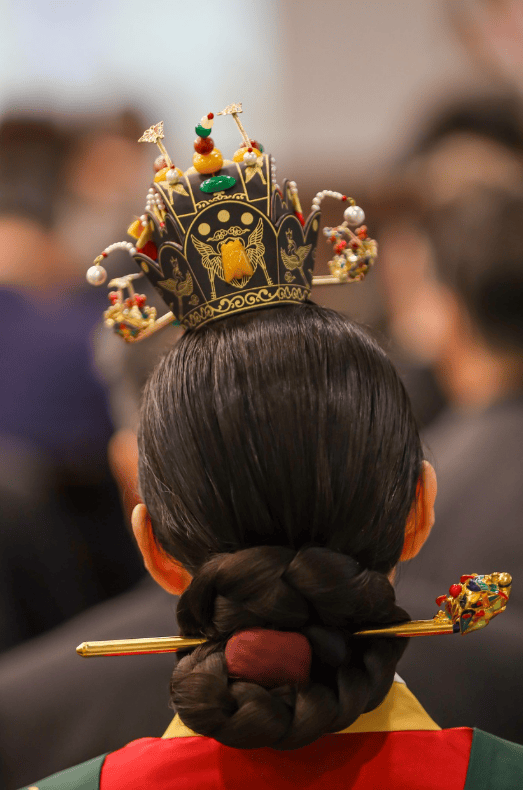
Binyeo
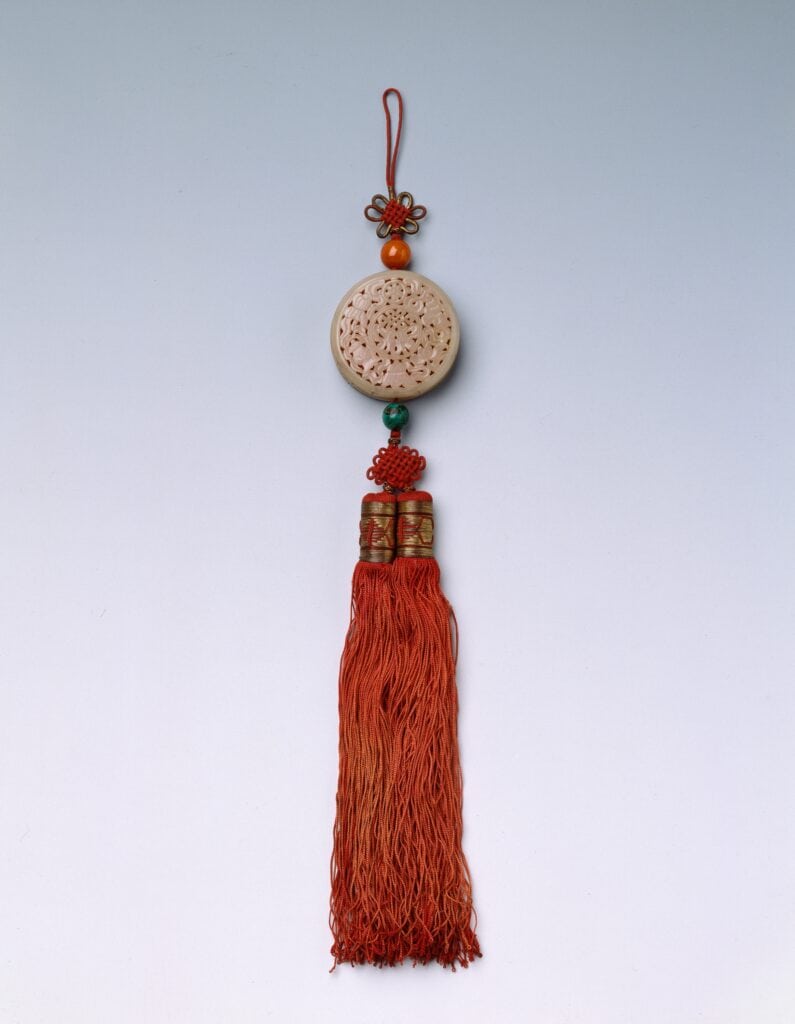
Norigae / Source: National Museum of Korea
3. From Ground Up: Completing the Hanbok Look with Traditional Footwear
The true beauty of Hanbok reaches its peak at the very tips of the toes. Peeking out from beneath the voluminous layers of the skirt, Kkotsin (flower-embroidered shoes like Unhye or Danghye) infuse a sense of grace into every step. The intricate floral patterns embroidered on silk, combined with the elegant upward curve of the toe, maximize the refined ‘Maepsi’ (style) of a Korean woman with every movement.
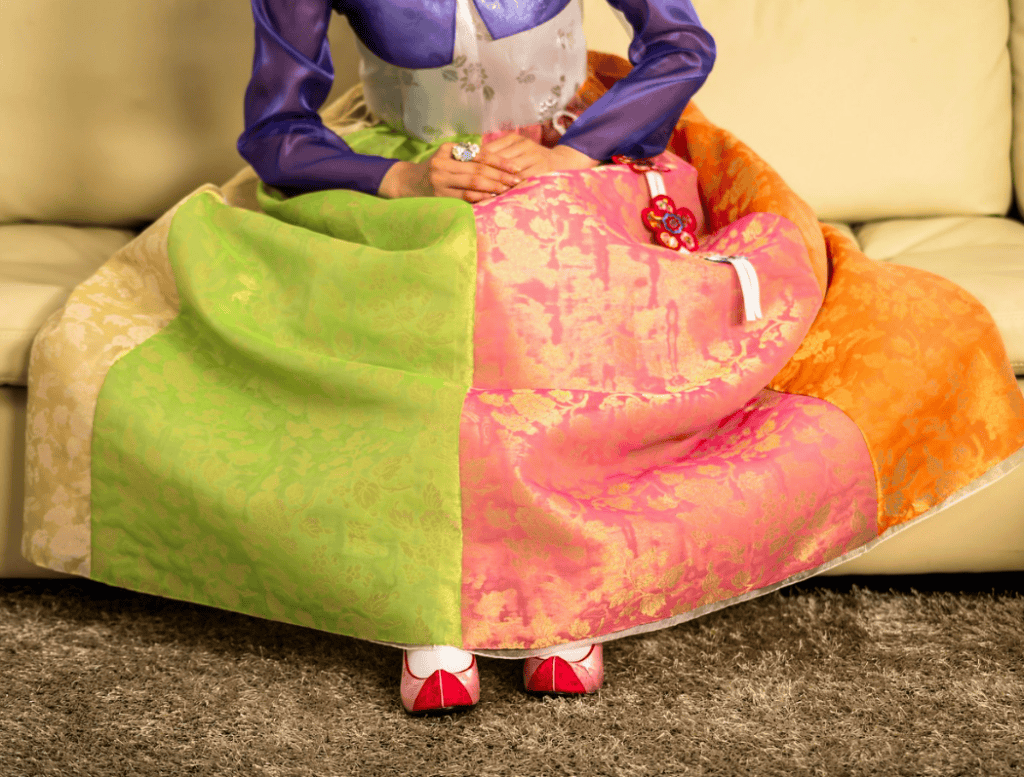
Kkotsin
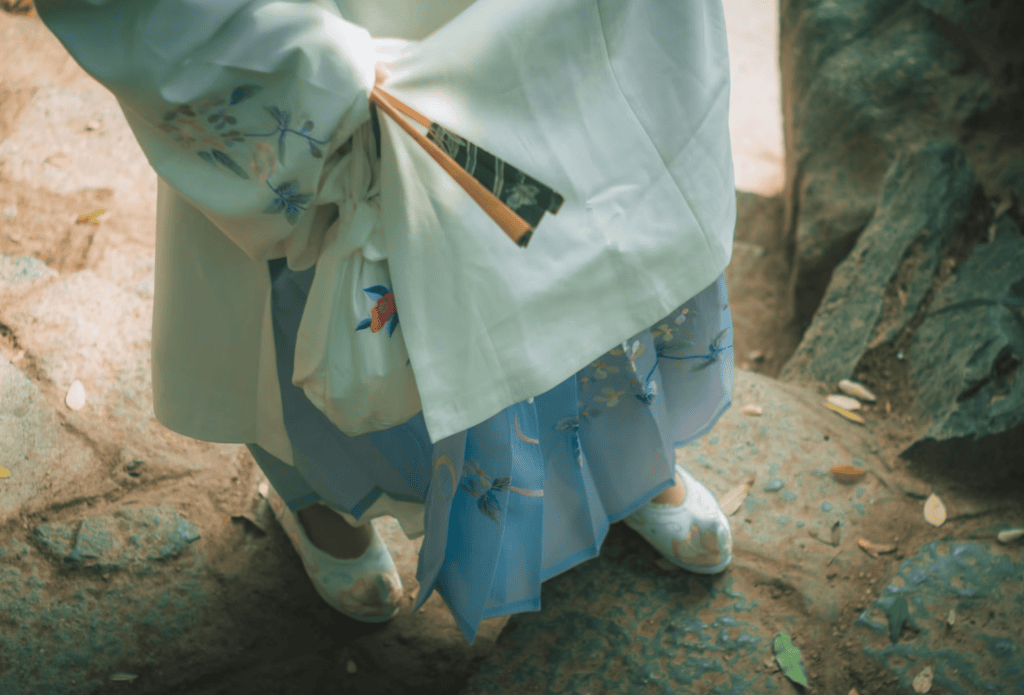
Kkotsin
Sadaebu refers to the scholar-official class that formed the backbone of Korean society during the Joseon Dynasty (1392–1910). Rather than being mere power-holding aristocrats, they embodied the ‘Seonbi’ (scholar) spirit, practicing strict Confucian values and viewing academic pursuit and politics as one. These Sadaebu men wore ‘Taesahye,’ sophisticated leather shoes that signified their scholarly dignity. The luxurious yet understated design of Taesahye harmonized perfectly with the restrained beauty of their ‘Dopo’ (overcoats), exuding a sense of profound trust and authority.
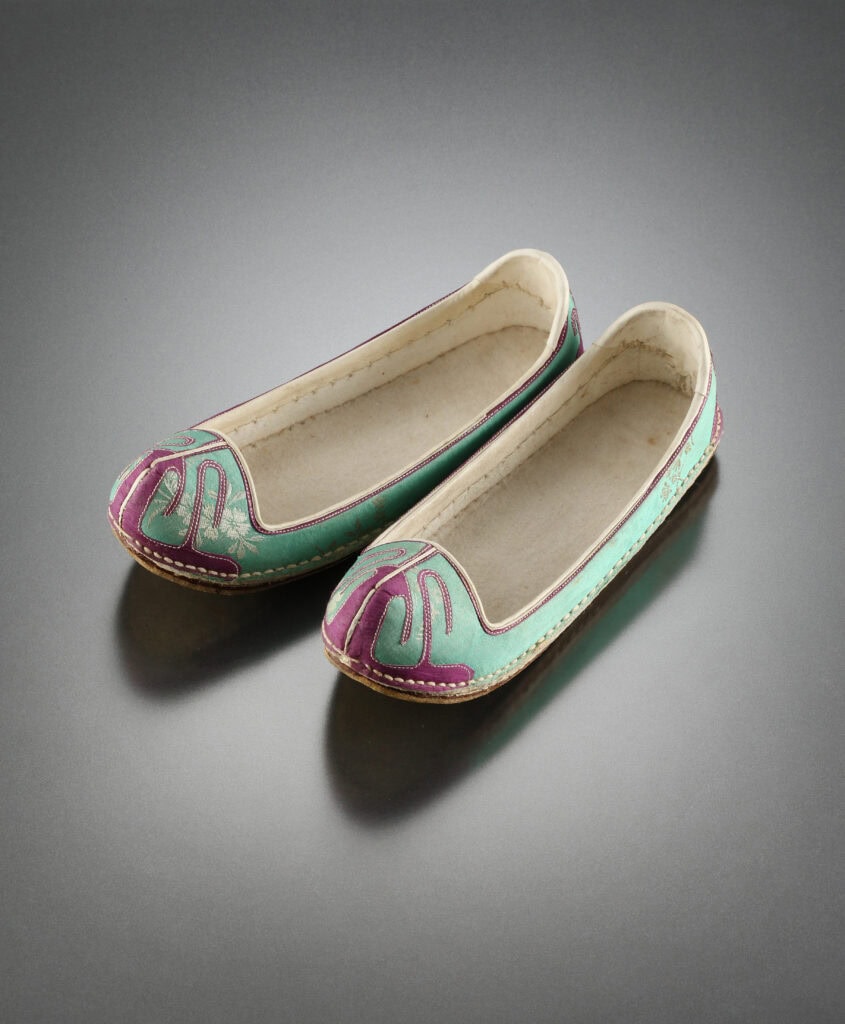
Taesahye / Source: National Palace Museum of Korea
On the other hand, for the common people, ‘Jipsin’ (straw sandals) and ‘Mituri’ (hemp sandals) were the true companions of daily life. While these two share a similar shape, they are distinguished by their materials. Though they may lack ornate splendor, they embody the practical wisdom and the resilient life force of the ‘Mincho’ (the grassroots people) who traversed the rugged mountains and fields of Korea.
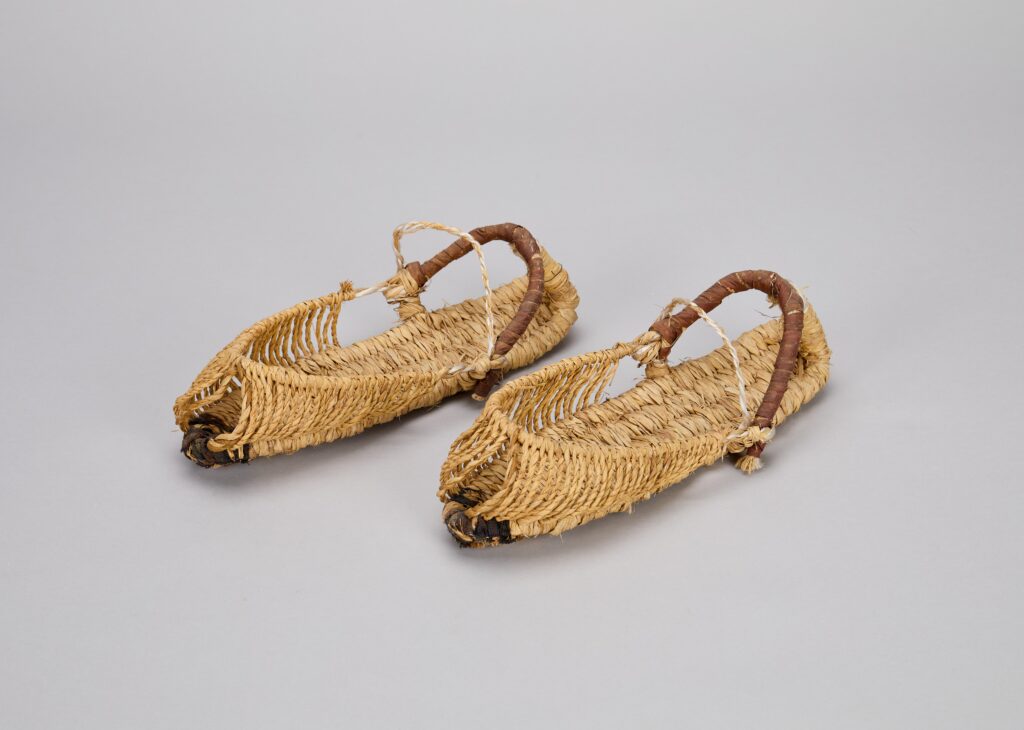
Jipsin / Source: Changnyeong Museum
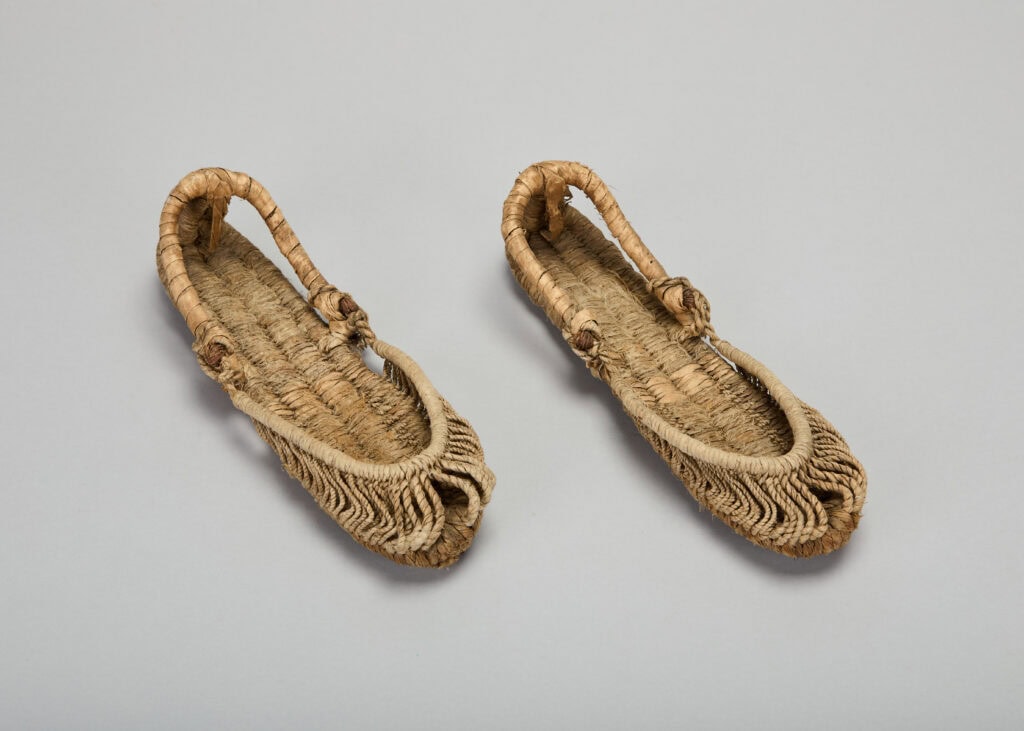
Mituri / Source: Cheonan Museum
Traditional Korean footwear, which supports the body from its lowest point while balancing the entire attire, perfectly illustrates the meticulous aesthetic sense of Koreans—who spared no detail from head to toe.
4. Palace Dress Code: Understanding the Symbolism in Royal Korean Attire
Royal attire during the Joseon Dynasty carried a significance far beyond mere clothing; it served as a powerful symbol of national order and a visual declaration of the sovereign’s authority. The Goryongpo, the King’s daily official robe, is characterized by its vibrant red silk adorned with exquisite gold-embroidered five-clawed dragons (Ojobaryong). Positioned on the chest, back, and both shoulders, these dragons symbolize the King’s absolute power and dignity. Furthermore, the Dallyeong—the robe’s rounded collar—reflects the King’s inclusive leadership, embracing all his subjects and the world beneath him.
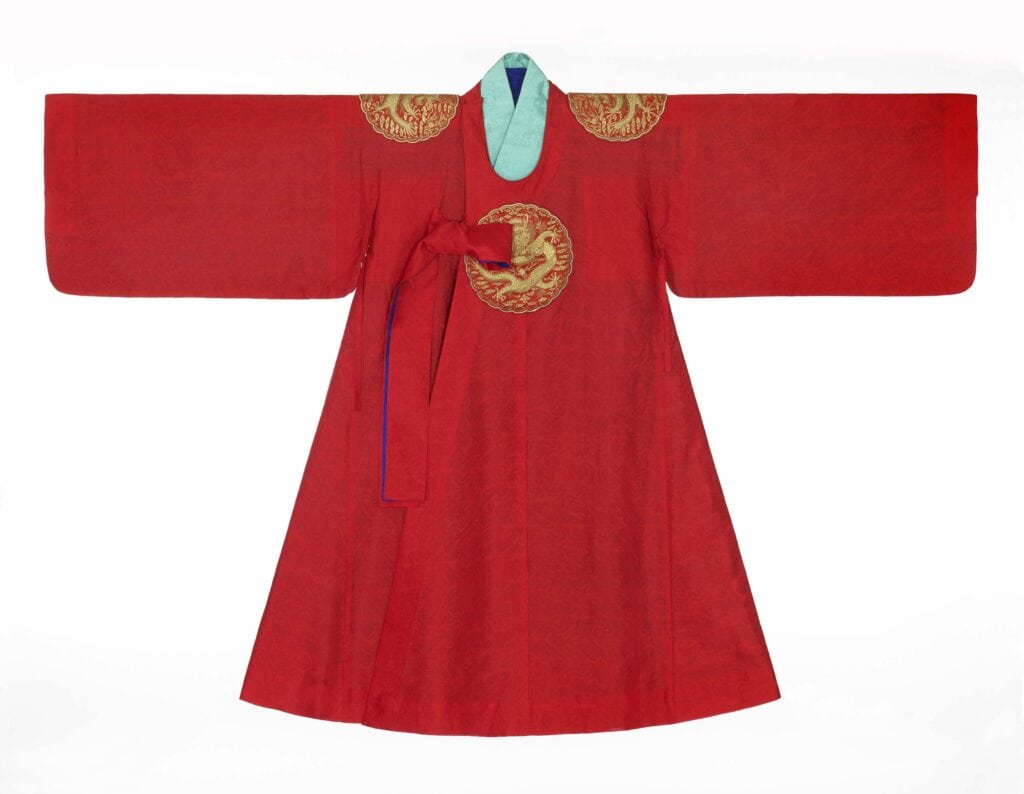
Goryongpo / Source: National Palace Museum of Korea
The Queen’s attire boasts an even more flamboyant and majestic level of dignity. The Jeogui, the highest ceremonial robe worn during the state’s most significant rituals or royal weddings, features a deep blue base embroidered with thousands of pheasant motifs. These pheasants were more than mere decoration; as birds known to remain faithful to a single mate for life, they symbolized the Queen’s devotion and served as a prayer for the eternal harmony of the royal couple and the lasting peace of the kingdom.
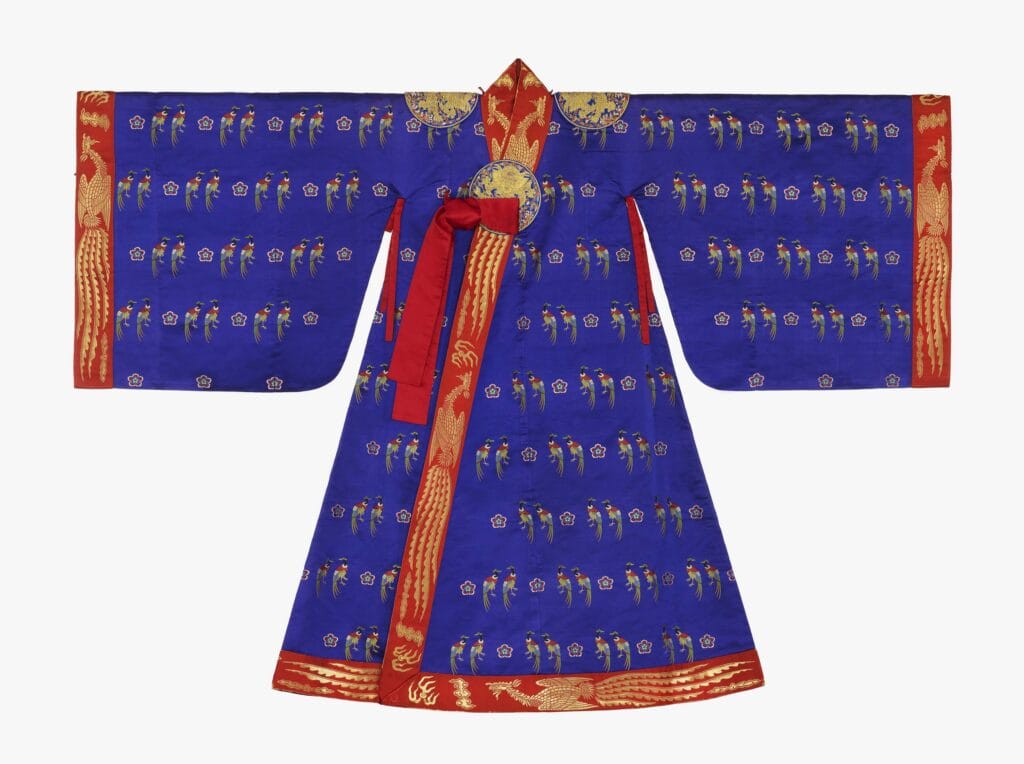
Jeogui / Source: National Palace Museum of Korea
5. Vows in Color: Discovering the Artistry of Traditional Wedding Hanbok
In Korea, a traditional wedding was regarded as Inryun-ji-daesa—meaning ‘the greatest event in human life.’ An intriguing historical fact is that even during the Joseon Dynasty, a period of rigid social stratification, the state officially permitted commoners to wear flamboyant official robes typically reserved for royalty or high-ranking officials on their wedding day. This exceptional gesture served as the nation’s highest blessing and mark of respect for a couple embarking on their new journey together as a family.
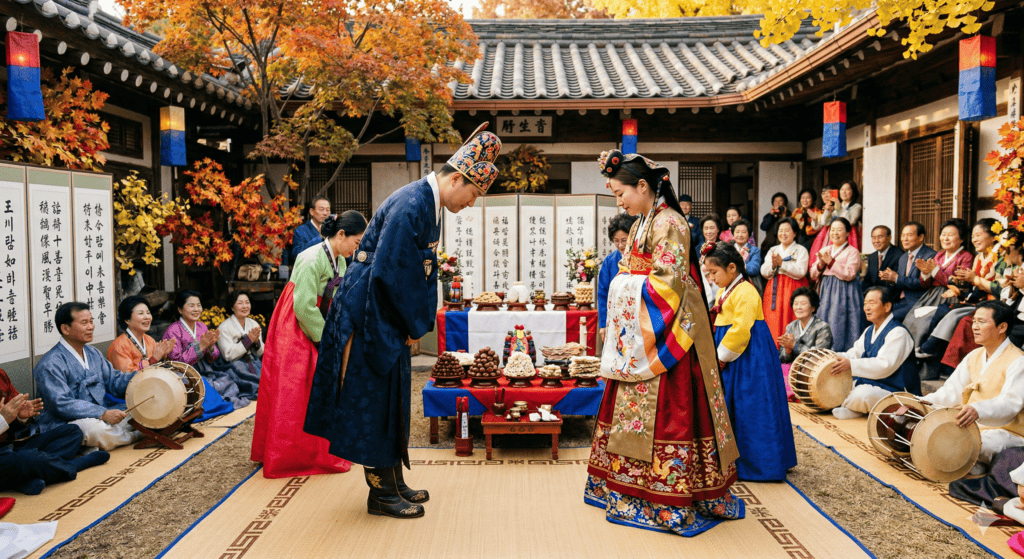
Korea Traditional Wedding
The bride wore a Hwal-ot or Wonsam, a magnificent robe made of red silk and exquisitely embroidered with patterns of peonies, butterflies, and lotuses—symbols of wealth, honor, and longevity. Notably, the vibrant Saekdong (multi-colored stripes) on the sleeves of the Hwal-ot carried the meaning of Byeoksa, an ancient belief in warding off evil spirits and inviting good fortune. Meanwhile, the groom dressed in Samo-gandae, the official uniform worn by civil and military officers. By donning this attire, he expressed the solemn responsibility of becoming the head of a household and received the public respect befitting the occasion.
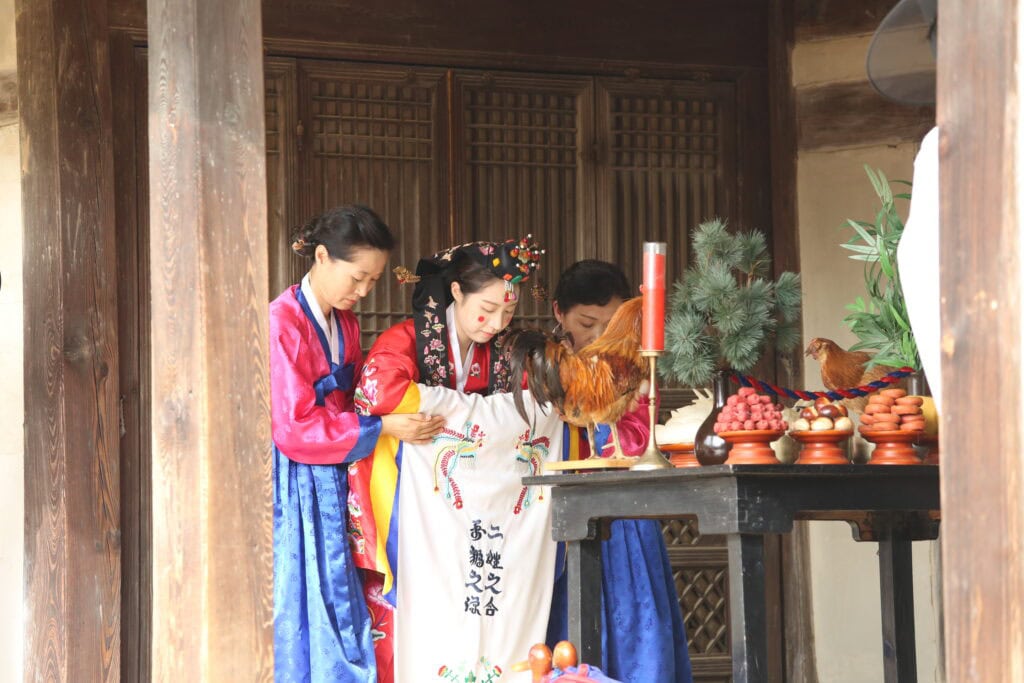
Bride / Source: Chae Ji-hyeong / Korea Copyright Commission Licensed under CC BY (Title: Korean Folk Village 146)

Bridegroom / Source: Chae Ji-hyeong / Korea Copyright Commission Licensed under CC BY (Title: Korean Folk Village 142)
Embedded within the brilliant embroidery and the five radiant colors of the wedding attire is the warm, collective wish of the community—that the couple’s future path together may be filled only with ‘flower-strewn roads’ (happiness and prosperity). On this single, most special day of their lives, couples celebrated their union as if they had become King and Queen. Today, the traditional Korean wedding continues to pass down these noble spiritual values, honoring the profound weight of this life-defining commitment.
6. Top Tips for the Ultimate Hanbok Experience
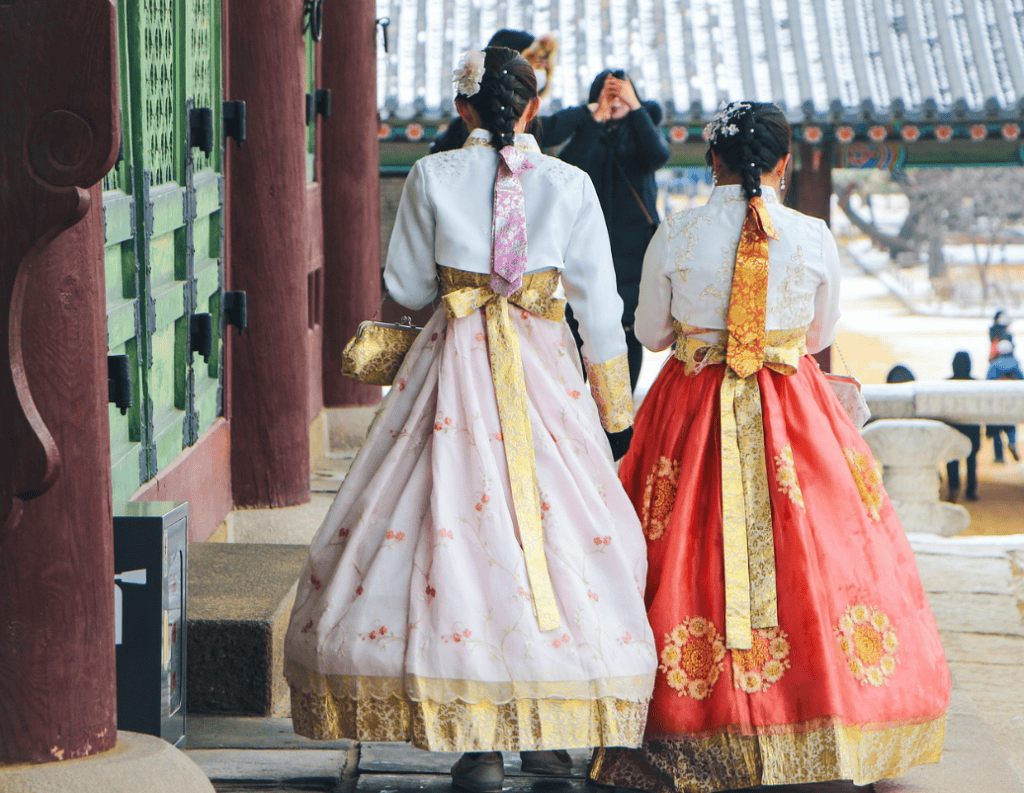
1) Where Should You Rent?
Most of the major Hanbok rental shops are conveniently clustered around Gyeongbokgung Station, Exit 4.
- Cham-Hanbok: Located on the 2nd floor of the Jeokseon Hyundai Building right in front of Gyeongbokgung Station, Exit 4, this shop offers the best accessibility. Since it operates year-round without holidays, it is very convenient for planning your travel itinerary.
- Hanboknam (Gyeongbokgung Branch): A large-scale franchise boasting an overwhelming collection of over 300 sets of Hanbok. They offer a very wide range of choices, from flamboyant “themed” Hanboks to classic traditional styles.
- Naye Hanbok: Highly popular among those who prefer the elegant simplicity of traditional Hanbok. It maintains a very high Google rating thanks to the owner’s friendly service and meticulous hair styling.
- Daehan Hanbok: Easy to find as it is located on the main Sajik-ro road near Gyeongbokgung Palace. Opening early at 8:30 AM, it is the perfect choice for those who want to take photos in the early morning before the crowds arrive.
2) Rental Fees and Included Services
- Rental Costs: Prices generally range from 10,000 KRW to 20,000 KRW for a 2-hour rental. For a full-day rental, expect to pay between 30,000 KRW and 50,000 KRW (rates vary depending on the intricacy and luxury of the Hanbok design).
- Free Included Services: Most rental shops provide inner skirts (petticoats), locker usage, and basic hair styling (such as traditional braiding) as part of their standard service.
- Optional Add-ons: Please note that additional fees may apply for premium accessories such as a Gat (traditional scholar’s hat), ornate Binyeo (hairpins), or decorative bags.
3) Special Benefit: “Free Admission to Royal Palaces”
- The Most Attractive Perk: The most compelling reason to wear a Hanbok is that the admission fee to Gyeongbokgung Palace (3,000 KRW) is completely waived for those dressed in traditional attire.
- Applicable Locations: This benefit applies to the four major royal palaces—Gyeongbokgung, Changdeokgung, Changgyeonggung, and Deoksugung—as well as the Jongmyo Shrine.
- Important Guidelines: To qualify for free entry, you must wear a complete set of Hanbok, including both the top (Jeogori) and the bottom (Chima for women or Baji for men).
- Check Before You Go: Please be aware that excessively modified or non-traditional designs may be excluded from this free admission policy. It is highly recommended to confirm with your rental shop whether your chosen outfit meets the official “Free Palace Entry” criteria.
4) Recommended Photo Spots for ‘Find Your Korea’ Readers
- Gyeonghoeru Pavilion at Gyeongbokgung Palace: The harmony between the majestic pavilion floating atop the pond and the elegant lines of the Hanbok is truly a living Oriental painting. This iconic spot offers a breathtaking backdrop that captures the essence of Korean traditional beauty in every frame.
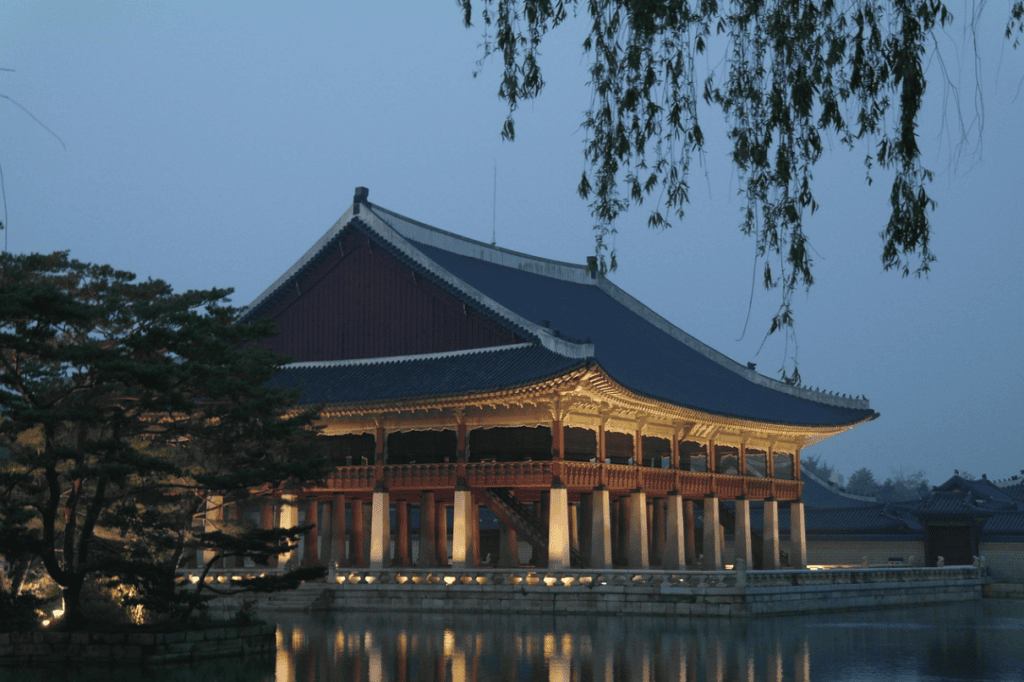
Gyeonghoeru Pavilion at Gyeongbokgung Palace
- Nakseonjae Hall at Changdeokgung Palace: Unlike other palace structures, Nakseonjae Hall is distinguished by its unpainted, natural wood finish. This raw, organic texture provides a serene and neutral backdrop that makes the vibrant colors of your Hanbok truly pop, making it one of the absolute best photo zones for a sophisticated photoshoot.
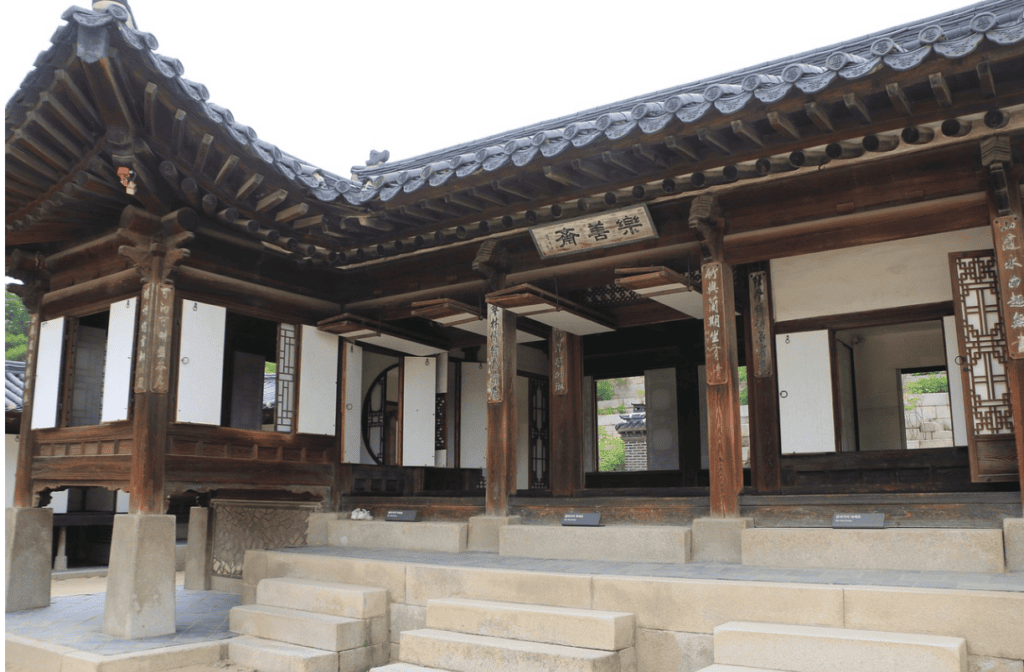
Nakseonjae Hall at Changdeokgung Palace
7. The Eternal Thread: Bridging Korea’s Heritage and Its Future
The traditional Korean attire we have explored is far from being a mere relic of the past. Today, Hanbok is being constantly reinvented, merging with modern sensibilities to create ‘Daily Hanbok’ (Saeghwal Hanbok) and taking center stage as striking performance outfits for global pop icons.
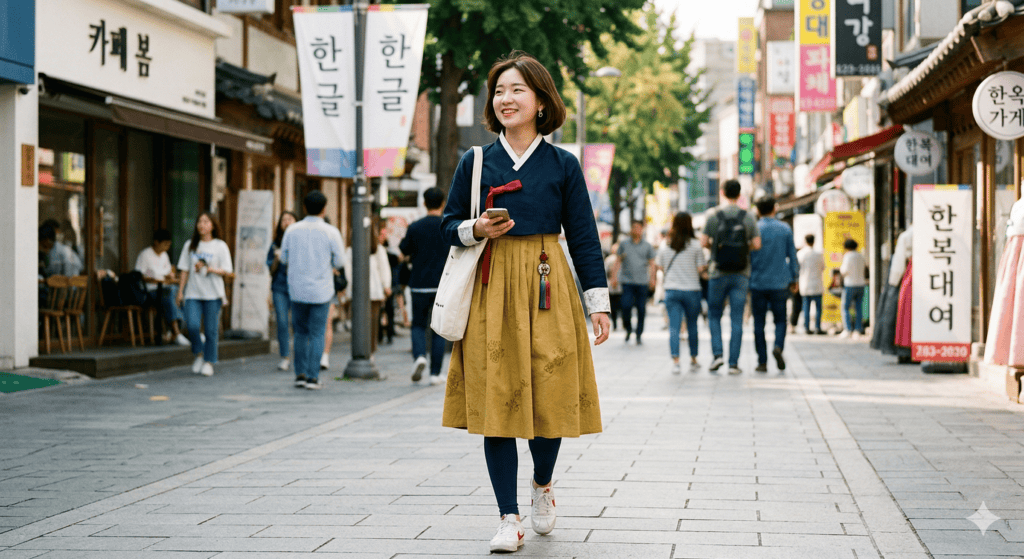
It is no longer a piece of history preserved behind the glass of a museum. Instead, it has evolved into a dynamic cultural medium that breathes alongside us, vividly representing the identity of modern Koreans.
If you visit Korea, I highly recommend strolling along the stone walls of the royal palaces dressed in Hanbok. The unique sense of leisure and dignity felt as your hem flutters in the breeze will be the most perfect medium to transport you back through hundreds of years of time.
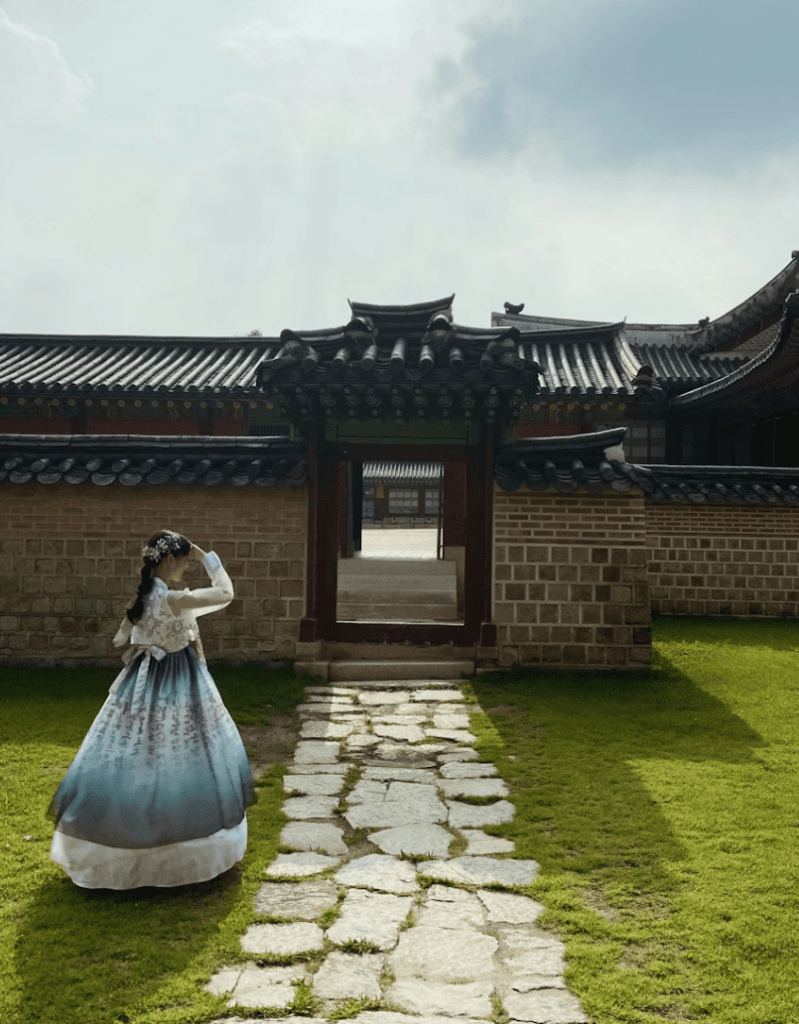

Through the aesthetics of Korean attire presented by Find Your Korea, I hope you have discovered the profound consideration and philosophy that lie beneath its visible splendor. Just as every stitch of the Hanbok is imbued with care and sincerity, I wish for you to complete your own uniquely warm and beautiful journey here in Korea.
Hanbok #VisitKorea #Gyeongbokgung #KoreanCulture #TravelKorea #HanbokExperience #SeoulTravel #FindYourKorea #TraditionalHanbok #Kstyle #PalaceTour #KoreaTrip2026 #FindYourKorea_Culture #HanbokAesthetics #HiddenGemSeoul #JoseonDynastyStyle #KoreanHeritage #한복 #경복궁 #창덕궁 #한국여행 #한복체험 #경복궁한복대여 #궁궐산책 #전통문화 #인생샷명소 #파인드유어코리아 #한복의미학 #한국의미