
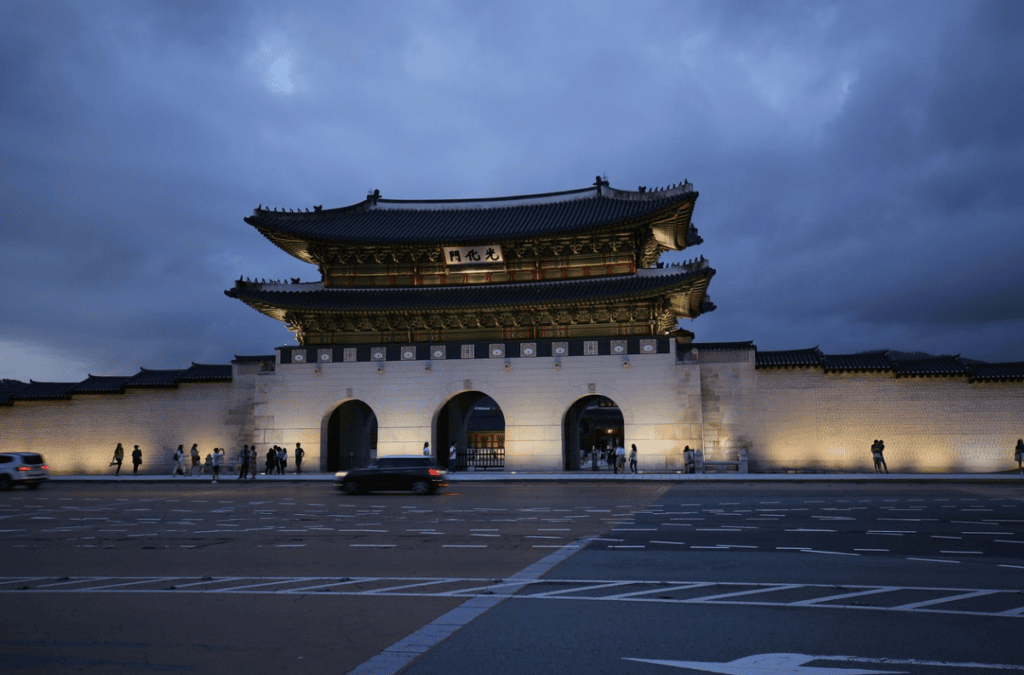
Gwanghwamun
Lately, Korea seems to be standing at the very center of global culture. The dazzling stages of K-pop stars, the cinematic brilliance of K-movies on the silver screen, and the majestic curves of Gyeongbokgung Palace’s eaves—where 500 years of traditional beauty meet the heart of modern Seoul—act like a powerful magnet drawing countless travelers. Yet, beyond the glamour of the screen and the historic landmarks, there is something even more dynamic and intriguing: the “real Korean life” pulsing beneath the surface.
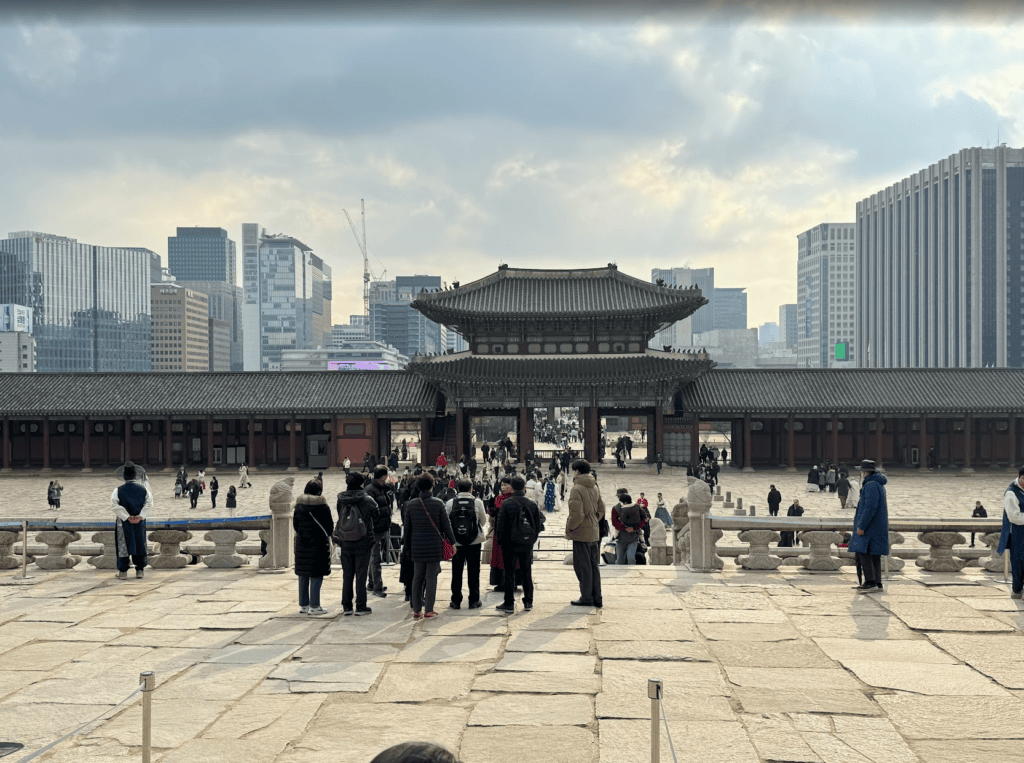
Gwanghwamun
Simply visiting famous sites is no longer the way to experience Korea. For a real discovery, explore the alleys behind the fame. Korea’s true identity lies in the daily morning hustle, convenience store food culture, bustling traditional markets, regional festivals, and the warm, welcoming spirit of ‘Jeong.’
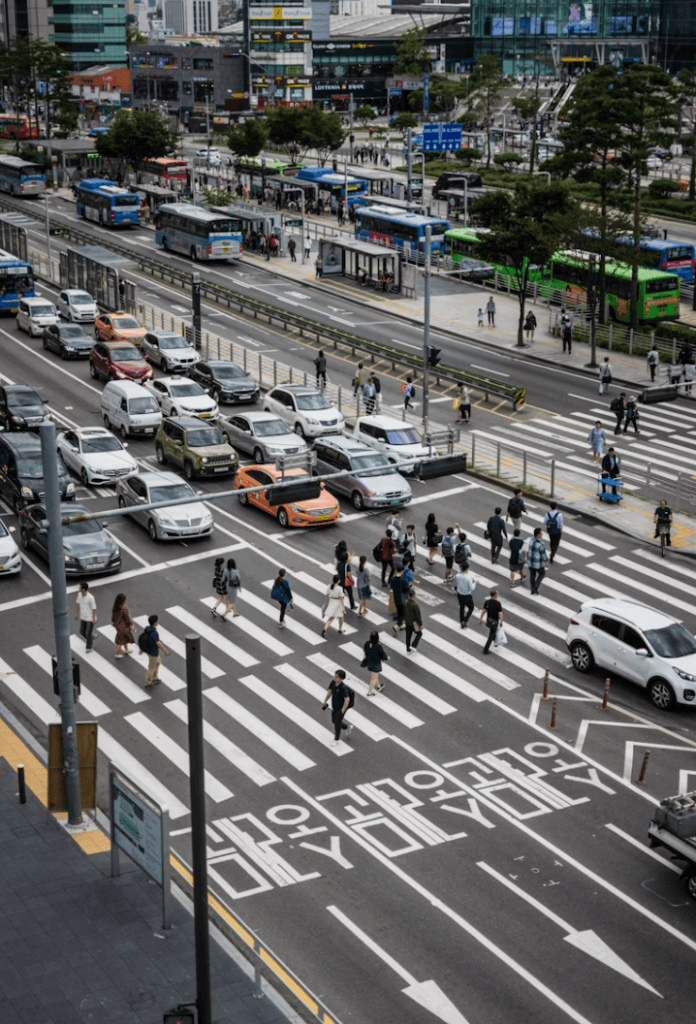

Kwangjang Market
In this post, I want to share how Koreans live their daily lives and the special lifestyle that defines them. ‘Living Like a Local’ isn’t just about acting like a Korean—it’s about feeling the rhythm and heart of the culture to find a Korea that resonates with you. Come along as we step into the heart of genuine Korean daily life.
1. The Morning Ritual: Commuting and Caffeine
Each morning, Korea wakes up to the pulse of its world-class public transport. By 7 AM, the streets are full of life, and the subway stations operate with the discipline and flow of a single, grand organism.
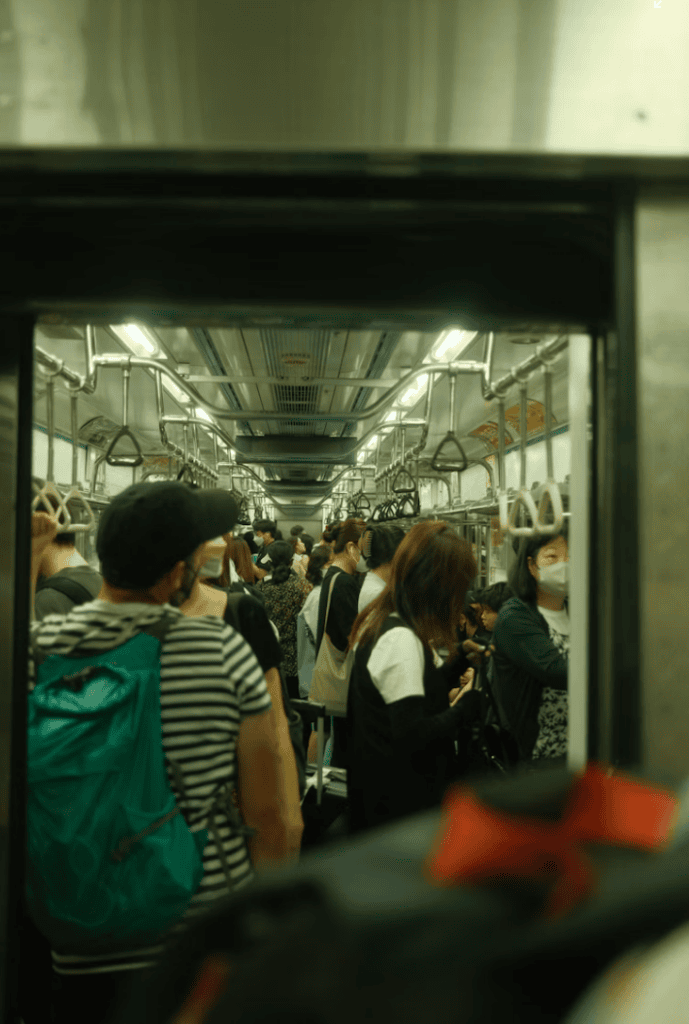
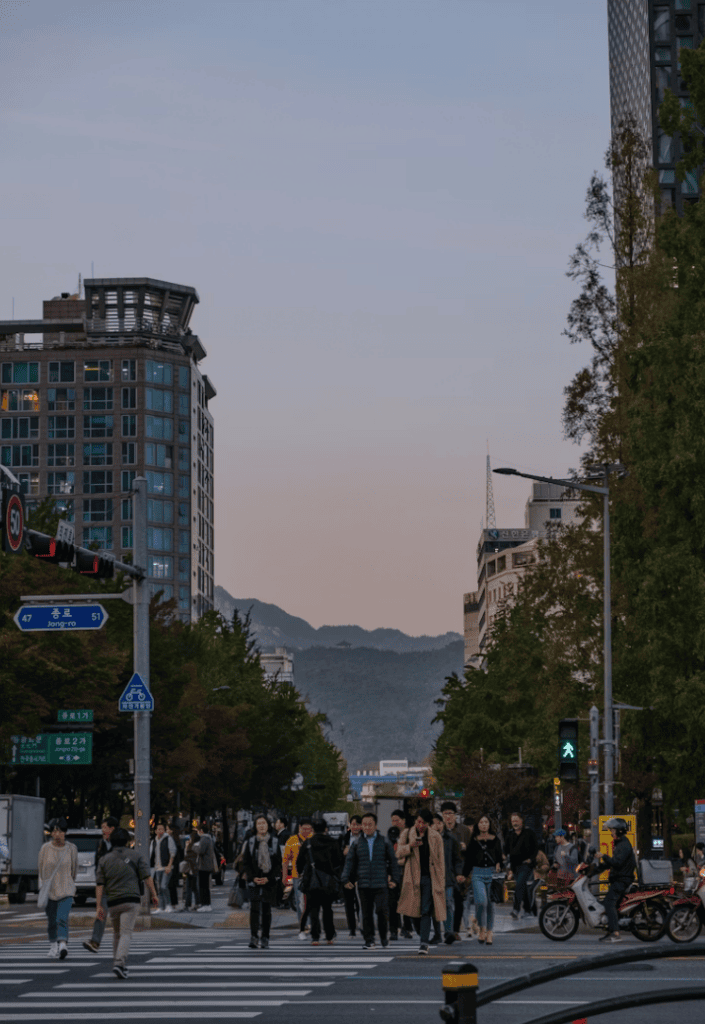
Living like a local in Korea begins with immersing yourself in this flow of ‘smart mobility.’ Whether it’s a rechargeable T-money card or a credit card with transit features, using a single card to transfer seamlessly between subways and buses nationwide is a quintessential part of Korean life—as is checking apps that provide arrival times down to the very second.
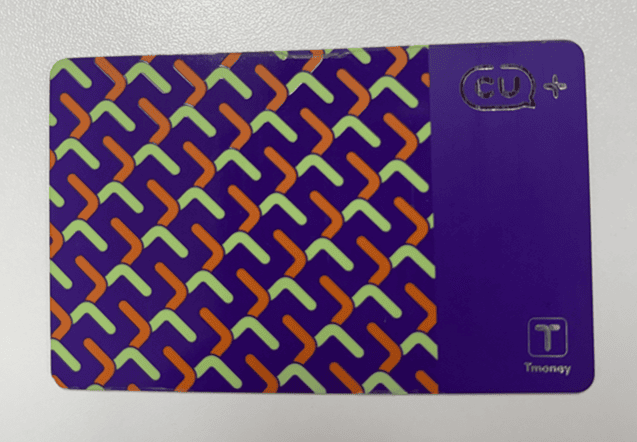
T-Money Card (You can top up your card at a convenience store with any amount you want and use it for transit as well as shopping at the store)
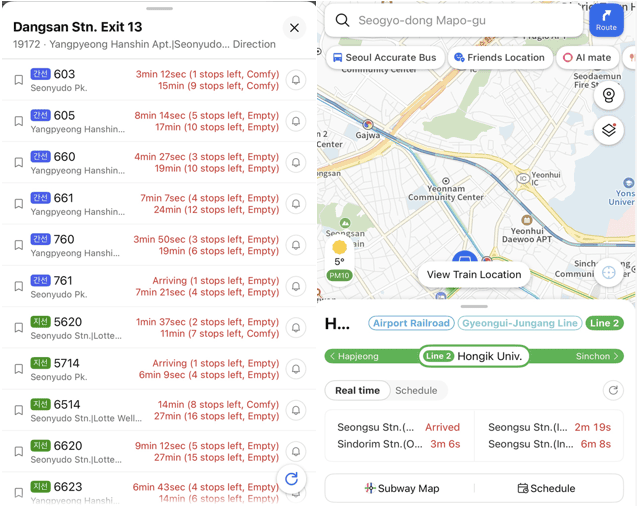
Bus Arrival Time / Subway Arrival Time
The true companion of this bustling morning commute is none other than the “Iced Americano.” Even in sub-zero temperatures, Koreans stick to their cold coffee—a cultural phenomenon known as “Eol-juk-a” (literally “freeze to death for iced coffee”). While this may seem baffling to foreigners, for Koreans, coffee is more than just a beverage; it is a “survival potion” needed to get through the day. The sight of office workers strolling with a coffee in hand after lunch is a unique ritual where Korea’s signature hustle and brief moments of leisure coexist.

As of late 2022, the number of cafes in South Korea surpassed 100,000. With approximately 1,500 cafes per million people, Korea leads the world in cafe density, overwhelmingly outpacing Japan (529), the UK (386), and the US (117). Despite a population of about 51.61 million, South Korea ranks 3rd in the world for total cafe market revenue, following only the US and China.
With an individual consumption rate of about 367 to 400 cups per year, South Korea has truly become a nation of immense coffee consumption.
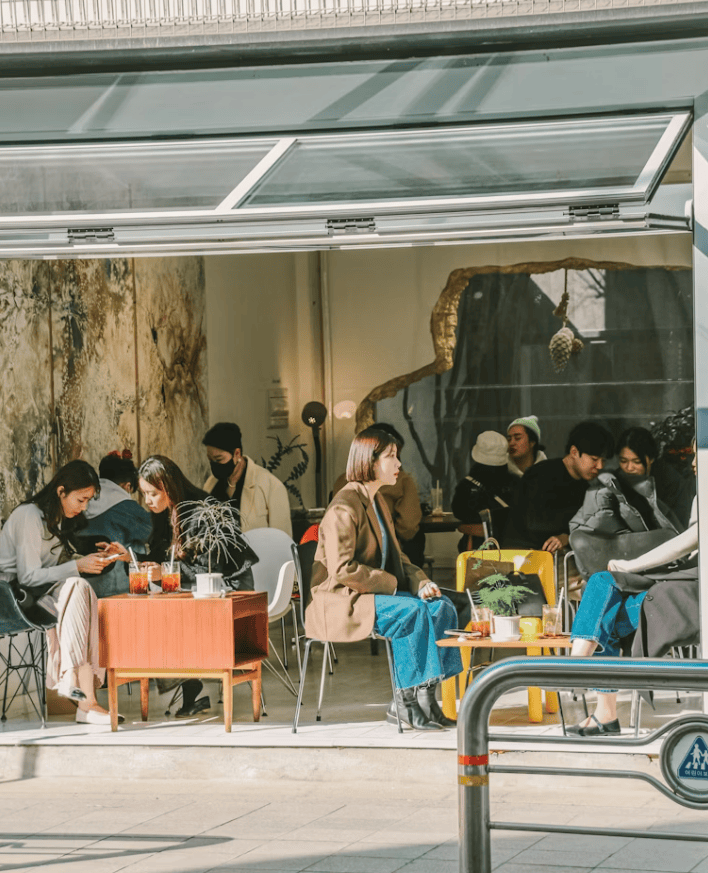
World-class public transportation infrastructure and the stylish cafes found on every corner are the most modern icons that define a Korean morning.
2. The Convenience Store: An Everyday Essential and a Foodie’s Paradise
The most familiar light illuminating the night streets of Korea is undoubtedly the convenience store (Pyeonuijeom). For Koreans, these stores are more than just retail shops; they are multifunctional lifestyle hubs that enhance the quality of daily life. At these 24-hour spaces found anytime and anywhere, we send parcels, withdraw cash, and use them as landmarks for a safe walk home late at night.
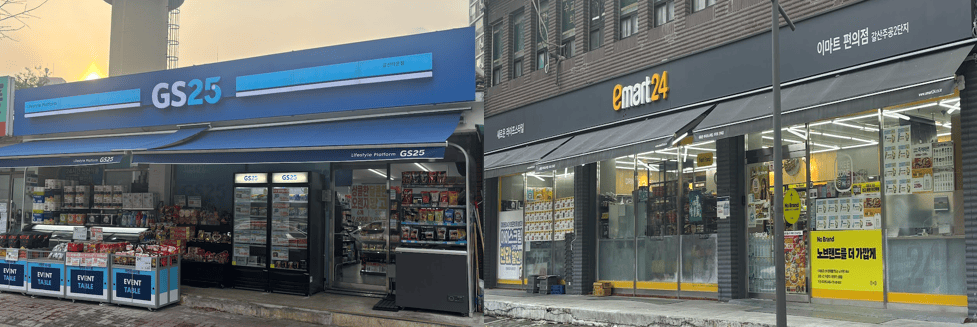
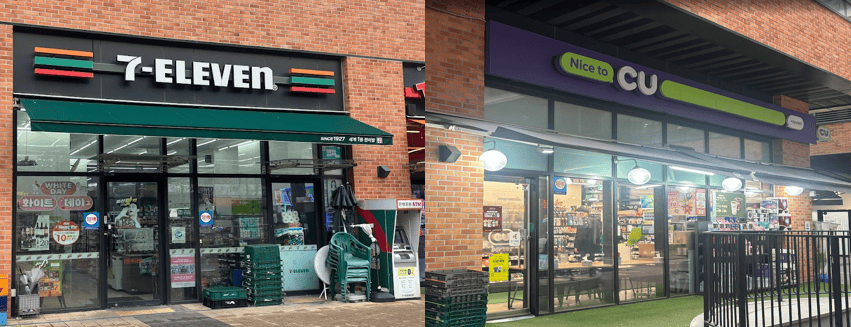
South Korea’s major convenience store brands: GS25, CU, 7-Eleven, and emart24
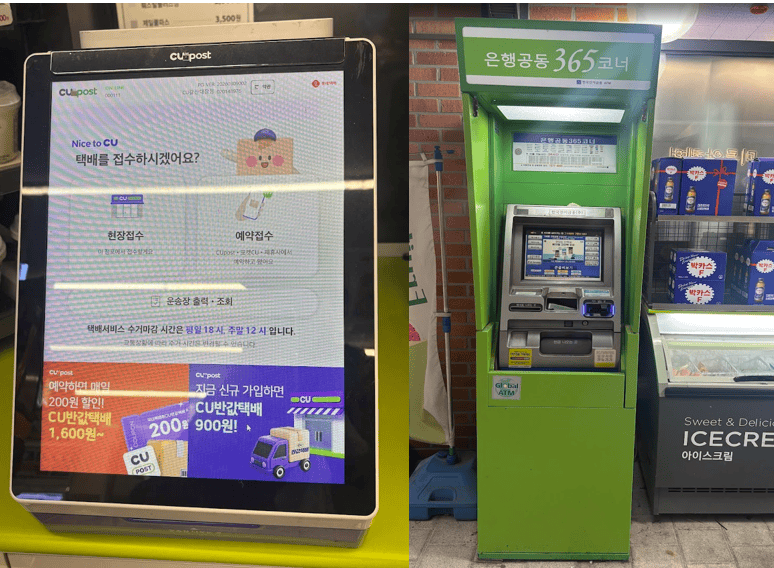
Sending parcel / ATM


Furthermore, they function as a local safety net through the “Convenience Store Safety Guard” (Ansim-jikimi) program. In this role, if someone feels threatened late at night, they can take refuge in a 24-hour store and ask for help. The store then immediately alerts the police via 112 or a wireless emergency bell to ensure a rapid response (though this service may not be available at every single location).

Women Ansim-Jikimi(Womem Safe Place): Yellow Sign
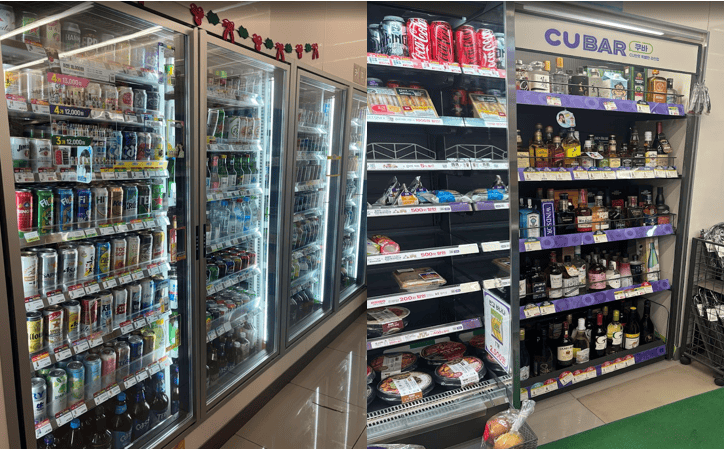
However, the part that international travelers are most enthusiastic about is undoubtedly “Convenience Store Gourmet” (Pyeonuijeom Misik). The vibrant ramen shelves covering entire walls and the “Hangang Ramen” machines—where you can cook instant noodles on the spot—have become a must-visit course for any trip to Korea.
Engaging in the “Convenience Store Food Combos” (Honey Combinations) trending on social media is the most affordable yet delightful local experience. Visitors love creating their own dishes like the Ramen + Cheese + Triangle Kimbap mix, or DIY drinks such as the “Hazelnut Banana Latte” (mixing banana milk with hazelnut coffee) and the “Melon Latte” (a blend of melon milk and coffee). From chef-curated lunch boxes (Dosirak) to seasonal fruits and limited-edition desserts, Korean convenience stores are dynamic cultural spaces where new trends are born every single day.

Ramyeon with Cheese
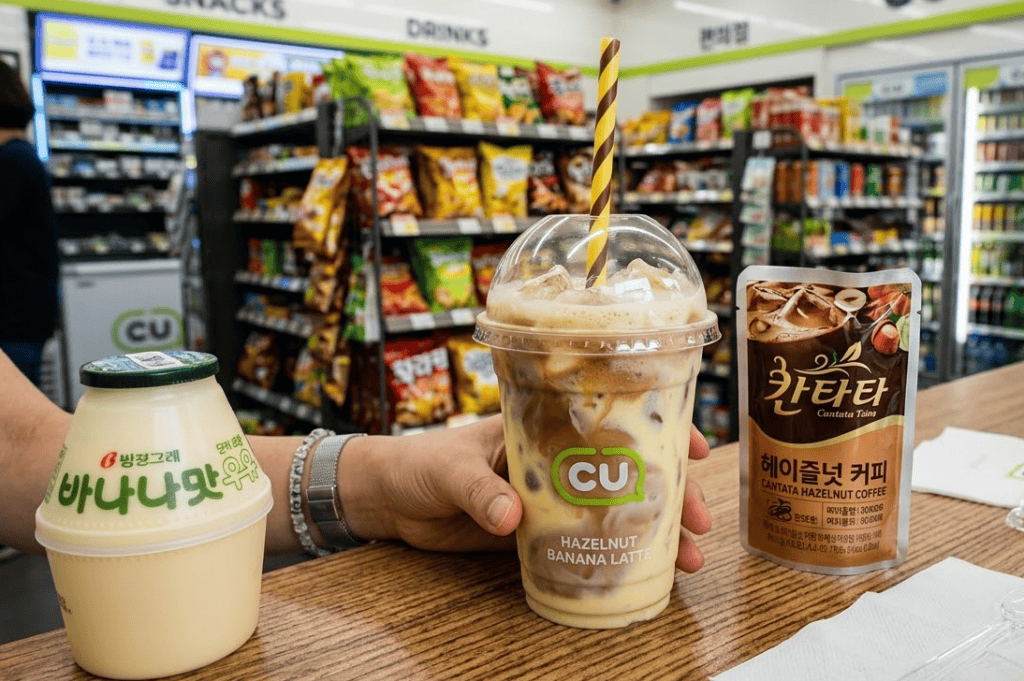
Banana Milk+Hazelnut Coffee : Hazelnut Banana Latte
3. Work-Life Balance and the ‘Hoesik’ (After-work Dining) Culture
To understand daily life in Korea, one must recognize “Hoesik” (after-work dining) as a unique and essential social ritual. While “Hoesik” in the past was often associated with mandatory drinking sessions, modern Korean society is rapidly shifting toward prioritizing “Work-Life Balance” (Worabel) and respecting individual lives.

Today, these gatherings have evolved into diverse forms of flexible communication aimed at building team bonds. They now range from exploring famous restaurants and having lunchtime team meals to “Cultural Hoesik,” such as going bowling, visiting exhibitions, or watching movies together.

As the sun sets, the sight of office workers gathering in groups to enjoy “Chimaek” (Chicken and Beer) or unwinding from the day’s fatigue in front of a sizzling plate of Samgyeopsal (Pork Belly) has become an iconic symbol of Korea’s vibrant nightlife. (For more details, please refer to my blog posts: “[Crispy Chicken and Cold Beer] Diving into Korea’s Iconic ‘Chimaek’ Culture” and “[K-BBQ] Everything You Need to Know Before Stepping into a Korean BBQ Restaurant“)
Especially on Friday nights, known as ‘Bul-geum’ (Burning Friday), the sight of shops and public transportation operating safely until the early hours of the next morning never fails to amaze foreigners. This dynamic nightscape that follows intense working hours is the true way Koreans recharge their energy and share the warmth of their community (Jeong).
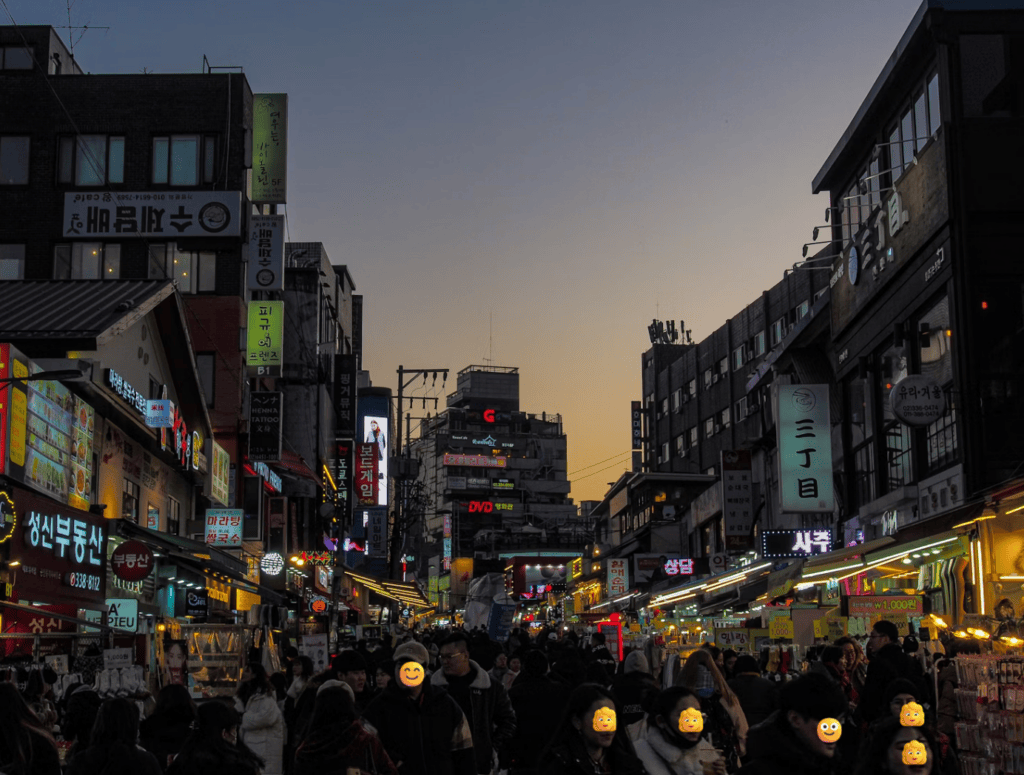
Hong-Dae

Yeongdeungpo
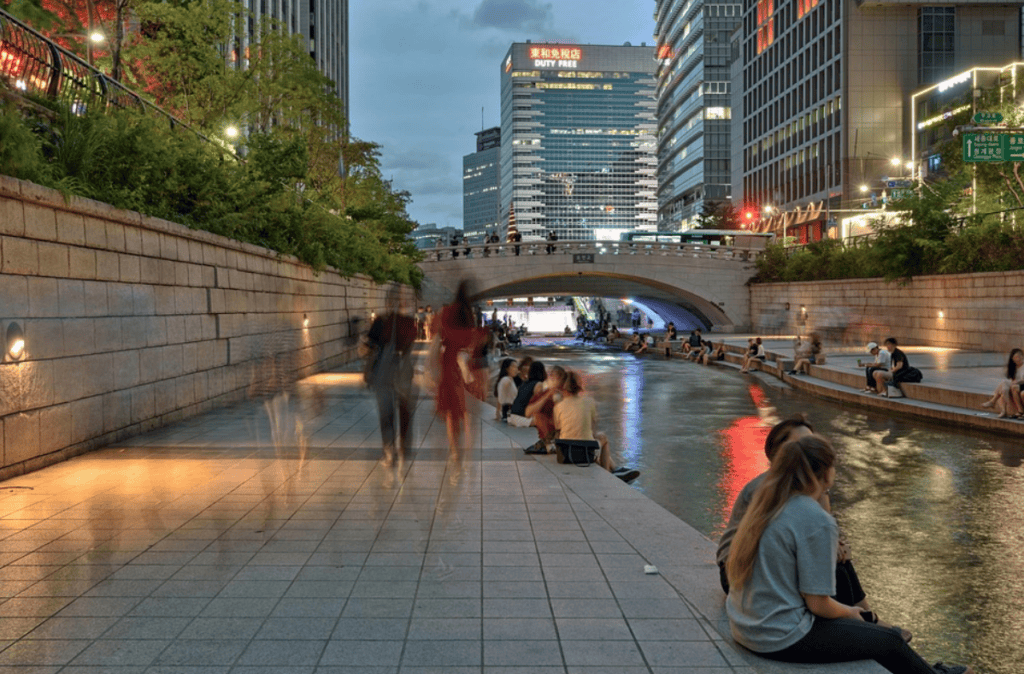
Cheonggyecheon Stream
4. Leisure & Wellness: Jjimjilbang and Hanok Stays
Korean relaxation is a form of wellness that restores life’s balance. At the heart of this is the Jjimjilbang, a place where Koreans gather on weekends to sweat, shower, and release the week’s tension. The cycle of moving between hot kilns and ice rooms while sharing sikhye and eggs is a unique social de-stressing process. For many tourists, joining locals in their ‘lamb-head’ towels for a day of rest is one of the most iconic and impressive parts of their journey to Korea.
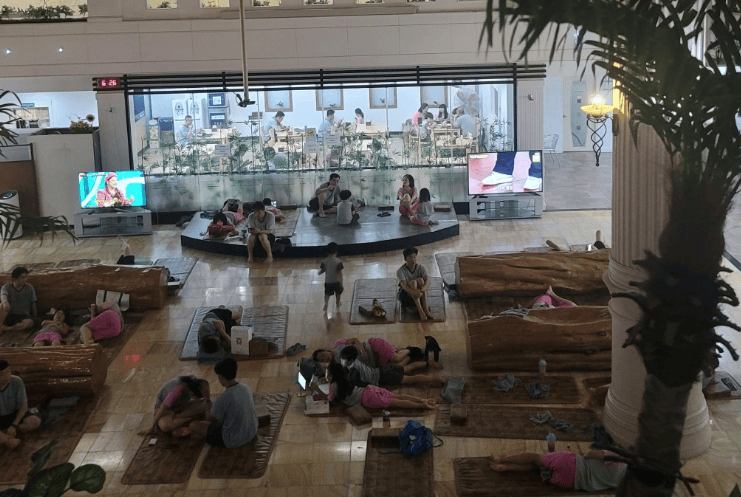
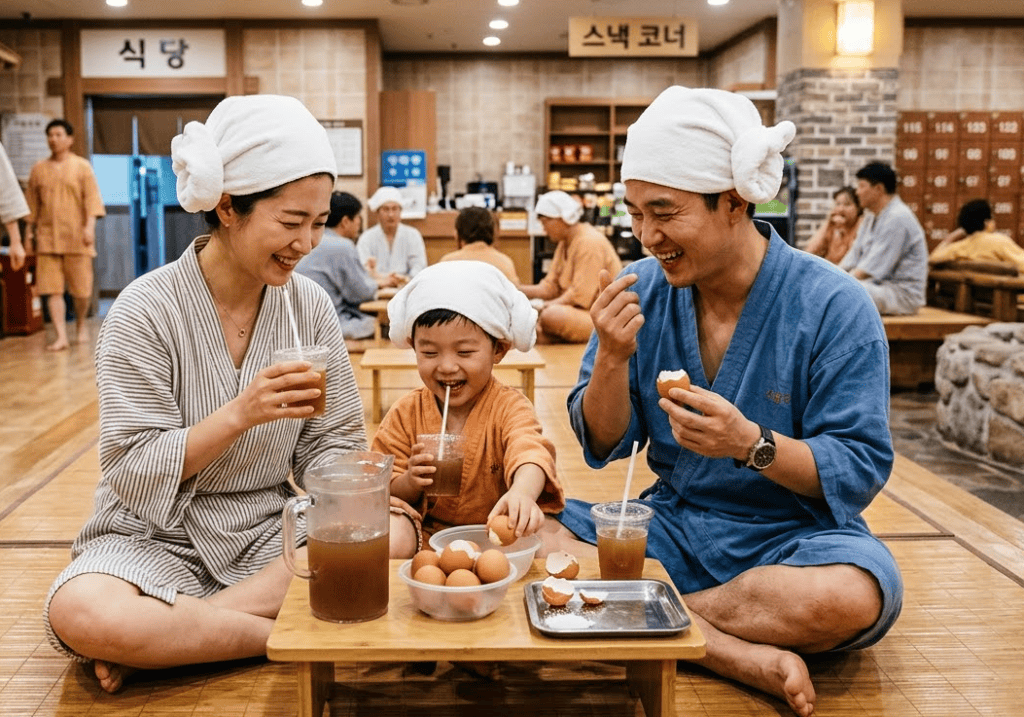
Jjimjilbang
For those seeking a more tranquil retreat, a Hanok Stay is highly recommended. The moonlight filtering through paper-covered doors and centuries-old wooden pillars invites you to forget the city’s noise and find inner peace. Relaxing with a cup of tea on the warmth of an ondol (heated) floor is where the wisdom of the past meets modern sensibility. Choosing a night in a Hanok over a modern hotel will offer you the true beauty of Korea and a deeply serene rest.


5. Seasonal Wisdom: Living with the Lunar Calendar and Regional Festivals
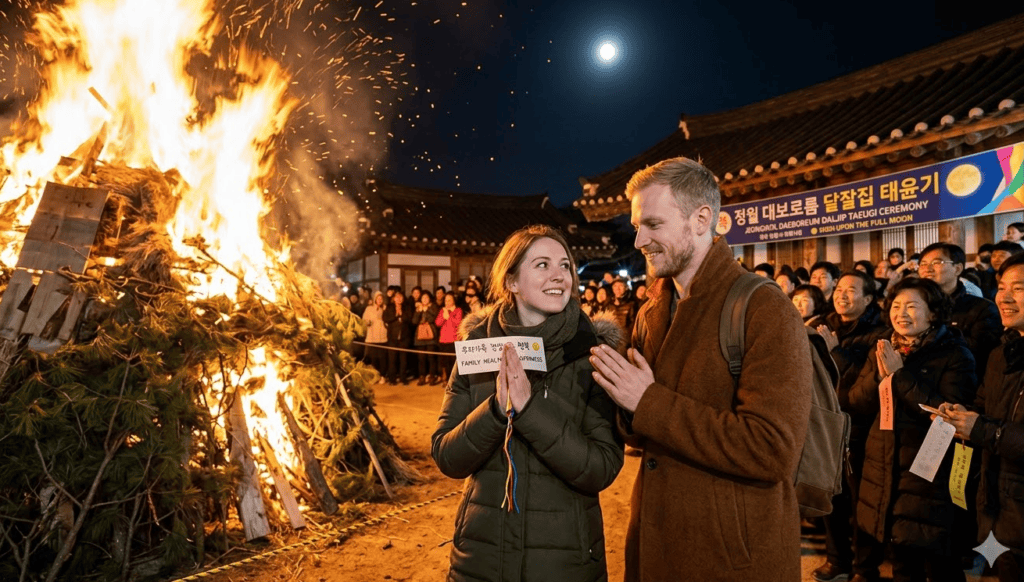
In Korea, daily life is a seamless coexistence of cutting-edge technology and the ancient wisdom of the Lunar Calendar. While the city clock moves at a frantic pace, Koreans still align themselves with the rhythms of nature by enjoying seasonal foods. There is no better moment to feel this ‘wisdom of the seasons’ than Jeongwol Daeboreum, the festival of the year’s first full moon.
During this time, people share Ogokbap (five-grain rice) to wish for a bountiful year and perform a grand fire ritual called Daljiptaeugi (moon house burning) to ward off misfortune. As seen in the event I attended in Bupyeong, Incheon, making a wish while watching flames roar in the middle of a modern city reveals a uniquely dynamic side of Korean spirituality. For more details, please check out my post: Jeongwol Daeboreum Guide: Korea’s First Full Moon Festival and Traditional Foods.“
“Beyond these major lunar holidays(I’ll share a separate post about Korean traditional holidays later), Korea hosts countless regional festivals throughout the four seasons.
These include spring flower festivals (Jinhae, Gwangyang, Yeouido), energetic summer events (Boryeong Mud, Hwadam Forest Hydrangeas), autumn spectacles (Jinju Lanterns, Seoul Fireworks), and winter wonderlands (Hwacheon Ice Fishing, Daegwallyeong Snow). I’ll be visiting these festivals soon to capture photos and videos, so I can introduce each one to you right here on my blog.
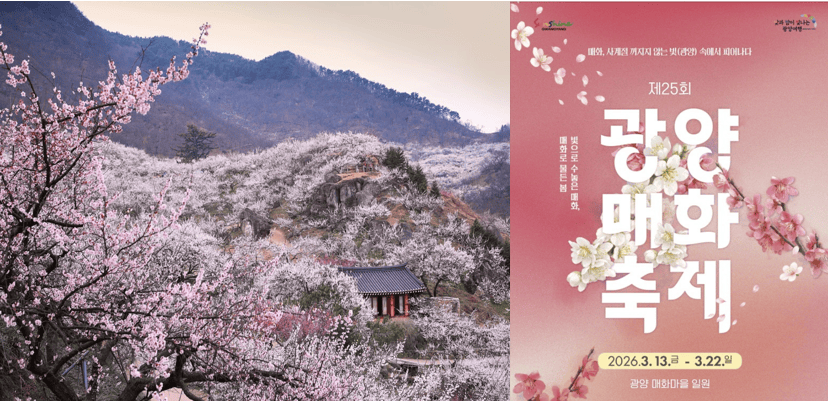
Gwangyang Maehwa Festival (Gwangyang Apricot Flower Festival) / Photo courtesy of Gwangyang City Office
Source: [Koreanet] – 2025 Boryeong Mud Festival (YouTube)
Source: [Jinju Namgang Yudeung Festival] – 2025 Jinju Namgang Yudeung Festival (YouTube)
6. Final Thoughts: Defining Your Unique Korean Experience
“Living like a local” in Korea means more than just visiting specific landmarks or eating trendy foods. It is a “journey of engagement”—feeling the dynamic energy within the bustling crowds of a Seoul morning subway, finding small comforts under the warm lights of a neighborhood convenience store, enjoying the neon signs that never flicker out until the dawn in the heart of the city, and making wishes alongside strangers in front of a blazing Daljip (moon house) during the First Full Moon Festival (Jeongwol Daeboreum).
The true charm of Korea is not found on a movie screen or a glitzy stage; it is hidden within the alleyways you walk through and the warm smiles of the people you meet along the way. For a moment, close your guidebook and feel the warmth of this land at your own pace.
With Find Your Korea, you can become the protagonist of the beautiful Korean culture. Now, it’s time to record a Korea that is uniquely yours.
FindYourKorea #LivingLikeALocal #KLifestyle #SouthKoreaTravel #SeoulLife #KoreanCulture #VisitKorea #AuthenticKorea #SeoulFoodie #KFood #KoreanConvenienceStore #Kramen #Chimaek #KoreanBBQ #SeouEats #StreetFoodKorea #ConvenienceStoreHaul #KCommute #IcedAmericano #Jjimjilbang #HanokStay #KWellness #KoreanTradition #WorkLifeBalance #SeoulVibe #TravelTipsKorea #SpringInKorea #CherryBlossomKorea #JinhaeGunhangje #SummerInKorea #BoryeongMudFestival #AutumnInKorea #KoreaFallColors #WinterInKorea #IceFishing
핑백: Korean Cafes & Desserts: A Timeless Experience of Old and New – Welcome To Find Your Korea