

If there is one culinary experience that defines the soul of Korean dining, it is undoubtedly Korean BBQ. More than just a meal, it offers a window into Korea’s rich traditional food culture.
As you gather around a glowing grill and place the meat on the grates, the rhythmic sizzle, combined with the vibrant flavors and colors of endless side dishes (Banchan), creates an atmosphere of pure excitement. Whether it’s savory marinated Galbi or the juicy, classic Samgyeopsal (pork belly), Korean BBQ is an interactive art form where you become the chef.
In this post, we’ll explore why Korean BBQ has captured hearts worldwide—from the secrets of the perfect ‘Ssam’ (wrap) to the communal joy that makes every bite feel like home.
1. The Art of the “Ssam”: Crafting the Perfect Bite
If you had to pick the most iconic and joyful moment of the K-BBQ experience, it would undoubtedly be the moment you craft a ‘Ssam.’ Derived from the Korean word meaning ‘to wrap’ or ‘to pack,’ Ssam is much more than just a way to eat meat with vegetables. It is a sophisticated art of layering flavors, one on top of the other.
The Artistry Behind the “Ssam“
1) A Harmonious Flavor Explosion
The fresh lettuce or fragrant perilla leaf spread across your palm serves as a blank canvas. On it, you place a piece of perfectly grilled meat, a dab of savory and salty Ssamjang (soybean paste sauce), a slice of pungent raw garlic, and a topping of sweet and sour scallion salad. The moment these ingredients merge in your mouth, the richness of the meat is perfectly balanced by a burst of fresh, intense flavors.

2) The Perfect Nutritional Balance
The reason K-BBQ is celebrated worldwide as a “healthy dining” option lies in the Ssam. It allows you to enjoy high-protein meats while consuming a generous amount of fresh vegetables packed with dietary fiber and essential vitamins. This eating method is a reflection of Korean wisdom, designed to harmonize taste with digestion and nutritional balance.

3) The Culture of Sharing “Jeong”
In Korea, there is a unique tradition of carefully crafting a Ssam and placing it directly into someone else’s mouth. This gesture showcases “Jeong”—a uniquely Korean sentiment that expresses deep affection, care, and respect for others. A Ssam is more than just a vessel for personal taste; it is a warm medium used to share one’s heart with those at the table.
Tip for Beginners: Ssam Etiquette for the Perfect Experience
One of the most important rules when making a Ssam is the “One-Bite Rule.” You should craft your wrap to a manageable size so it can be eaten in a single mouthful. Since biting into a Ssam can cause the juicy fillings to spill out, it is considered good manners—and much cleaner—to adjust the ingredients to fit your mouth size. Go ahead, pop the whole wrap in, and fully enjoy the symphony of flavors as they unfold with every chew!
2. Marinated vs. Non-Marinated: The Great K-BBQ Debate
When you sit down at a K-BBQ restaurant and open the menu, you’re immediately faced with a classic dilemma: “Should I enjoy the natural, savory taste of the meat, or go for the addictive, bold flavors of the marinade?” Here is a look at how Koreans enjoy these two distinct styles and what makes each of them so special.
1) The Pure Bliss: Non-Marinated Meats
Non-marinated meats are the ultimate choice when you want to fully experience the freshness and natural texture of the meat.
- Signature Dishes: Samgyeopsal (pork belly), Kkot-deungsim (ribeye/sirloin), and Hangjeongsal (pork jowl).
- Flavor Profile: The star of the show is the savory fat and rich juices that develop as the meat sizzles on the grill. When grilled to be crispy on the outside and juicy on the inside, the nutty flavors become even more intense with every bite.
- How to Enjoy: It is typically enjoyed with a light dip in coarse salt or Gireum-jang (a mixture of sesame oil and salt). This clean pairing is key, as it enhances rather than masks the natural flavor of the meat. You can also dip it in Ssamjang—a traditional Korean sauce made from a blend of fermented soybean paste and chili paste—for a savory kick.


2) The Flavor Bomb: Marinated Meats
Marinated meats boast an irresistible addiction, with Korea’s signature “sweet and salty” (Dan-jjan) sauce deeply infused into every fiber of the meat.
- Signature Dishes: Marinated Galbi (beef or pork ribs), Bulgogi (thinly sliced marinated beef), and Gochujang Samgyeopsal (spicy pork belly).
- Flavor Profile: A secret marinade made from a blend of soy sauce, garlic, sugar, and pear juice acts as a natural tenderizer, making the meat incredibly soft. The highlight of marinated meat is the “smoky flavor” (Bul-mat) created when the sauce lightly caramelizes over the charcoal grill.
- How to Enjoy: Since the marinade itself has a bold flavor, it is best enjoyed with a bowl of steamed rice. Another “unwritten rule” (Guk-rul) among Koreans is to wrap the meat around cold, tangy Naengmyeon (buckwheat noodles) for the perfect sweet, savory, and refreshing finish.

Marinated Meat
K-BBQ Pro Tip: The Order Matters!
Koreans typically follow a specific order: start with non-marinated (plain) meats and move on to marinated ones (Plain → Marinated). This is because if you eat the bold, flavorful marinated meat first, it becomes difficult to fully appreciate the delicate, nutty notes of the plain cuts. The perfect K-BBQ course starts with savory non-marinated meat to awaken your palate, followed by a grand, sweet finale of marinated meat.
3. The Magic of “Banchan”: More Than Just a Side Dish
For many visitors, the most surprising moment at a Korean restaurant happens even before the meat arrives: it’s the sight of numerous small dishes suddenly filling the table. Known as “Banchan,” these side dishes represent the abundance of the Korean table and are the essential elements that complete the K-BBQ experience.
What Makes Banchan So Special?
1) Endless Variety & Free Refills
The Korean culture of Banchan is rooted in the sentiment of “Jeong.” This tradition stems from a heartfelt desire to ensure guests are fed abundantly, and its most remarkable feature is that almost all side dishes are refilled for free. From spicy Kimchi and seasoned vegetables (Namul) to savory pancakes (Jeon) and pickled delicacies (Jangajji), this endless variety doesn’t just make the table look visually stunning—it turns the very beginning of the meal into a celebration.

Banchan
2) The “Conductor of Flavor”: Balancing Your Palate
Banchan are far more than just simple side dishes; they play a crucial role in cutting through the richness of the meat.
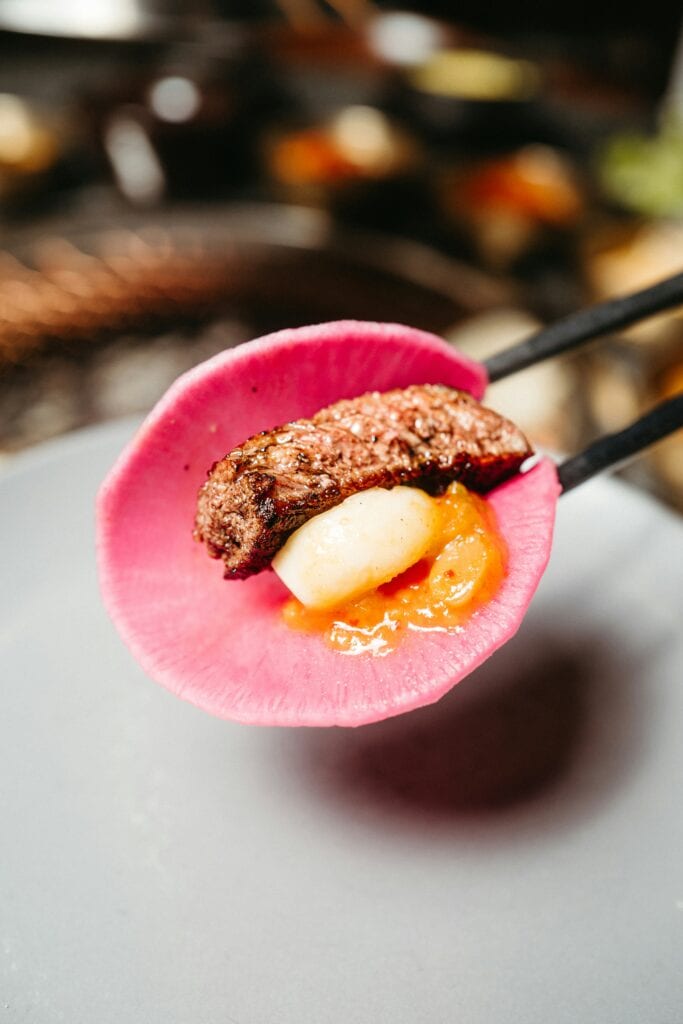
- The Art of Fermentation: Crunchy, spicy Kimchi or tangy pickled radish wraps (Mu-ssam) act as a palate cleanser, refreshing your mouth after a savory bite of meat.
- A Harmony of Freshness: The sharp, zesty kick of freshly tossed Scallion Salad (Pa-jeori) is a match made in heaven for the nutty flavor of Samgyeopsal (pork belly).
- Soft Comfort: Silky Steamed Egg (Gyeran-jjim) or sweet Corn Cheese work beautifully to neutralize spicy flavors and add a rich, comforting texture to the meal.

Pajeory – Steamed Egg – Corn Cheese – Mussam
The “Hidden Stars” of K-BBQ Banchan
- Kimchi: Korea’s ultimate soul food. When grilled alongside the meat, its flavors intensify, creating a deep, smoky richness that is truly unparalleled.
- Jangajji (Pickled Vegetables): These vegetables, pickled in a savory soy-based brine, provide a sharp contrast that elevates the “umami” (savory depth) of the meat.
- Doenjang-jjigae (Soybean Paste Stew): Taking sips of this hearty, savory stew between bites of meat is a favorite ritual for Koreans. It provides a warm, earthy balance that rounds out the entire meal.

Kimchi and Jangajji

Doenjang-jjigae
4. The Perfect Pair: K-BBQ and Its Iconic Liquid Companions
Beside the rhythmic sizzle of meat on the grill, there is another sound that is never missing from a K-BBQ restaurant: the energetic “Jjan!” (Cheers!) as glasses clink together. For Koreans, BBQ and drinks are an inseparable pair, transforming a simple meal into a vibrant social festival.
The Three Main Stars That Fill the Soul of K-BBQ
1) Soju
The Eternal Companion to Meat When you think of K-BBQ, the first thing that comes to mind is the iconic green bottle: Soju. With its clean and transparent flavor, Soju plays a vital role in refreshing your palate after enjoying rich, fatty cuts like Samgyeopsal.
- Why it works: The relatively high alcohol content and crisp finish of Soju provide a perfect contrast to the savory fats of the meat. It cleanses the mouth, making the very next bite of meat taste just as delicious as the first.

2) Maekju (Beer)
A Burst of Cooling Refreshment As you grill meat over a hot fire, you’ll naturally find yourself craving something cold and carbonated. Korean beer is generally light and highly refreshing, making it the ultimate drink to quench your thirst, especially when paired with bold, marinated meats like Galbi.

3) Somaek
The Magic of the Korean Cocktail Somaek, a blend of Soju and beer mixed in a “golden ratio,” is often called the “crown jewel” of the K-BBQ experience. When the potency of Soju meets the refreshing carbonation of beer, it creates an incredibly smooth finish. Often prepared with flamboyant mixing performances at social gatherings, Somaek is the ultimate catalyst that cranks up the energy of the meal.

5. “The Griller” – A Shared Experience: The Joy of Grilling Together
In a Western steakhouse, you wait for a perfectly cooked steak to be delivered from the kitchen. At a K-BBQ restaurant, however, the grill at the center of the table becomes the stage. Here, someone takes up the tongs and scissors to become “The Griller,” leading the rhythm of the meal. This active, hands-on process is the very core of what makes K-BBQ the most dynamic dining culture in the world.
Why is Grilling It Yourself So Special?
1) The Sensory Joy of the Wait
The moment the meat hits the grill, K-BBQ transforms the wait into a form of entertainment. From the rhythmic sizzle that fills your ears and the savory aroma that teases your nose to the visual transformation of the meat turning from bright pink to a rich, golden brown—every second is part of the show. There is a unique thrill in controlling the level of doneness to your liking and picking up a piece at the perfect moment, a joy that simply can’t be found in a pre-cooked meal.

2) “Care and Connection” in Every Pair of Tongs
In a Korean dining setting, the person holding the tongs is usually the most experienced griller or the one who wishes to show hospitality to the group. The simple acts of pushing a perfectly cooked piece of meat toward a guest or carefully cutting it into bite-sized pieces are infused with “Jeong”—the uniquely Korean sentiment of affection and consideration. As the conversation flows over the sizzling grill, the shared wait for the meat to cook acts as a catalyst, drawing people closer together.

K-BBQ Pro Tip: Etiquette for the Griller
If the restaurant staff handles the grilling for you, simply sit back and enjoy the meal. However, if you and your friends are taking charge of the grill, keep an eye on the timing for “Changing the Grill” (Bul-pan Gal-gi). When the marinade begins to burn and the plate turns black, requesting a fresh grill plate from the server is a crucial mission for any Griller who wants to ensure every bite stays delicious.
6. The Grand Finale: Rounding Out Your Meal with Fried Rice and Cold Noodles
There is a unique culture in Korean BBQ restaurants that often baffles foreigners at first, only for them to fall head over heels for it later: ordering another full meal—like fried rice or cold noodles—right after stuffing yourself with meat. For Koreans, this isn’t just “extra food”; it’s a ritual to cleanse the palate and complete the experience, famously known as “K-Dessert.”
1) Art on the Grill: The Legendary Fried Rice
If you’ve enjoyed pork belly or marinated galbi, you absolutely cannot miss the “Fried Rice Show” that unfolds right on the grill.
- The Secret to the Flavor: It starts with the savory fat left over from the meat, mixed with chopped kimchi, seaweed flakes, sesame oil, and those precious leftover bits of meat. The real highlight is the “Nurungji”—the thin layer of rice spread across the bottom of the grill until it becomes perfectly crispy and toasted.
- Visual Delight: Sometimes, the server will shape the rice into a heart or crack an egg right in the center. This performance is so iconic that you won’t be able to resist taking a photo before digging in.

Fried Rice with Kimchi, Meats, and Vegetables
2) Icy Perfection: The Refreshing Naengmyeon
There is nothing quite like a bowl of cold Naengmyeon (buckwheat noodles) to soothe your palate and cool down your body after the intense heat of the grill.
- Mul-Naengmyeon vs. Bibim-Naengmyeon: You can choose between Mul-Naengmyeon, served in a chilled broth with floating ice chips for a clean and refreshing finish, or Bibim-Naengmyeon, which features a spicy-sweet sauce that reawakens your appetite.
- The Magic of “Yuk-ssam”: A true local pro tip is to save a few pieces of grilled meat to wrap around the cold noodles. The harmony created by the contrast between the hot, savory meat and the icy, chewy noodles is simply fantastic.

Mul-Naengmyeon

Bibim-Naengmyeon

Yuk-ssam
#KBBQ #KoreanBBQ #KoreanFood #KFood #KoreanCuisine #GrilledMeat #FoodGuide #VisitKorea #SouthKorea #Samgyeopsal #PorkBelly #KoreanBeef #Banchan #Naengmyeon #KoreanNoodles #Soju #Somaek #ExploreKorea #SeoulFoodGuide #SeoulEats #MustEatKorea #FindYourKorea
핑백: Living Like a Local: A Deep Dive into the Real K-Lifestyle – Welcome To Find Your Korea