If you are searching for the most colorful and visually striking dish in Korea, it is undoubtedly Bibimbap.
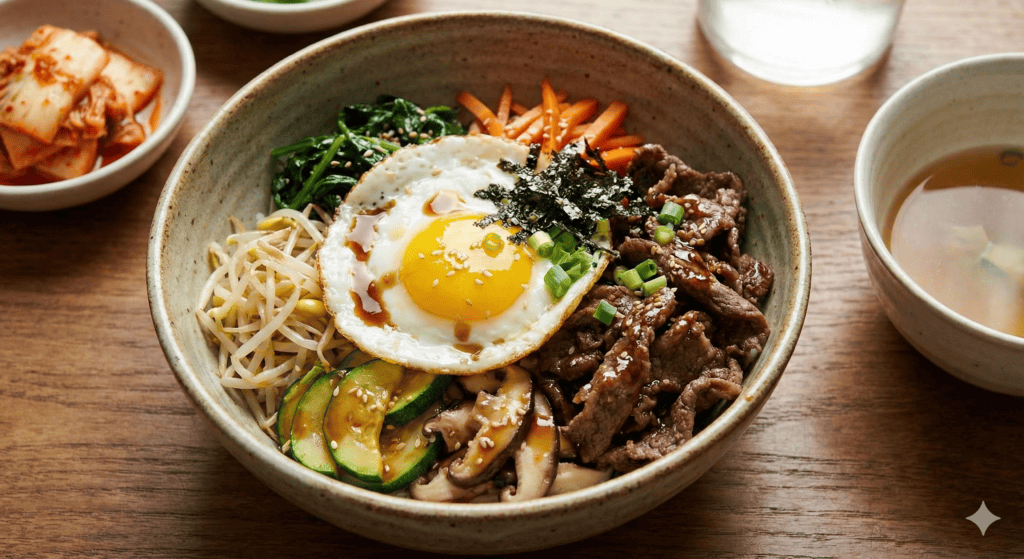
The name Bibimbap comes from the words “Bibim” (mix) and “Bap” (rice). It is a dish served as a bowl of warm white rice topped with seasoned vegetables (namul), marinated meat, a fried egg, and the key ingredients: sesame oil and Gochujang(red chili paste). You eat it by mixing all the ingredients together.
Bibimbap goes beyond simply being a tasty meal; it is a dish that achieves a balance of nutrition and flavor. It features vegetables representing Korea’s traditional Obangsaek (five colors: white, black, green, red, and yellow), ensuring that the bowl is packed with both health benefits and rich taste.
Whether you are a gourmet looking for healthy food, a vegetarian searching for a delicious option, or someone who enjoys spicy flavors, Bibimbap is a dish for everyone.
In this guide, we will cover:
What makes Bibimbap special? (History and Origins)
Key ingredients you need to know
Dolsot vs. Regular: Which one to choose?
Ready to mix it up? Let’s dig in!
1. What makes Bibimbap special?(History and Origins)
Etymology
The Original Name: The dish was historically known by the Hanja (Chinese character) name ‘Goldongban (骨董飯)’. Goldong means “a mixture of various things,” and Ban means “rice.” Together, it literally translates to “rice mixed with various ingredients.” In the royal court, terms related to ‘Bibim’ were also used to describe this mixing process.
First Written Record: The first record of the dish in Hangul (the Korean alphabet) appears in ‘Siujuijeonseo (是議全書)’, an anonymous cookbook from the late 1800s. Back then, it was spelled as ‘Bubuim-bap’, which eventually evolved into the modern name, ‘Bibimbap’.
Three Main Theories of Origin
1) The Ancestral Rites Theory (Jesa Eumbok) – The Most Widely Accepted Theory
“Bibimbap represents community and sharing.”
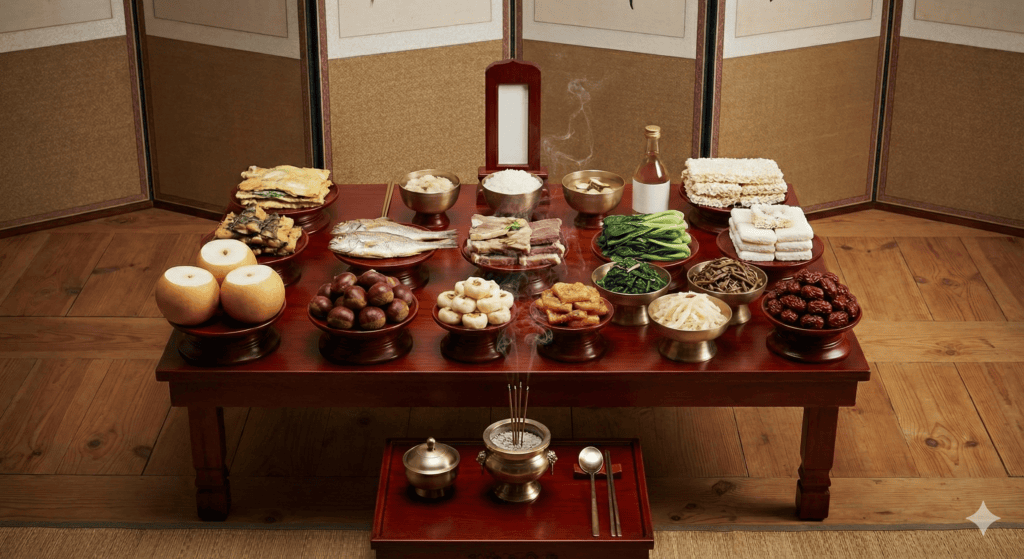
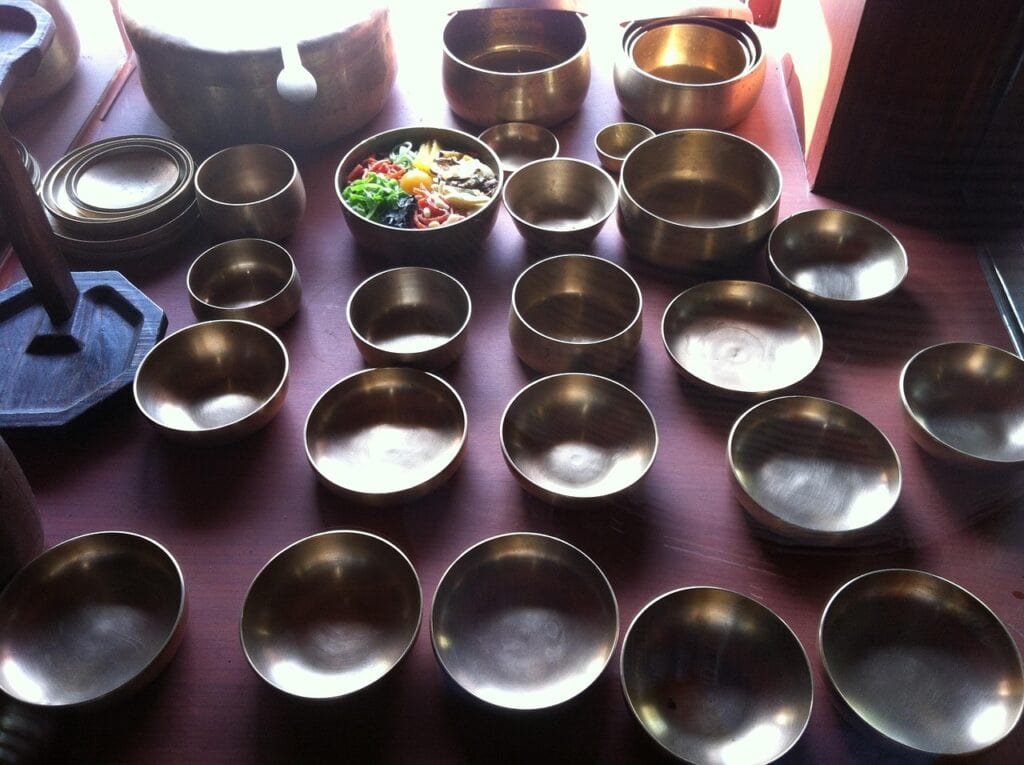
In Korean tradition, families hold memorial ceremonies called ‘Jesa’ to honor their ancestors. During these rites, a table is set with various foods like rice, meat, fish, and seasoned vegetables (namul). After the ceremony, the family, relatives, and neighbors gather to share the ritual food in a practice called ‘Eumbok’. Historically, because there weren’t enough individual bowls for everyone, or simply to make sharing easier, all the ingredients were put into a large bowl and mixed together. This communal act of mixing and sharing is believed to be the origin of Bibimbap.
2) The Farming Food Theory (Deulbap)
“Efficiency and energy for hard work.”
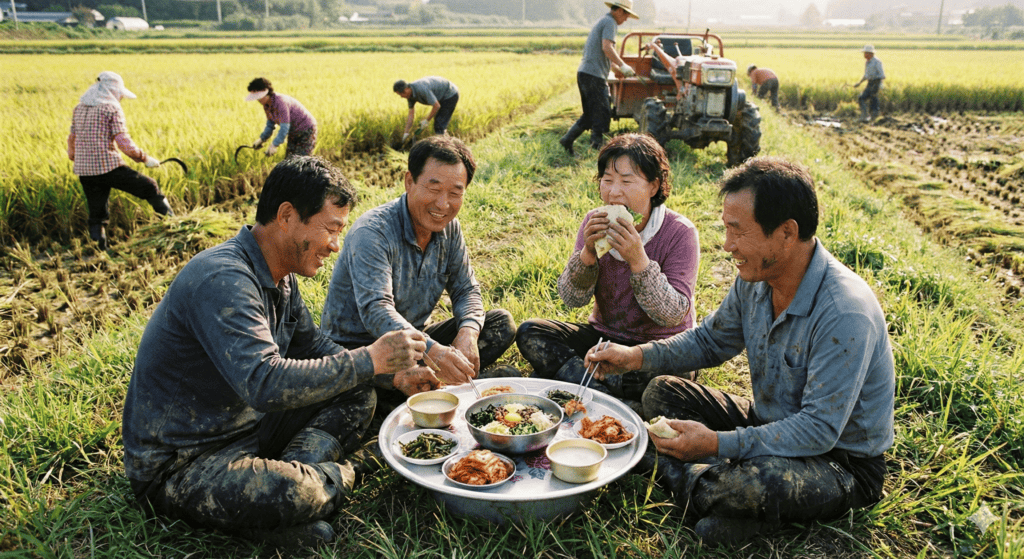
During the busy farming season, farmers often had to eat lunch in the fields. Bringing food from home to distant fields was a challenge; carrying many individual bowls was difficult, and workers needed to eat quickly to get back to work. To solve this, they brought rice (often barley rice) and side dishes in a large container. They would mix everything together in a large gourd bowl, creating a nutritious meal that was easy to share and quick to eat. This practical meal was known as ‘Deulbap’.
3) The New Year’s Eve Theory (Clearing Out Leftovers)
“Starting the New Year with a clean slate.”
This theory suggests that Bibimbap originated from a custom observed on Lunar New Year’s Eve (the last day of the lunar year). Traditionally, people believed that keeping leftovers from the old year into the New Year was bad luck. To ensure a fresh start, families would take all the remaining side dishes and rice from their pantry and mix them together to finish everything before midnight. This was a delicious way to “clean house” and welcome the coming year.
2.The key ingredientsyou need to know :A Bowl of Harmony
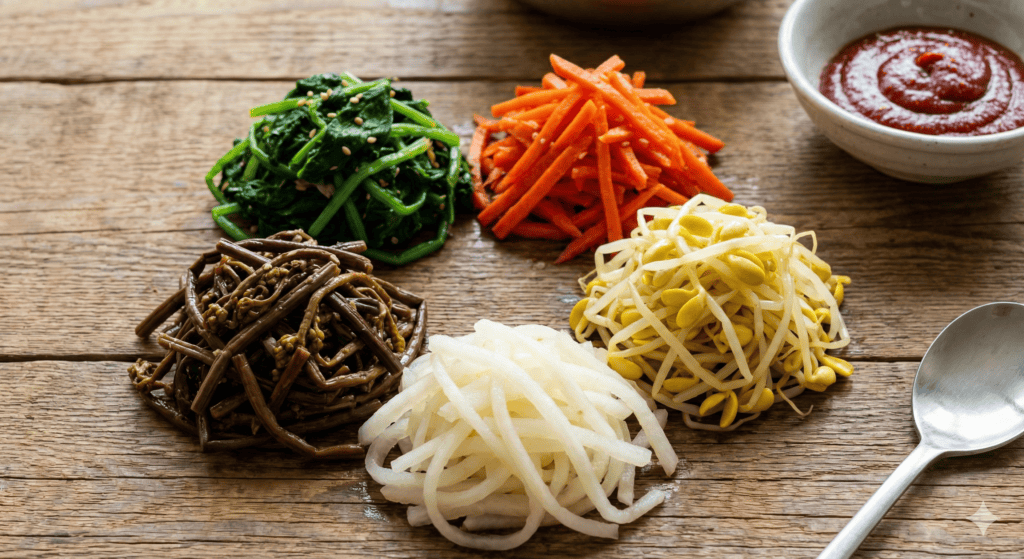
Visual harmony is a hallmark of traditional Korean cuisine. In Korean food, color is not just for decoration; each hue carries a distinct taste and significance. Bibimbap is the perfect embodiment of the traditional philosophy known as ‘Obangsaek’ (The Five Cardinal Colors). Each color represents a direction and element of the universe, working together to create a dish that is perfectly balanced in both nutrition and flavor.
1) The Base: Rice (Bap)
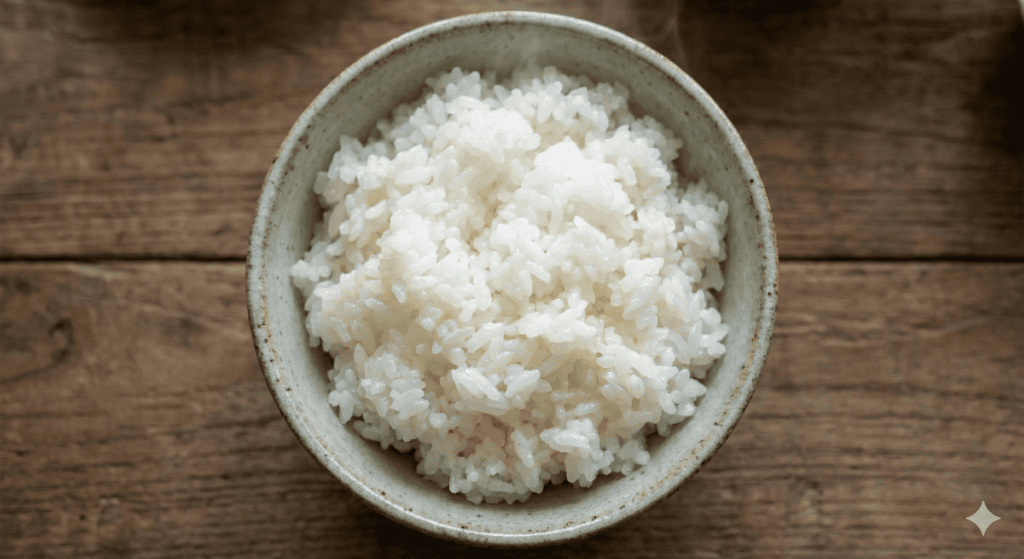
Traditionally, Bibimbap starts with steaming white rice. While modern variations often use brown rice or quinoa for a healthy twist, the subtle, clean flavor of white rice is essential to the authentic experience. It acts as the perfect canvas, balancing the intense flavors of the spicy sauce and seasoned vegetables.
2) The Colors: Seasoned Vegetables (Namul)
🟡 Yellow represents the center of the universe, signifying wealth and nobility. You can taste this in ingredients like bean sprouts, egg yolk, and yellow mung bean jelly.
🟢 Green symbolizes life, creation, and wishes. Fresh vegetables like spinach, zucchini, and cucumber bring this vibrant energy to the bowl.
⚪ White stands for truth, purity, and nature. This is represented by the rice base, as well as bellflower roots (Doraji) and radish.
🔴 Red signifies birth, passion, and love. This fiery energy comes from Gochujang (chili paste), carrots, and beef.
⚫ Black (or dark colors) represents wisdom and rebirth. Deep flavors like fernbrake (Gosari), shiitake mushrooms, and seaweed bring this element to the dish.
Tip: You don’t need all of them! Just try to get a mix of colors to make your bowl look appetizing and healthier
3) The Protein: Meat or Tofu
The Classic: Marinated Beef (Bulgogi). Thinly sliced beef stir-fried with soy sauce and sugar adds a savory sweetness that perfectly complements the spicy sauce.
The Essential: Fried Egg. A sunny-side-up egg is crucial! The runny yolk acts as a secondary sauce, coating the rice and vegetables to make every bite creamy and rich.
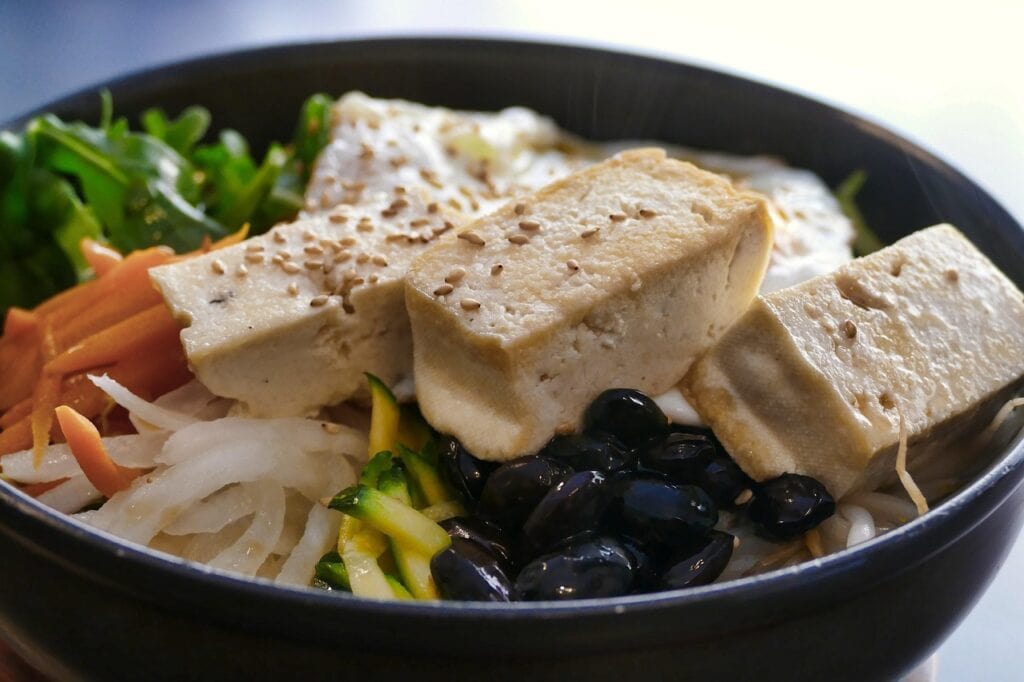
For Vegans: Pan-fried Tofu. Lightly pan-fried tofu is the ultimate meat substitute. It absorbs the spicy sauce beautifully and provides a satisfying, protein-packed texture.
4) The Soul: Magic Sauce (Gochujang)
For Koreans, Gochujang is the “soul” of the kitchen. Simply put, you cannot have Bibimbap without it. This fermented chili paste offers a complex trifecta of flavors: spicy, sweet, and savory (umami) all at once. It binds all the ingredients together into one harmonious dish.
👨🍳 Chef’s Secret:
Start Small: Don’t add too much at once, or it might be too spicy or salty. Add a spoonful, mix it in, taste it, and then add more to your liking.
Non-Spicy Option: For children or those with a low spice tolerance, you can replace Gochujang with a Soy Sauce dressing. It is a delicious, savory alternative!
✈️ Travel Hack: If you fly with a Korean airline (like Korean Air or Asiana), ask the flight attendant for Gochujang. They serve delicious stir-fried Gochujang in small tubes. Be warned: once you get a taste of this, you’ll want to squeeze it onto everything you eat!
5) The Ultimate Nuttiness: Sesame Oil (Chamgireum)
Sesame oil is an indispensable ingredient in Korean cuisine; a kitchen without it is unimaginable. Think of it as the grand finale. After adding all the ingredients, including the Gochujang, drizzle a generous amount of sesame oil on top. Its rich, toasted nutty aroma will instantly fill the kitchen, elevating the flavor of the Bibimbap to a whole new level of perfection.
“Ready to cook? Don’t worry about having the ‘perfect’ ingredients. Bibimbap is all about flexibility. Use whatever fresh vegetables you have in your fridge. Mixing practically any veggie with Gochujang and sesame oil will create your own perfect bowl.”
3. Dolsot vs. Regular:Which one to choose?
The Two Faces of Bibimbap: Traditional vs. Dolsot
Did you know there are two main ways to enjoy Bibimbap? You have the Classic (Traditional) Bibimbap and the sizzling Dolsot (Hot Stone Pot) Bibimbap. To help you decide which one suits your palate, here is everything you need to know to make the perfect choice.
1) Regular Bibimbap (Yangpun / Jeonju Style)
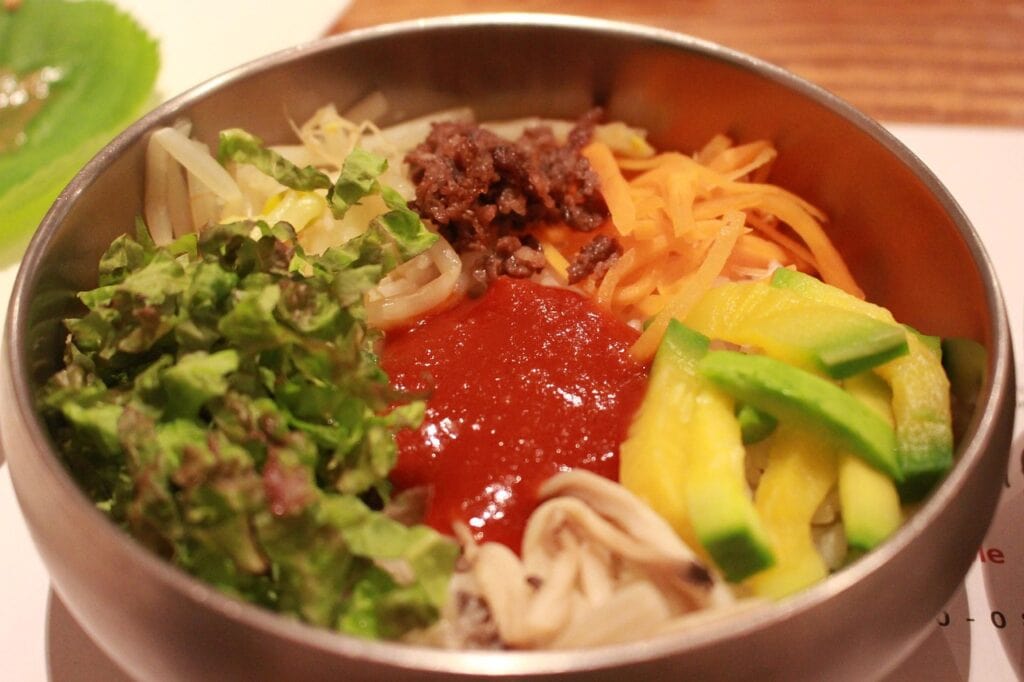
This is the classic version served in a brass, stainless steel, or ceramic bowl.
Temperature: It is served at the perfect temperature to eat right away. The warmth comes from the freshly cooked rice, the stir-fried vegetables, and the fried egg. It’s warm and comforting, but never scorching hot.
The Vibe: Fresh, clean, and light. Without the intense heat of a stone pot, the focus remains entirely on the crisp texture and unique natural flavors of the fresh vegetables.
Best For:
People sensitive to very hot food (no burnt tongues here!).
Those who prefer a refreshing, salad-like meal.
A quick lunch where you don’t want to wait for your food to cool down.
2) Dolsot Bibimbap (Hot Stone Pot)
“Dolsot” literally translates to “Stone Pot.” In this version, the rice and vegetables are served in a scorching hot stone bowl that has been heated directly on the stove.
Temperature:Piping hot! It arrives at your table sizzling loudly, and the stone retains the heat, keeping your meal warm until the very last bite.
The Best Part: Crispy Rice Crust (Nurungji): The highlight of Dolsot Bibimbap is the bottom layer. The stone pot is coated with oil before the rice is added and heated. This process fries the bottom layer of rice against the hot stone, creating a golden, crunchy crust called Nurungji. It adds an irresistible crispy texture to the dish.
The Egg: Unlike the regular version, this is often served with a raw egg yolk. Don’t worry— the intense heat from the stone bowl cooks the egg as you mix it in, creating a rich, creamy sauce.
Best For:
Texture lovers craving that crunchy rice crust (Nurungji).
Cold winter days when you need a hot, comforting meal.
Foodies seeking a full sensory experience (Listen to that sizzle!).
💡Tip: “Don’t mix the bottom right away! Let it sit for a minute to get extra crispy.”
That wraps up Part 1 of our Ultimate Guide to Bibimbap.
But our journey into Korean Bibimbap isn’t over yet! In Part 2, we will dive into:
How to eat like a local (Hint: Don’t just eat it without mixing!)
Why Jeonju? (Discovering the City of Gastronomy)
Stay tuned for the next post—you won’t want to miss it!