
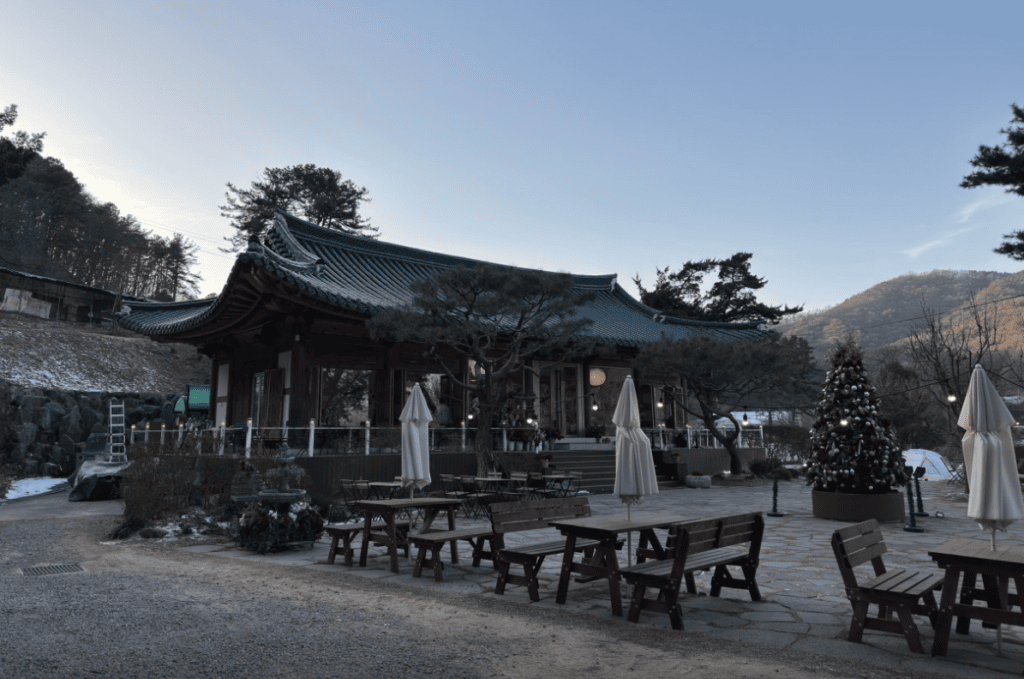
Introduction: Beyond the Cup — Korea’s Unique Cafe Culture
One of the first things travelers notice when visiting Korea is the abundance of trendy cafes on every street corner. To understand the deep-rooted love Koreans have for their cafe culture, please refer to my previous post, [Living Like a Local: A Deep Dive into the Real K-Lifestyle]
However, for Koreans, a cafe is far more than just a shop that sells beverages. It has become what sociologists call ‘The Third Place’—a vital space between home and work that fulfills the need for both psychological liberation and social connection.
While cafes exist all over the world, Korea’s cafe culture is exceptionally unique. From ‘Hanok cafes’ where you can sip tea under the ancient wooden beams of a traditional house, to ‘Industrial cafes’ repurposed from massive old factories, and ‘Gallery cafes’ that double as art exhibitions, Korean cafes serve as ‘cultural showrooms’ in their own right.
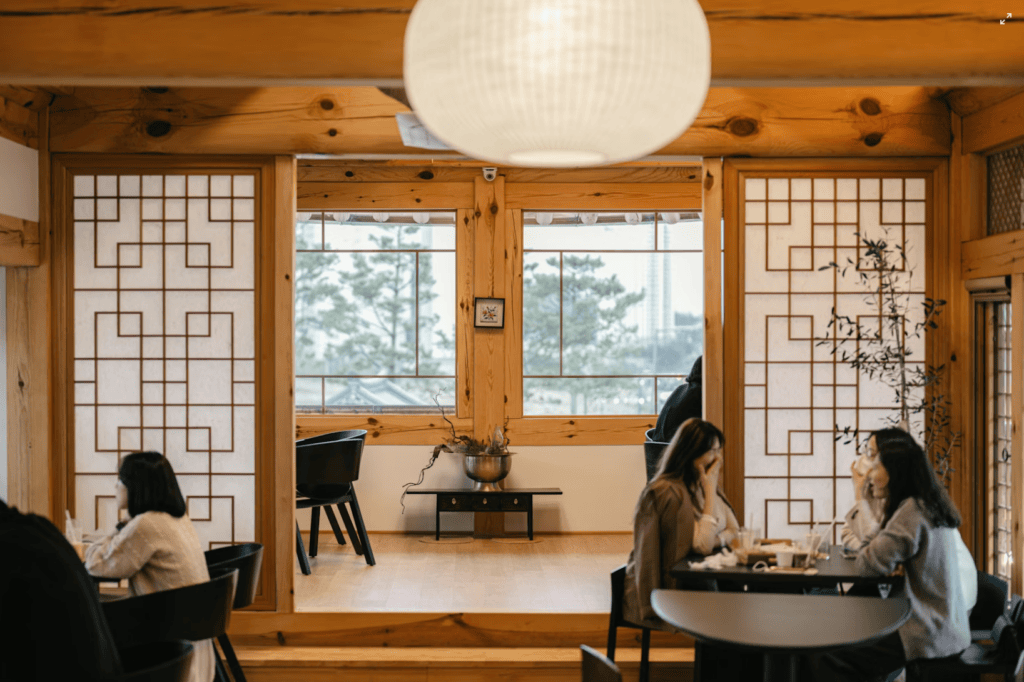
Within these extraordinary spaces, the undisputed protagonist of late is none other than ‘K-Dessert.’ Once considered the exclusive domain of the grandparents’ generation, traditional treats like Yakgwa (honey pastry) and Tteok (rice cake) have undergone a modern transformation. How did these heritage snacks become the ‘hip’ treats captivating the global MZ generation? In this post, we will take a deep dive into Korea’s unique dessert and cafe culture—a world that deeply honors the traditions of the past while embracing the sophistication of the future.
1. The Newtro Craze and the Rise of ‘Grandma Tastes
For the past few years, the most fascinating phenomenon sweeping through the Korean dessert market is ‘Newtro.’ A portmanteau of ‘New’ and ‘Retro,’ Newtro represents a unique cultural trend in Korea that doesn’t just replicate the past, but reinterprets tradition through a modern lens. From this movement, the witty term ‘Halmae-ipmat‘ (literally ‘Grandma’s taste‘) was born. It playfully describes the preferences of the younger generation who have fallen in love with the subtle, nutty, and wholesome ingredients that were once considered the exclusive favorites of their grandmothers.

Ingredients once dismissed as old-fashioned or uncool—such as mugwort (ssuk), black sesame (heukimja), red bean (pat), and roasted soybean powder (injeolmi)—have undergone a complete makeover, emerging as the trendiest and ‘hippest’ flavors in the culinary scene today.
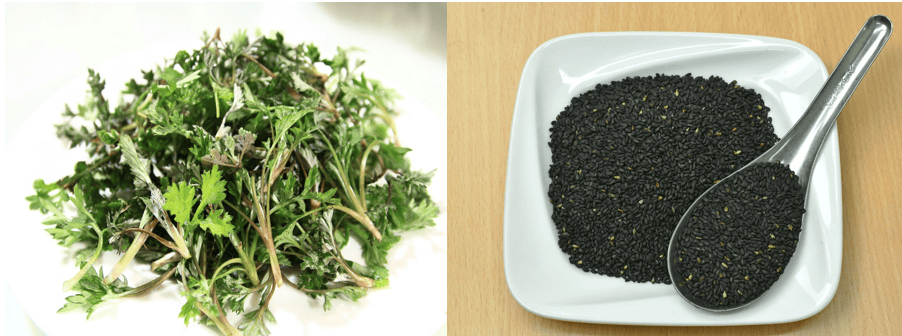
Mugwort – Black sesame
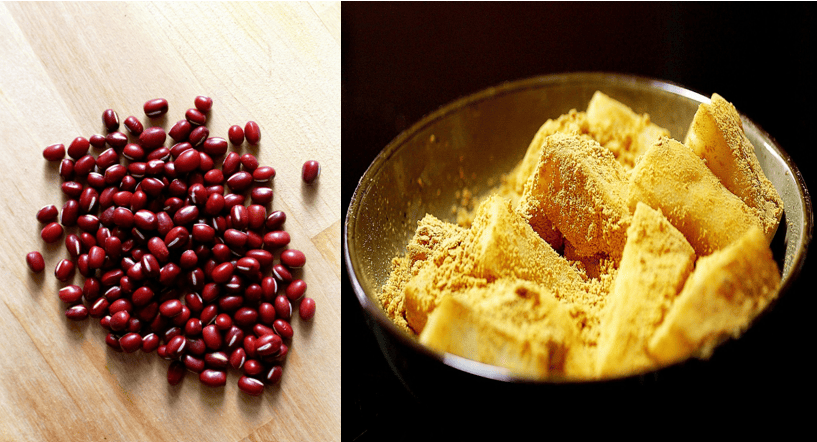
Red Beans – Injeolmi(Rice Cake)
Instead of the intense sweetness of refined sugar, the MZ generation seeks the subtle and deep nutty flavors of grains. They are now so passionate about these traditional treats that they eagerly engage in ‘Yakketing‘ (a portmanteau of Yakgwa and ticketing)—an intense online scramble to buy famous Yakgwa, much like the competitive ‘clicking war’ to secure tickets for a K-pop idol concert.
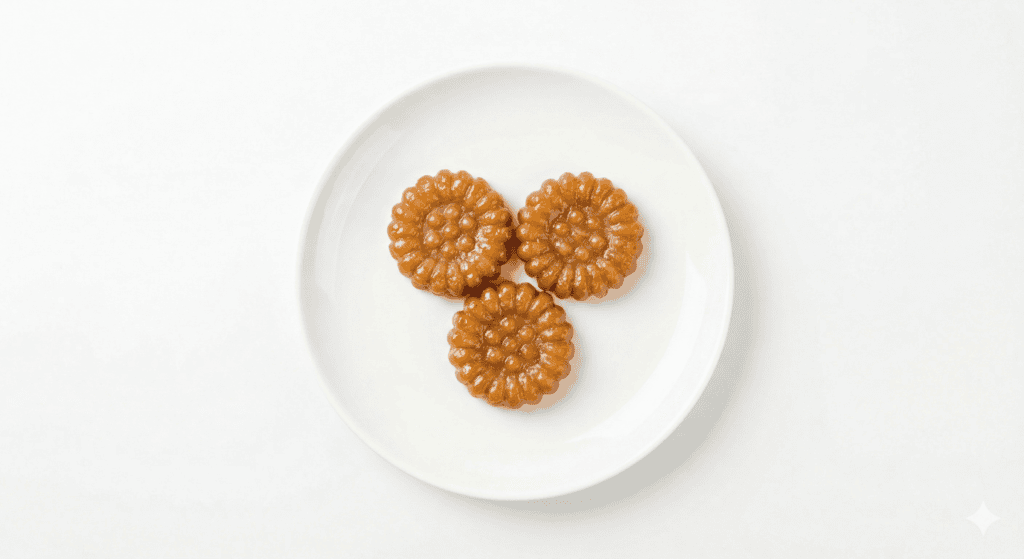
Yakgwa
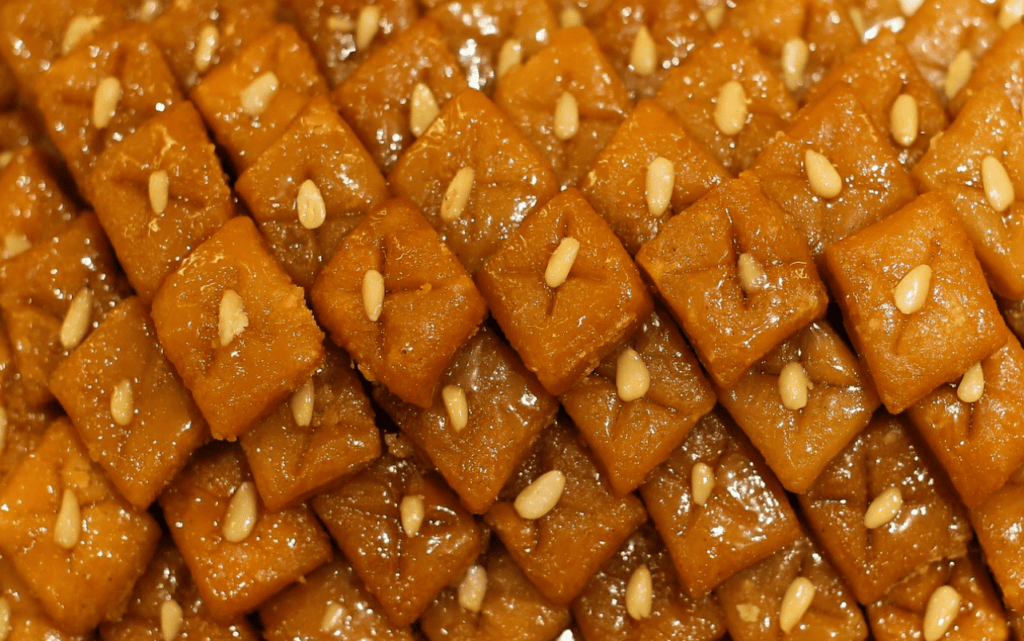
Yakgwa
I believe that the lifestyle of the ‘MZ Generation‘—who tend to distance themselves from alcohol and smoking while prioritizing health through activities like running—has played a significant role in this trend.
The core appeal of this ‘Grandma’s taste‘ craze lies in its ‘healthy sweetness’ and ‘unexpected charm.’ While preserving traditional flavors, these treats adopt the sophisticated forms of modern cakes or cookies, ensuring they never miss out on visual appeal (making them highly ‘Instagrammable’). This ‘Halmae-ipmat’ rebellion, which blends a deep respect for heritage with contemporary elegance, has transformed Korea’s dessert culture into a meaningful medium where all generations can connect and communicate.
2. The Big 4 K-Desserts You Must Try
Beyond being just sweet treats, traditional Korean desserts are true works of art, harmonizing artisanal craftsmanship with natural ingredients. Here are the four most iconic desserts you can discover in the trendiest cafes across Korea today.
1) Gaeseong Juak: The Korean Glazed Donut
The undisputed superstar currently taking Korean social media by storm is none other than Gaeseong Juak. This charming dessert is made by kneading glutinous rice flour with Makgeolli (Korean rice wine), deep-frying the dough until golden, and then soaking it in Jocheong (grain syrup)—a traditional glazing process known as ‘Zipcheong.’
Resembling a tiny, adorable apple in appearance, the first bite offers a delightful contrast: a crisp exterior that gives way to a chewy, rice-cake-like interior. As you chew, the subtle sweetness of the grain syrup bursts forth, creating a sophisticated flavor profile. While it may look similar to a Western glazed donut, Gaeseong Juak is distinguished by its clean, non-greasy finish and a much deeper, earthy sweetness.
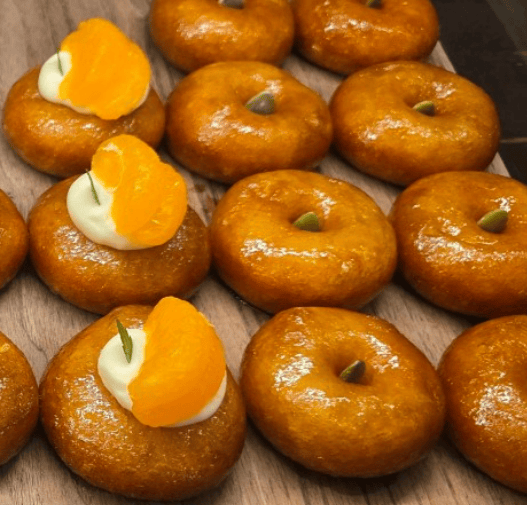
Gaeseong Juak
2) Yakgwa: The Honey Pastry
The name Yakgwa literally means “medicinal cookie” (Yak means medicine), reflecting the historical Korean belief that honey and ginger used in the dough possessed healing properties. Traditionally made by kneading wheat flour with sesame oil, honey, and rice wine, this royal delicacy enjoyed by Goryeo Dynasty aristocrats has experienced a spectacular revival in the form of ‘Yakgwa cookies’ and ‘Yakgwa financiers.’
The dense, syrupy sweetness of the honey seeps into the meticulously layered, pastry-like structure, making it a perfect companion for coffee or tea. In modern cafes, a must-try combination is the ‘Yakgwa Affogato,’ where a chewy Yakgwa is served with a scoop of cold vanilla ice cream—a delightful fusion that perfectly balances warm spice and cool sweetness.
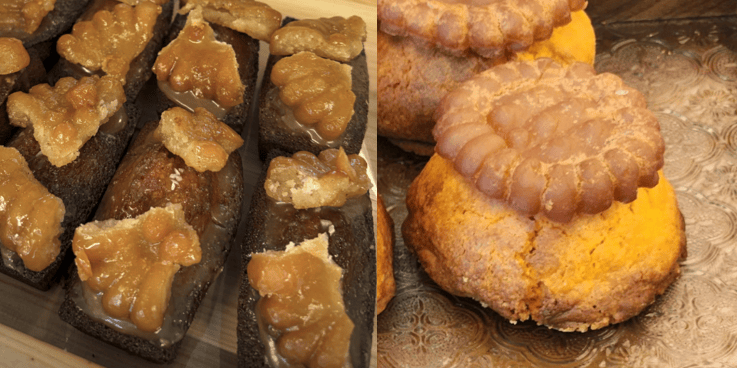
Yakgwa Financier – Yakgwa Cookie
3) Bingsu: The Shaved Milk Ice
Once a seasonal treat to beat the sweltering heat, Bingsu has evolved into a beloved global dessert enjoyed all year round. Unlike the coarse, crunchy shaved ice of the past, the modern standard is ‘Nunkkot Bingsu‘ (snow-flower shaved ice), made by flash-freezing milk and shaving it into incredibly fine, fluffy flakes that resemble freshly fallen snow.
The visual impact is stunning: a mountain of these soft milk flakes topped with a generous heap of fresh mango, strawberries, or traditional ingredients like sweet red bean (pat) and roasted soybean powder (injeolmi). As the delicate ice melts instantly on your tongue, it creates a rich, creamy symphony of flavors. Beyond the taste, Bingsu is the perfect menu to experience Korea’s unique ‘sharing culture,’ where friends and family gather around a single large bowl to enjoy a sweet moment together.
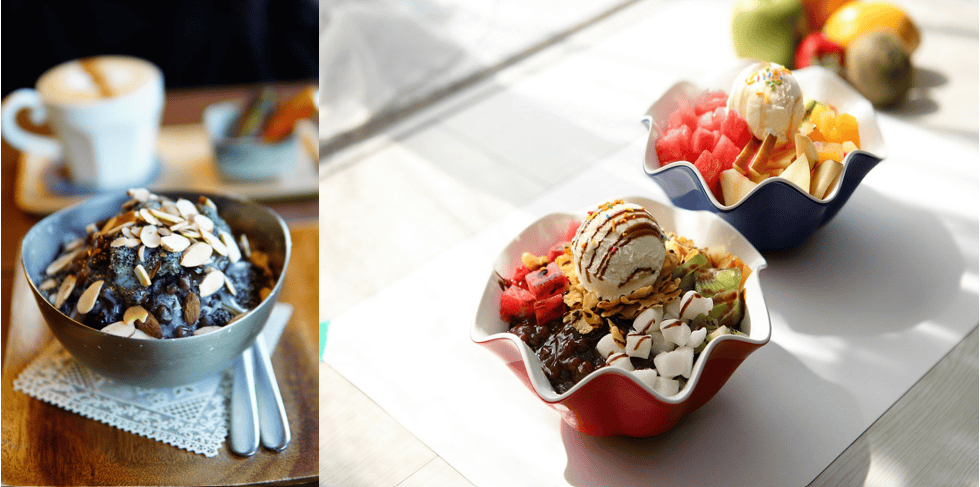
Red Bean Bingsu – Fruits Bingsu
4) Fusion Tteok: The Delicious Bridge Between East and West
Traditional Tteok (rice cake) is undergoing a radical transformation as it meets Western dessert ingredients. Imagine soft, chewy Injeolmi filled with sweet fresh cream or tiramisu cheese, or ‘Ang-butter Seolgi,’ where slices of creamy butter and sweet red bean paste are sandwiched between layers of fluffy Baekseolgi (snow-white steamed rice cake).
This fusion of the satisfying, hearty texture of Korean rice cakes and the velvety smoothness of Western sweets makes it the perfect entry point for foreigners who might be more accustomed to bread or pastries. Fusion Tteok offers a familiar yet delightfully unexpected experience, proving that tradition can be incredibly trendy and accessible to everyone.
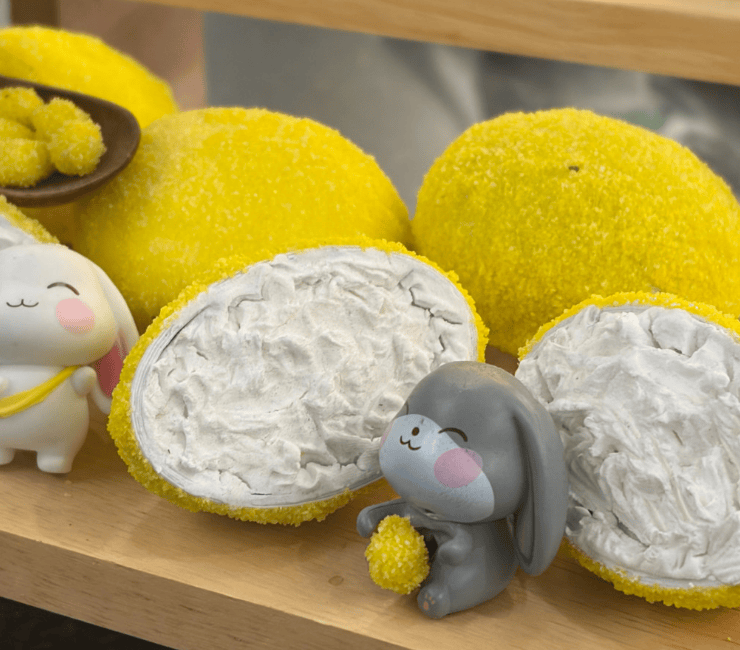
Cream Cheese Chapsalddeok
3. The Experience of Space: From Hanok to Grand Galleries
The magic of Korean cafes lies not just in their innovative menus but in the “spaces” themselves, which serve as immersive art installations and experiential galleries. The spatial aesthetics of Korean cafes offer two distinct, yet equally captivating charms.
First is the “Hanok Cafe,” which offers a literal journey back in time. In historic neighborhoods like Bukchon or Ikseon-dong in Seoul, you’ll find cafes that preserve the original Seokkarae (wooden rafters) and Giwa (roof tiles) of centuries-old traditional houses. Sipping tea under low eaves while gazing out at a quiet courtyard provides a rare escape from the city’s noise, allowing visitors to experience the “Beauty of Void”—Korea’s unique aesthetic of stillness and minimalism. This surreal harmony, where Western coffee meets traditional Korean architecture, has naturally become one of the most sought-after photo spots for international travelers.
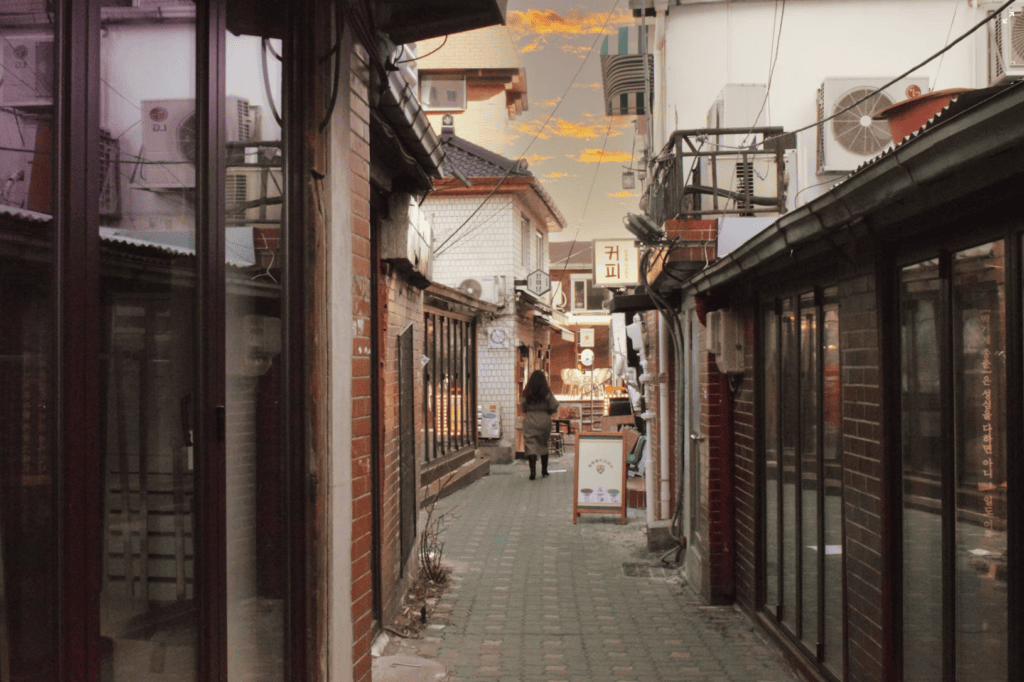
Hanok Cafe Street
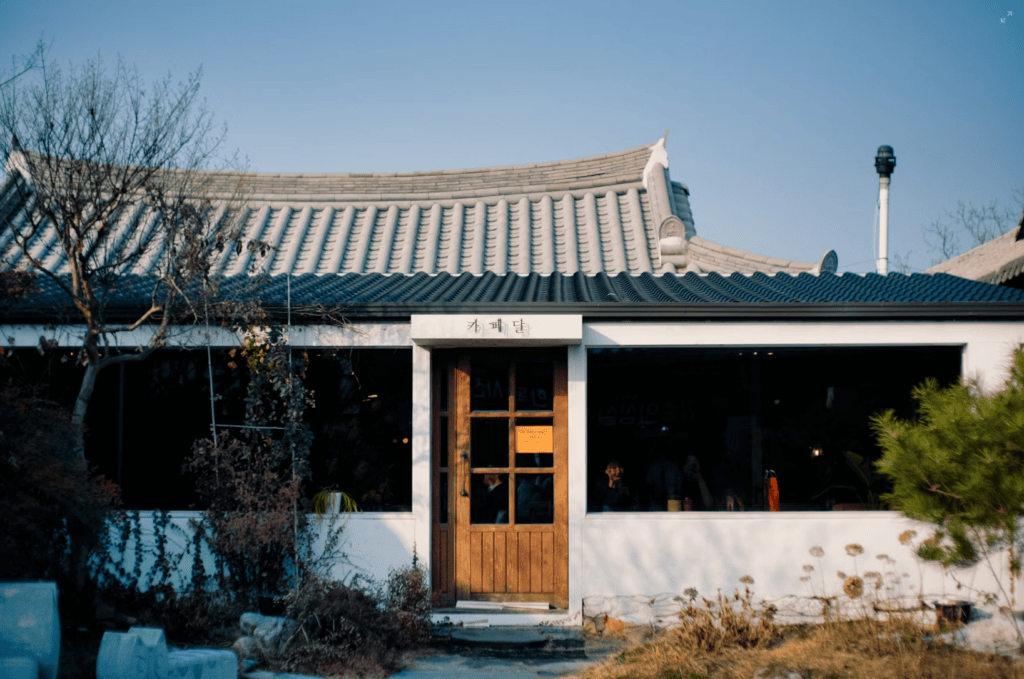
Hanok Cafe
On the other hand, venture just outside the city center, and you will be captivated by ‘Mega Gallery Cafes‘ boasting overwhelming scales. Whether it’s an industrial-chic space repurposed from an abandoned factory or a glass-walled sanctuary that frames mountains and rivers like a traditional folding screen, these cafes have become landmarks in their own right. Some host cutting-edge media art exhibitions, while others showcase art pieces curated by professional gallerists.
For Koreans, visiting these places isn’t just about grabbing a coffee; it’s about consuming the ‘aesthetic experience’ provided by these sensory spaces. This is why ‘Cafe Hopping’ has become a quintessential weekend ritual—a journey to discover and immerse oneself in the latest trends of art, architecture, and nature.
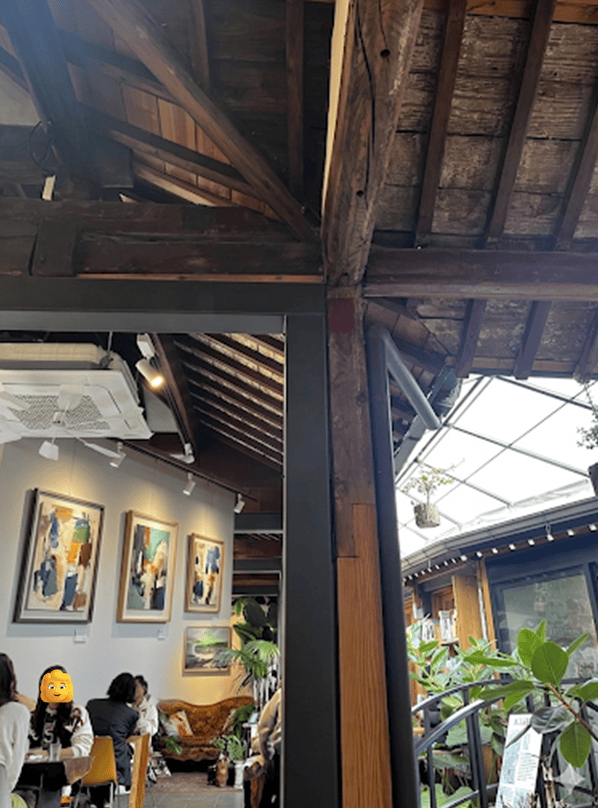
Gallery Cafe
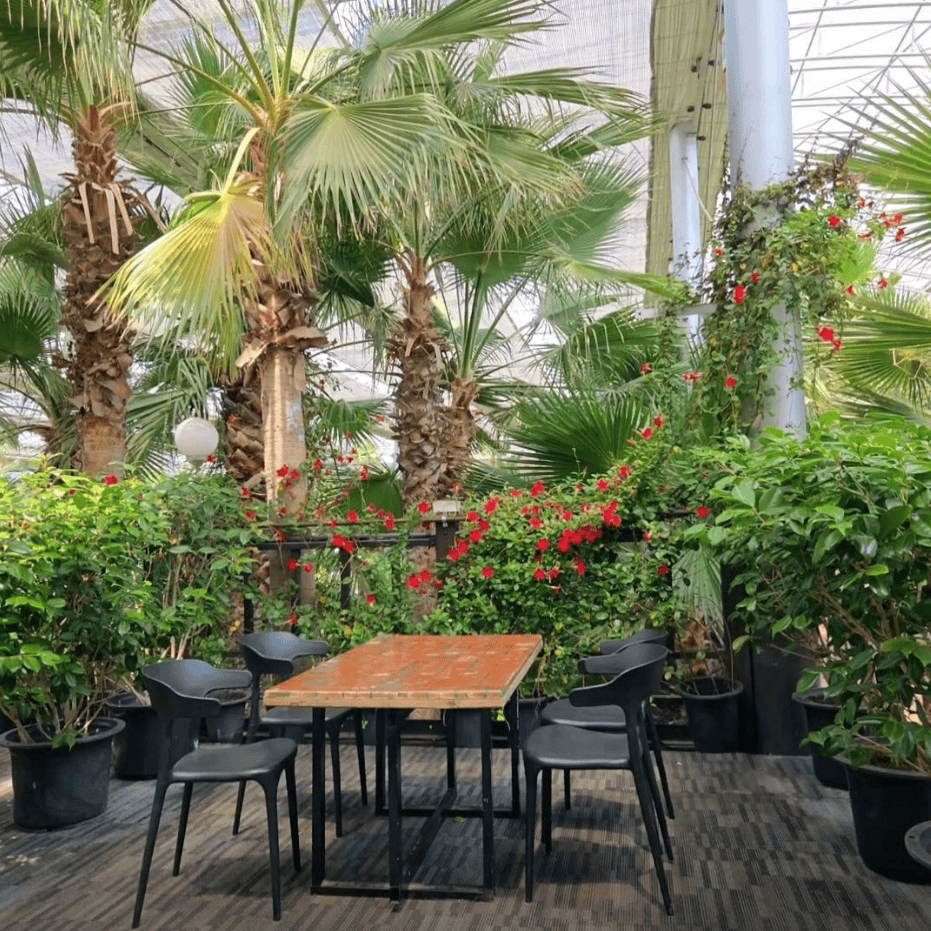
Botanical Garden Cafe
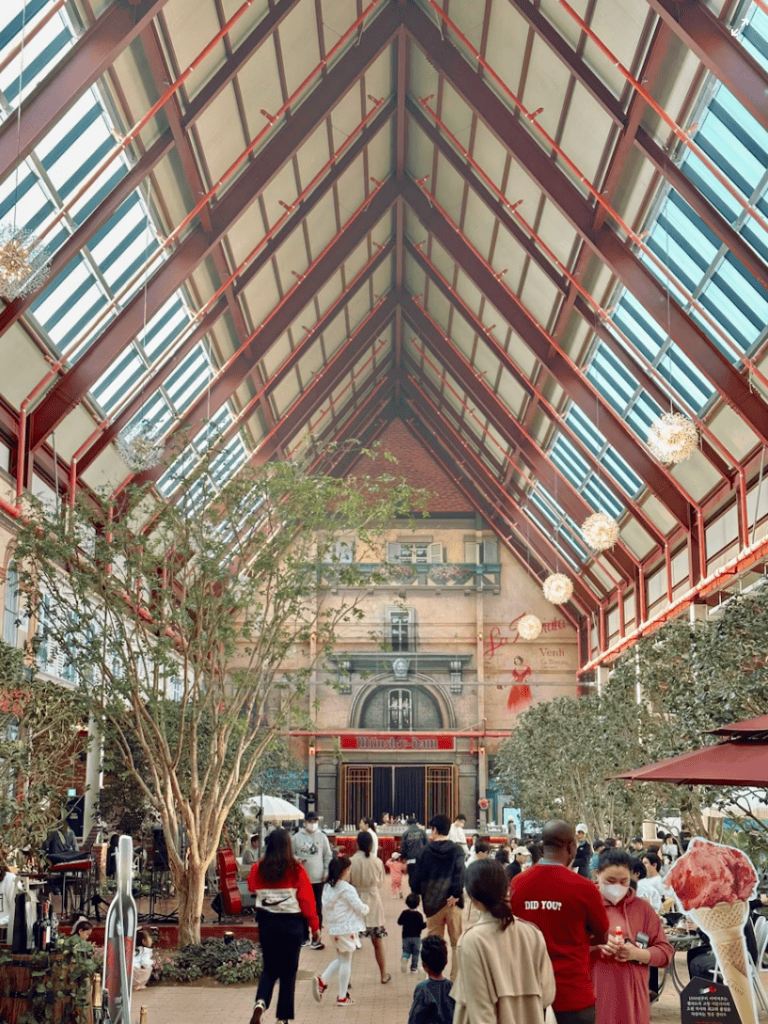
Converted Factory Cafe
4. The Perfect Pair: Iconic K-Beverages
The Korean dessert experience is truly complete only when paired with its unique ‘K-drinks.’ First and foremost, I highly recommend Fruit Ades made with ingredients like Omija (magnolia berry) and Maesil (green plum).
Thanks to Korea’s distinctive café culture of ‘Cheong’ (fruit preserves or syrups handmade by macerating fresh fruit in sugar), these drinks offer a fresh, deep fruit aroma that is on a completely different level from artificial syrups.
There is a vast variety of Cheong available, including green plum, Omija, tangerine, lemon, ginger, lime, green grape, grapefruit, strawberry, pear & bellflower root, orange, and passion fruit. In particular, ‘Omija Ade’—made from the five-flavored berry—captivates both the eyes and the palate with its strikingly vibrant red hue.

Fruit Ades

Maesil Ades
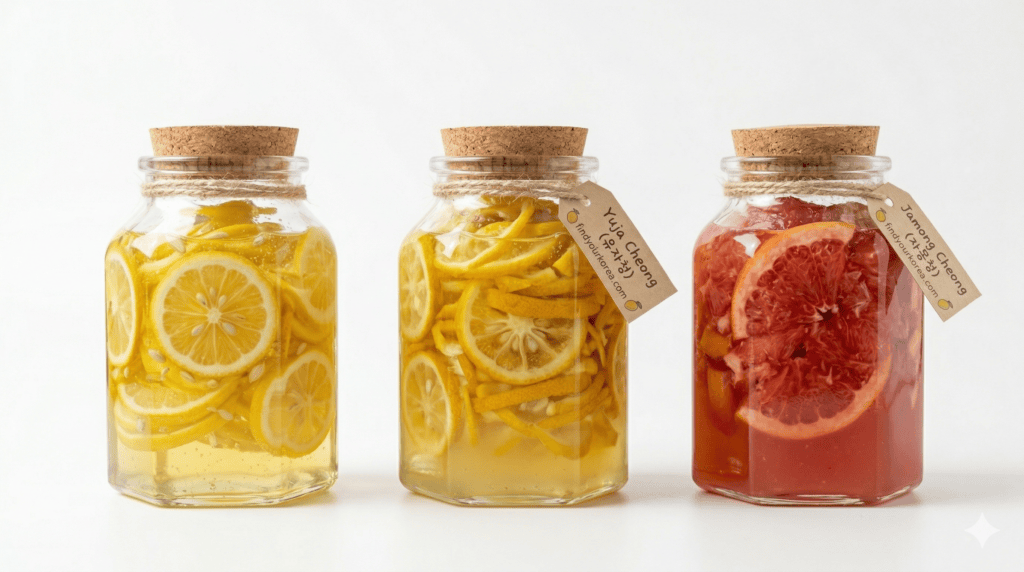
Cheong’ (fruit preserves or syrups handmade by macerating fresh fruit in sugar)
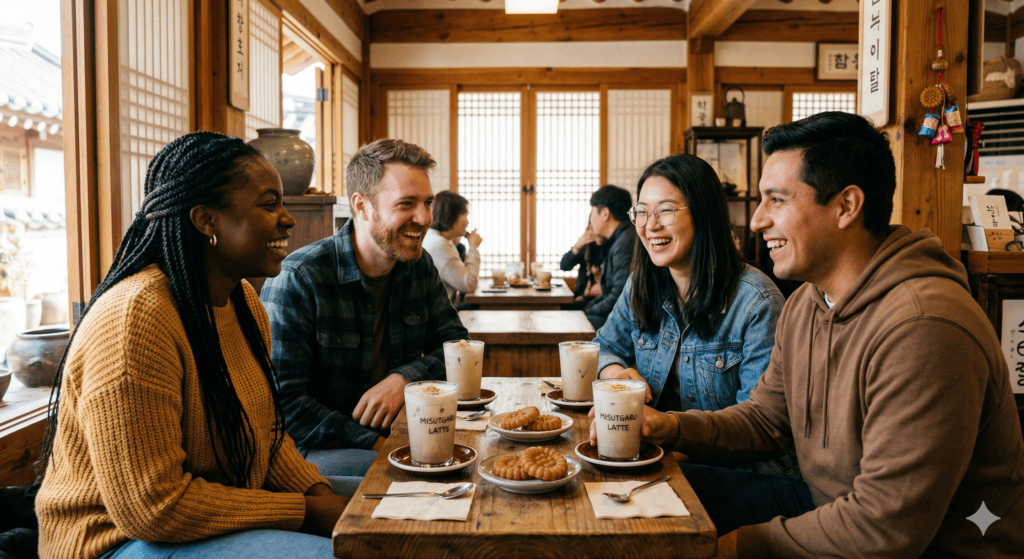
For those who aren’t coffee lovers, don’t miss the chance to fall in love with the nutty richness of ‘Grain Lattes.’ Lattes made with Black Sesame or Misugaru (roasted multi-grain powder) boast a much deeper and more filling flavor profile than the ‘Oat Lattes’ found in the West.
The aroma of these grains fills your mouth without any dry aftertaste, acting as the perfect counterbalance to the sweetness of desserts like Yakgwa (honey cookies) or Tteok (rice cakes).
Finally, traditional teas like Sujeonggwa (cinnamon punch) or Daechu-cha (jujube tea) provide a clean finish with the spicy, aromatic notes of cinnamon and ginger. Sikhye (sweet rice punch) is also an excellent choice for experiencing Korea’s traditional ‘after-meal’ culture.
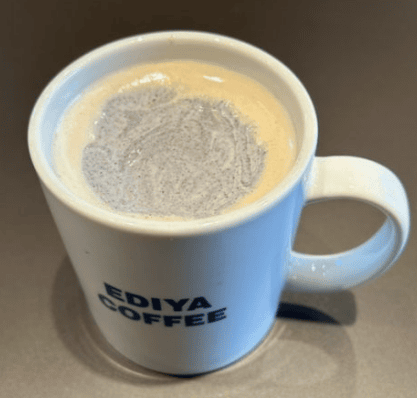
Black Sesame
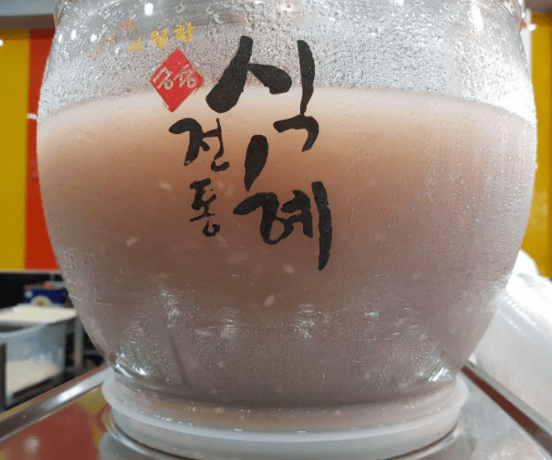
Sikhye (Sweet Rice Punch)
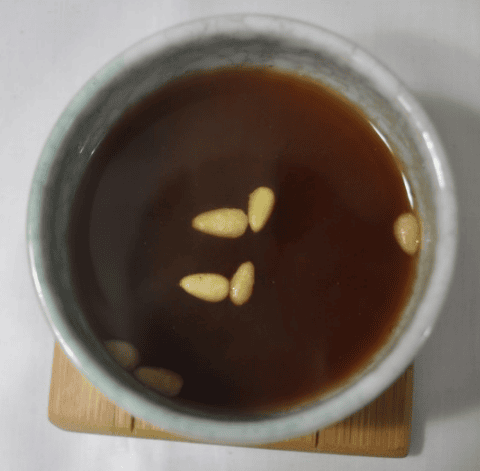
Sujeonggwa (Cinnamon Punch)
5. Practical Tips & Etiquette for Travelers
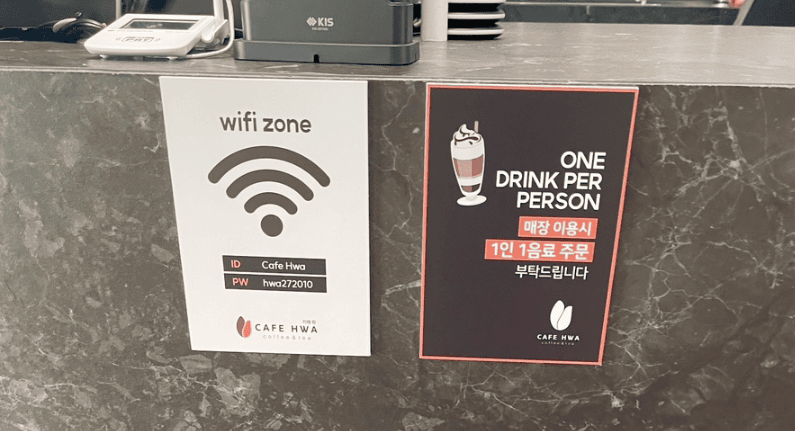
To fully enjoy Korean café culture, there are a few etiquette tips to keep in mind. First, most cafés in Korea follow a ‘one drink per person’ rule. This is a basic agreement for using the space.
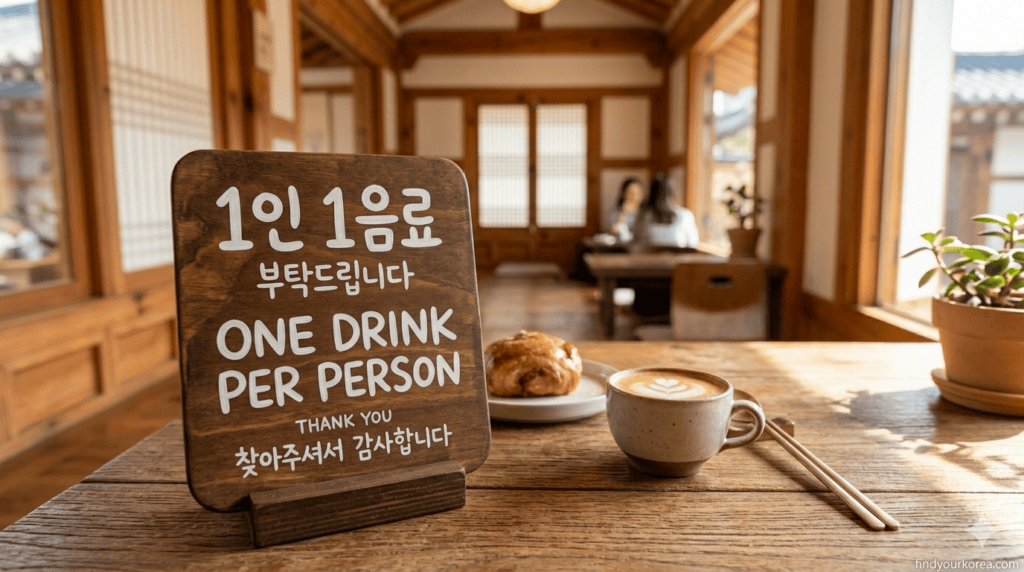
After placing your order, you will receive a pager (vibration bell). Once it vibrates, you should head to the counter to pick up your drinks yourself. While the shape of the pager may vary from café to café, the process is always the same: when it rings, you simply swap it for your order.

Vibration Bell
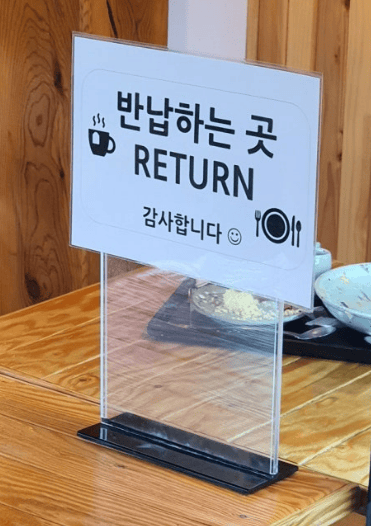
Additionally, a self-service culture is common here. After finishing your drinks, please return your tray to the designated area, usually marked as ‘Return.
Furthermore, Korea has a well-developed ‘Cagong-jok’ (café study) culture, where people enjoy working on laptops or studying in cafés. As a result, most places are exceptionally well-equipped with free Wi-Fi and power outlets.
However, it’s considered polite not to occupy a seat for an excessively long time, so it is best to be mindful of your stay. You can usually find power outlets either on top of the tables or underneath your seat.

6. Conclusion: Tasting the Future Through the Past
Korea’s K-dessert and café culture is more than just a passing trend; it is a prime example of how ‘preservation of tradition’ and ‘modern innovation’ can achieve perfect harmony. The reason why Yakgwa (honey cookies) and Juak (deep-fried rice donuts), once enjoyed by the royal court centuries ago, have become the stars of today’s trendiest cafés is that Koreans view the past not as a dusty relic, but as a source of fresh inspiration.
The serene ambiance of a Hanok (traditional house) tucked away in an alleyway of Seoul or a provincial city, paired with the burst of sweet Jocheong (grain syrup) on your palate, will allow you to experience Korea’s yesterday and today simultaneously.
When you travel to Korea, be sure to pair a sophisticated cup of espresso with a chewy Gaeseong Juak, or try a nutty Black Sesame Latte or Misugaru Latte. This timeless and unique culinary journey will undoubtedly make your trip to Korea deeper and more enriching.
Which K-dessert are you most excited to try first? Or, if you’ve already found your all-time favorite Korean café, please share it with us in the comments!
FindYourKorea #KDessert #KoreanCafe #KoreaTravel #VisitKorea #SeoulCafe #KoreanFood #KDrink #KoreanCulture #OmijaAde #Maesil #BlackSesameLatte #Misugaru #Yakgwa #GaeseongJuak #KoreanTea #TraditionalKoreanDessert #GlutenFreeKorea #HanokCafe #ArboretumCafe #IndustrialCafe #ConvertedFactory #WarehouseCafe #CafeTourKorea #SeoulHotplace #InstagrammableKorea #KoreaTravelTips #CafeEtiquette #DigitalNomadKorea #WorkationKorea #Cagong #KoreaWiFi #TravelGuideKorea